
Keep people away from wet plugs, outlets, power strips and an unstable or damaged aquarium or stand. Request urgent qualified electrical help when access or isolation is unsafe or uncertain, and prompt help from an experienced aquarium service provider and the actual equipment manufacturer for source control and animal care. Follow only an established stopping plan for that system when it can be carried out safely. Do not move a filled aquarium, reach into water, patch a seam or restart a pump to find the leak. A quiet pump does not necessarily stop gravity-fed water, and a stopped drip does not complete the repair.
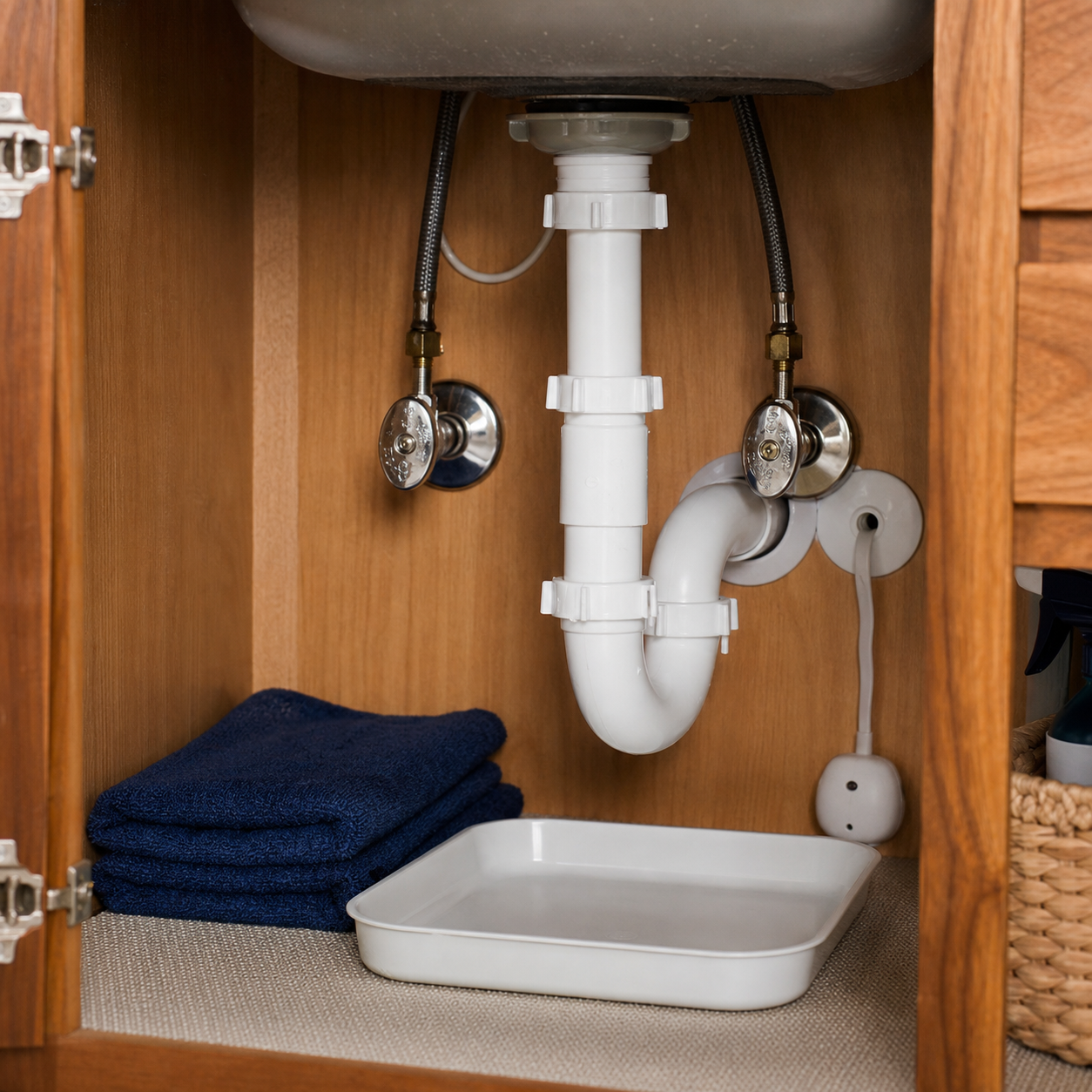

Keep people clear before touching the aquarium equipment
Keep children, pets and other household members away from spreading water, broken glass, a leaning stand or visibly unstable equipment. Do not brace a failing aquarium, put a hand beneath it or cross the wet area to rescue equipment. Leave and call 911 from safety for immediate danger such as fire, sparking, serious injury or failing glass or support.
CDC warns against operating power or electrical equipment while standing in water. Do not touch a wet plug, outlet, power strip, switch or cord, or reach into aquarium water to disconnect equipment. Request urgent qualified electrical help when access or safe isolation is uncertain. Protecting the animals does not make unsafe electrical contact acceptable.
Aqueon’s currently linked QuietFlow LED PRO manual distinguishes abnormal leakage from the separate hazard of a wet plug or receptacle. Its wet-connection warning says not to pull the cord out. Treat the exact equipment’s isolation instructions and safe access as essential; this guide supplies no household breaker, wet-plug or submerged-equipment handling sequence.
A stopped pump is not a universal water shutoff
Use only the actual system’s established emergency stopping and water-control plan, with dry, safe and understood access. If the plan is missing, water continues or a control is uncertain, ask for urgent aquarium-service help and any necessary electrical or building response. Do not keep potentially unsafe equipment running to preserve circulation or investigate a drip.
For example, Aqueon’s current instruction index links its September 2011 ProFlex 110/220 overflow-box manual. That named manual describes gravity drainage in an open sump arrangement during a power interruption. It illustrates why pump-off status alone does not establish that all water movement has stopped; it is not a diagnosis or stopping procedure for an unknown aquarium.
Do not pinch a hose, block an overflow, close an unidentified valve, remove a siphon tube or refill the tank as an experiment. Ask the experienced aquarium provider how water will be controlled for the actual arrangement and who can carry out that plan safely. Report whether escape is continuing, stopped or uncertain without approaching to prove it.
Describe the tank, equipment and animal-care needs separately
Use existing records for the aquarium, filter, sump, heater, pump and any other connected equipment. Tell the provider whether it is a freshwater or marine setup and which animals are present, if already known. Do not reach behind the stand or move a cover to collect a label. Unknown equipment information is better than an unsafe inspection.
Report the first water location already observed: at a vessel edge, beside a filter, around a visible hose, below a stand or on the floor. Include a recent water change, maintenance task or power interruption only if it actually happened. Do not assume a glass seam failed because the puddle is beside the tank, or run a filter to reproduce it.
Ask the aquarium professional promptly to coordinate the animals’ needs while source and electrical work are resolved, including any temporary care that is appropriate for this system. Do not improvise capture, transport containers, water chemistry, temperature changes or a draining percentage from a routine moving article. A tank repair appointment and an animal-care plan are separate commitments.
Use a contact table that separates the urgent decisions
Use this original table for the first calls. Explain immediate hazards and continuing water before discussing replacement parts. The actual manufacturer and experienced aquarium service may need to coordinate with electrical, restoration or building help; do not assume one provider’s visit includes every task.
| What is already known | Question or next contact |
|---|---|
| Wet power or unsafe access | Urgent qualified electrical help: what safe isolation and assessment are required? Keep clear rather than touching or testing. |
| Glass or support appears unstable | Leave the danger area. Who handles the urgent aquarium and qualified building/support assessment? Do not brace or move a filled tank. |
| Water continues after a pump stops | Aquarium service: what actual water path remains, and how will it be controlled safely? Do not guess at a valve or overflow. |
| Water at a filter, hose or tank edge | Manufacturer and aquarium service: what confirmed finding identifies the source and appropriate work for these components? |
| Animal support is disrupted | Who arranges prompt, appropriate temporary care while human safety, source control and equipment work are resolved? |
| The floor or ceiling below is wet | Who assesses the affected materials and any structural or electrical concern, separately from the aquarium repair? |
Keep moving, repairs and return to use within the actual plan
Aqueon’s moving guidance warns against lifting or transporting an aquarium containing water or gravel. Do not slide a filled tank onto towels, tilt it for a photograph, insert shims beneath a loaded stand or recruit household members to hold it level. Arrange safe handling through the responsible provider after the immediate hazards are addressed.
Ask the manufacturer and aquarium service what was found, whether the affected vessel or component can be repaired or needs replacement, and who is authorized to do that work. Do not apply tape, household sealant or a clamp to a wet seam and call it fixed. Retain the actual product and service records; a warranty inquiry should not delay urgent safety or animal-care help.
If electrical equipment was exposed, keep it out of use pending appropriate qualified assessment and manufacturer/service instructions. ESFI warns that drying alone does not make water-damaged equipment safe. A repaired hose, quiet pump or dry power-strip case does not clear every connected appliance. Request explicit instructions before restoring use.
Arrange prompt assessment of affected flooring, carpet and any ceiling below. EPA advises correcting water problems and drying items completely, with experienced help for contaminated-water damage. Use the floor and carpet guides for the separate material questions. A dry-looking surface, bucket or stopped drip does not finish source repair, electrical work and material recovery.
Example: the pump is quiet but water still reaches the floor
Fictional example: a household notices water beneath an aquarium stand and a damp power connection nearby. It keeps people away and calls urgent electrical help, then an experienced aquarium provider with existing equipment records. It does not reach behind the stand or lift the aquarium to complete the report.
The household says “pump is quiet; water still appears at the floor; starting point unknown.” It does not conclude that the vessel cracked, block an overflow or restart equipment. The aquarium provider is asked to coordinate safe source control and appropriate animal support alongside the electrical response.
The completion record later separates the confirmed source work, animal-care arrangements, equipment reuse instructions and remaining floor assessment. This invented example illustrates a handoff; it does not diagnose a sump, promise animal survival, approve a tank repair or establish a universal draining or restart sequence.
Keep a short private aquarium and follow-up record
Make urgent calls first. Use the free homeowner checklist for responsible contacts and next actions, keeping detailed aquarium records, photos and service instructions privately. Use existing information rather than moving equipment or approaching unsafe water to complete a field.
- First water location, discovery time and whether escape continues: ___.
- Wet power, glass/support, floor or ceiling hazards already observed: ___.
- Tank and connected equipment models from existing records: ___.
- Known freshwater/marine setup and animals; missing information: ___.
- Recent maintenance or power event already known; no repeat test: ___.
- Established stopping action taken, by whom, and unresolved water control: ___.
- Aquarium/electrical contacts, animal-care plan and next update: ___.
- Confirmed source work, equipment reuse instructions and separate material/support follow-up: ___.
When to call a professional
Leave and call 911 from safety for fire, sparking, serious injury, failing glass/support or other immediate danger. Unsafe electrical access needs urgent qualified electrical help. Coordinate an experienced aquarium service provider and the actual tank/equipment manufacturer for safe water control, equipment assessment and an appropriate animal-care plan. Significant or uncertain wet-floor, concealed-material or contaminated-water damage needs an experienced restoration provider; damaged structural support needs the appropriate qualified building assessment.
Related guides
Sources
- Aqueon: Instructions & Setup — current manufacturer gateway for named aquarium/equipment manuals
- Aqueon: QuietFlow LED PRO manual, January 2016 — CA10/20/30/50/75-2H families; safety page 2 (PDF)
- Aqueon: ProFlex 110/220 overflow-box manual, September 2011 — gravity-flow scope and professional-support boundary (PDF)
- Aqueon: How to Move an Aquarium — filled-tank handling warning; planned-moving scope
- Aqueon: Consumer Care — actual manufacturer product/troubleshooting contact route
- CDC: Reentering Your Flooded Home — standing-water electrical boundary
- ESFI: Water-Damaged Electrical Equipment — qualified evaluation before reuse
- EPA: Mold Cleanup in Your Home — source correction, complete drying and contaminated-water help
Free next step
Download the free seasonal maintenance checklist to record observations and follow-up tasks. See the seasonal maintenance routine for more context.
Affiliate disclosure
No affiliate links appear in this guide. If a reviewed recommendation is added, the disclosure will appear beside it.