
Usually, a mold test is not needed just to establish that visible mold needs attention. EPA says sampling is unnecessary in most cases where growth is visible; CDC does not recommend routine home mold testing. Do not delay fixing the water problem or arranging appropriate cleanup while waiting for a kit or a species name. If a qualified professional proposes sampling for a specific question, ask what decision it will change, how results will be interpreted and what remains outside the test. A result alone is not proof of a repaired leak, complete cleanup or safety for a particular occupant.
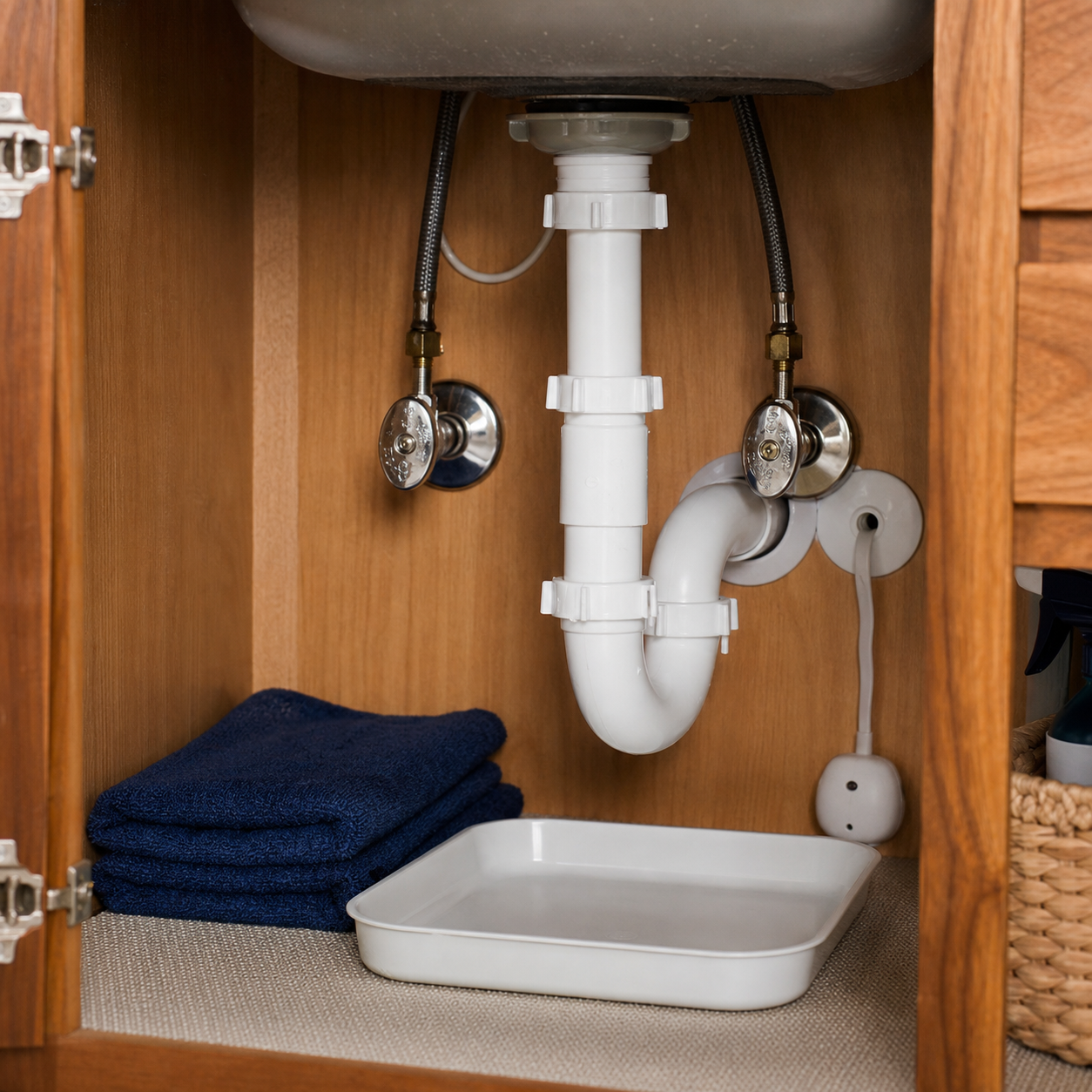

Keep source control and safe access ahead of testing
If water is still entering, call the appropriate plumber, roofer or building emergency contact and report ongoing water and hazards first. Follow the established safe instructions for a known authorized customer shutoff only when it is safely reachable; request urgent isolation help when it is not. Sampling does not stop the source.
Do not stand below a sagging ceiling, touch wet electrical fittings, enter a wet crawlspace or lift carpet to get a sample. A photo, moisture reading or completed questionnaire is not required before requesting help. Keep people away from unsafe areas and use the appropriate ceiling, basement or wastewater response.
EPA’s cleanup guidance makes the provider choice depend on more than visible area: extensive damage, contaminated water, HVAC involvement and health concerns change the situation. A small-looking patch is not an automatic safe-work permission. Describe what is known and let the appropriate qualified providers establish the scope and precautions.
Visible growth and a musty smell raise different questions
With visible growth, the first question is how to address the moisture and affected materials safely, rather than which mail-in kit to buy. Do not touch, scrape or deliberately disturb a spot to decide what it is. A photograph is not a professional material assessment or a way to identify the mold type.
An odor without a visible source needs a different investigation from a visible patch on an accessible surface. EPA describes hidden mold behind finishes and under flooring, and cautions that disturbing those areas can release spores. Ask an experienced professional how it will investigate the known water history and inaccessible areas. Do not peel wallpaper, remove trim or open a wall to look.
Keep the observation precise: location, date, prior water event, recurrence and what is unknown. A musty smell does not identify a leaking pipe, prove a particular mold species or establish the full affected area. Likewise, no visible spot on the room-facing surface does not document the condition inside an assembly.
Before commissioning a sample, ask what it will change
EPA allows a role for appropriately designed professional sampling, including some surface-sampling questions about cleanup. Its visible-growth advice is not a claim that sampling can never be useful. The proposed purpose, collection method and interpretation need to belong together.
Use this original question table before agreeing to non-urgent sampling. It distinguishes a defined investigation from buying a result without a decision. Do not let the discussion delay source control or necessary qualified assessment.
| Part of the proposal | Question to resolve with the provider |
|---|---|
| Purpose | What exact question remains after the water history and material assessment, and why would a sample help answer it? |
| Decision | What action would change for different possible results, and what work should proceed regardless? |
| Method and scope | Who designs and collects the samples, which locations and conditions are represented, and what cannot be assessed? |
| Interpretation | Who explains the laboratory result, comparison basis and uncertainty in language we can use? |
| Cleanup and completion | How will findings connect to source correction, material treatment and the actual completion record? |
| Requirements and cost | Is this a recommendation or a requirement for this particular project? Who set it, what does it include and what follow-up costs remain? |
A lab number is not a universal pass or fail
EPA says there are no established federal mold or mold-spore limits that let a sample prove compliance with a federal mold standard. A report should not present an unexplained number as an EPA safe-room threshold. Ask the provider to identify the actual basis and limits of its conclusion.
This does not settle every local, building, contractual or project-specific requirement. If someone says a test is required, ask which actual requirement applies, who specified it and what decision it serves. Keep the written scope rather than assuming every home needs the same test or that no project can require one.
CDC explains that sampling and culturing do not establish whether an individual will become sick. Take health questions to a healthcare professional instead of converting a lab label into a diagnosis. A species name, color description or reassuring result does not replace the moisture and cleanup work.
If results are difficult to understand, ask for an explanation and an assigned next action before treating the report as a finished repair. Do not collect more household samples to resolve an unclear professional conclusion.
Ask for completion evidence that covers the actual work
A useful completion record identifies the confirmed water source and repair, areas assessed, material treatment, any inaccessible places and the remaining restrictions or follow-up. Keep proposed work separate from completed work. The wet-drywall, insulation and carpet guides help name the materials without prescribing a household inspection.
EPA’s home guide describes completion in terms of correcting the moisture problem, removing mold and checking for returning water damage or growth after cleanup. It notes that staining can remain. These are contextual findings to discuss with the responsible provider, not a checklist that lets a household certify a hidden space by sight or smell.
Ask who supplies the completion findings and what should happen if a spot, odor or water returns. A finished laboratory report, equipment pickup, paid invoice or new paint does not document every part of that handoff. EPA advises against painting or caulking moldy surfaces before proper cleanup.
Keep a portable air cleaner or dehumidifier in its actual supporting role. An equipment setting or cleaner rating does not identify the source or document treatment of an affected wall. Use the air-cleaner rating guide for that separate comparison; do not buy equipment as a substitute for resolving the repair question.
Example: a test offer before the wall assessment is complete
Fictional planning example: after a pipe repair, Avery notices recurring spotting near the affected wall and receives an offer for mold sampling. The household keeps the area undisturbed and arranges appropriate assessment. It reports the repair date, the observed location and the recurrence without naming a species or opening the wall.
Before commissioning the sample, Avery asks what question the test would answer, what action different results would change and who interprets them. The proposal has not yet explained the affected-material or moisture assessment, so that missing work stays assigned rather than disappearing behind a test package.
If professional sampling is later justified for a defined purpose, the household keeps its scope and limitations with the repair record. It does not label a result all-clear for every surface or person. This invented example shows how to ask useful questions; it does not decide whether another property needs sampling or approve its cleanup.
Keep a compact private moisture and sampling record
Make urgent calls first. Use existing reports and observations already available safely; do not collect a physical sample or approach suspect material for this record. The free homeowner checklist can hold the next action and contact while detailed property and health information stays private.
- Observed location/date, known water event and recurrence: ___.
- Actual source finding, completed repair and unresolved moisture question: ___.
- Material/cleanup provider, assessed areas and inaccessible places: ___.
- If sampling is proposed: exact question, decision and reason for the method: ___.
- Person collecting/interpreting, stated limitations and report reference: ___.
- Material treatment and completion findings, separately from the test result: ___.
- Restrictions, follow-up date and contact if water, spots or odor return: ___.
When to call a professional
Keep active leaks, wet electrical equipment, unstable ceilings and contaminated water on their urgent response paths. Leave and call 911 from safety for immediate danger, fire, injury or suspected collapse. Arrange experienced water-damage/mold help for substantial, hidden or uncertain damage; use appropriately experienced contaminated-water help for sewage. Suspected affected HVAC needs qualified advice before use. Consult a healthcare professional about individual health concerns before cleanup; this article does not diagnose illness or approve occupancy.
Related guides
Sources
- EPA: Mold Testing or Sampling — purpose, professional methods and limits of federal standards
- CDC: Mold — moisture correction, home testing and individual health limitations
- EPA: A Brief Guide to Mold, Moisture and Your Home — hidden mold, completed cleanup and follow-up
- EPA: Mold Cleanup in Your Home — choosing appropriate help, HVAC and contaminated-water boundaries
Free next step
Download the free seasonal maintenance checklist to record observations and follow-up tasks. See the seasonal maintenance routine for more context.
Affiliate disclosure
No affiliate links appear in this guide. If a reviewed recommendation is added, the disclosure will appear beside it.