
Choose a step stool or self-supporting ladder that gives you a stable working height on a level indoor floor and fits the task's load and instructions. Do not use furniture, damaged equipment, or any setup that puts you near electrical hazards or requires overreaching.
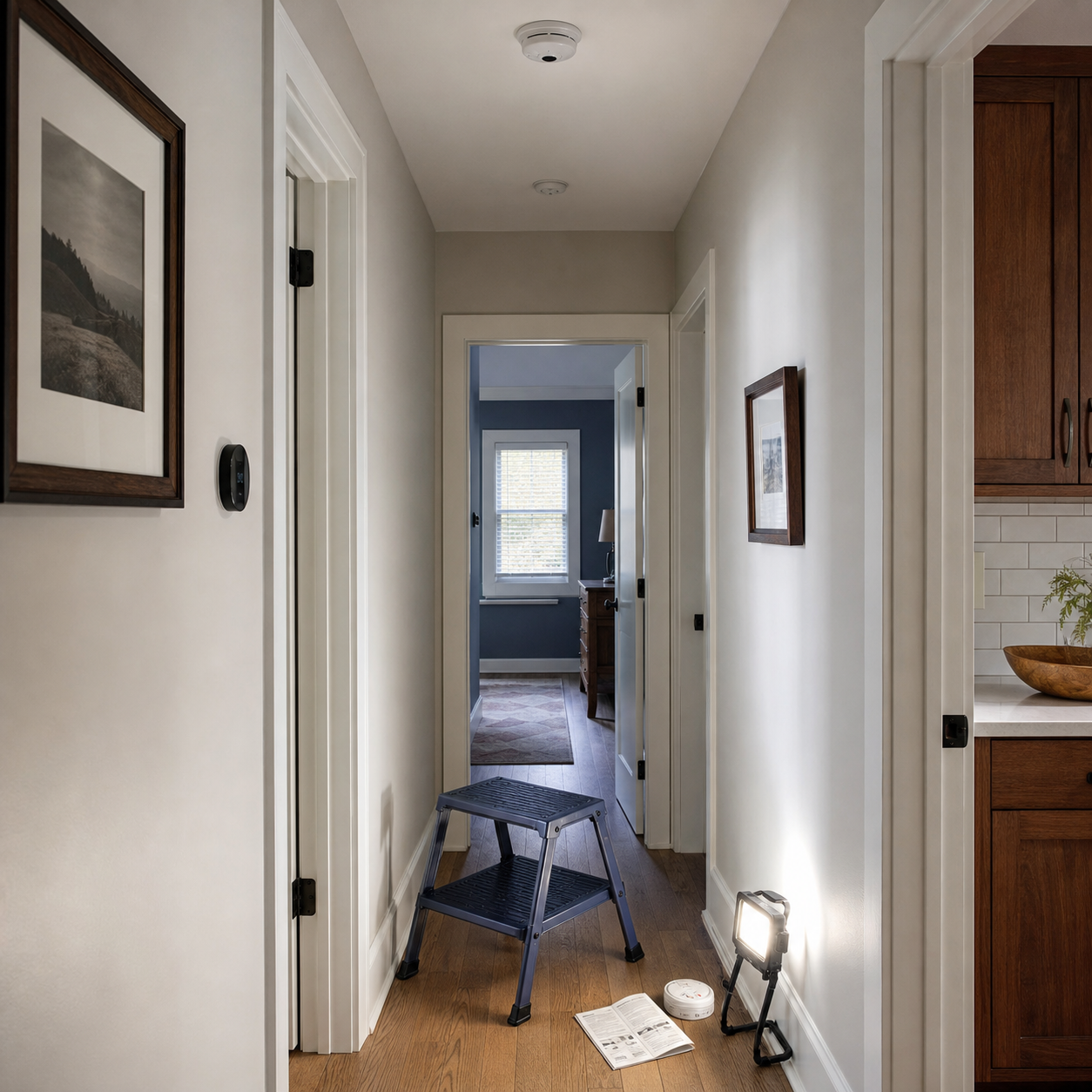
Match the tool to the reach
A low, stable reach may call for a step stool; a higher task may need a properly rated self-supporting ladder. In either case, your feet should be on an intended step or platform and your body should remain centered rather than leaning sideways.
Measure the task, consider the object you need to carry, and read the equipment label. A taller ladder is not safer if it is the wrong type, damaged, or used on an unsuitable surface.
Inspect before every use
OSHA's portable-ladder guidance emphasizes following labels, inspecting before use, keeping feet and rungs clean, and using ladders only as designed. For an indoor homeowner, that means checking for loose parts, cracks, bent rails, worn feet, spills, and obstacles before climbing.
Do not use a ladder on stairs, boxes, furniture, or a slippery floor. Do not reposition it while someone is on it.
Keep the boundary clear
Roof access, exterior ladder setup, electrical exposure, uneven ground, and heavy or awkward work require a different level of planning and may require qualified help. This guide does not cover those tasks.
When to call a professional
Stop and contact a qualified professional when the task requires roof access, unstable footing, work near electrical equipment, or a height that an ordinary indoor step stool cannot safely reach.
Related guides
Sources
Affiliate disclosure
No affiliate links appear in this guide. If a reviewed recommendation is added, the disclosure will appear beside it.