
Start with basic measuring, fastening, gripping, cutting, lighting, and cleanup tools. Add specialty tools only after a real project calls for them.
Buy for the problems you are likely to have
A first tool setup should help you assemble furniture, hang lightweight items, tighten loose hardware, read a manual, handle a minor cleanup, and see clearly during an outage. It does not need to anticipate every repair in the house.
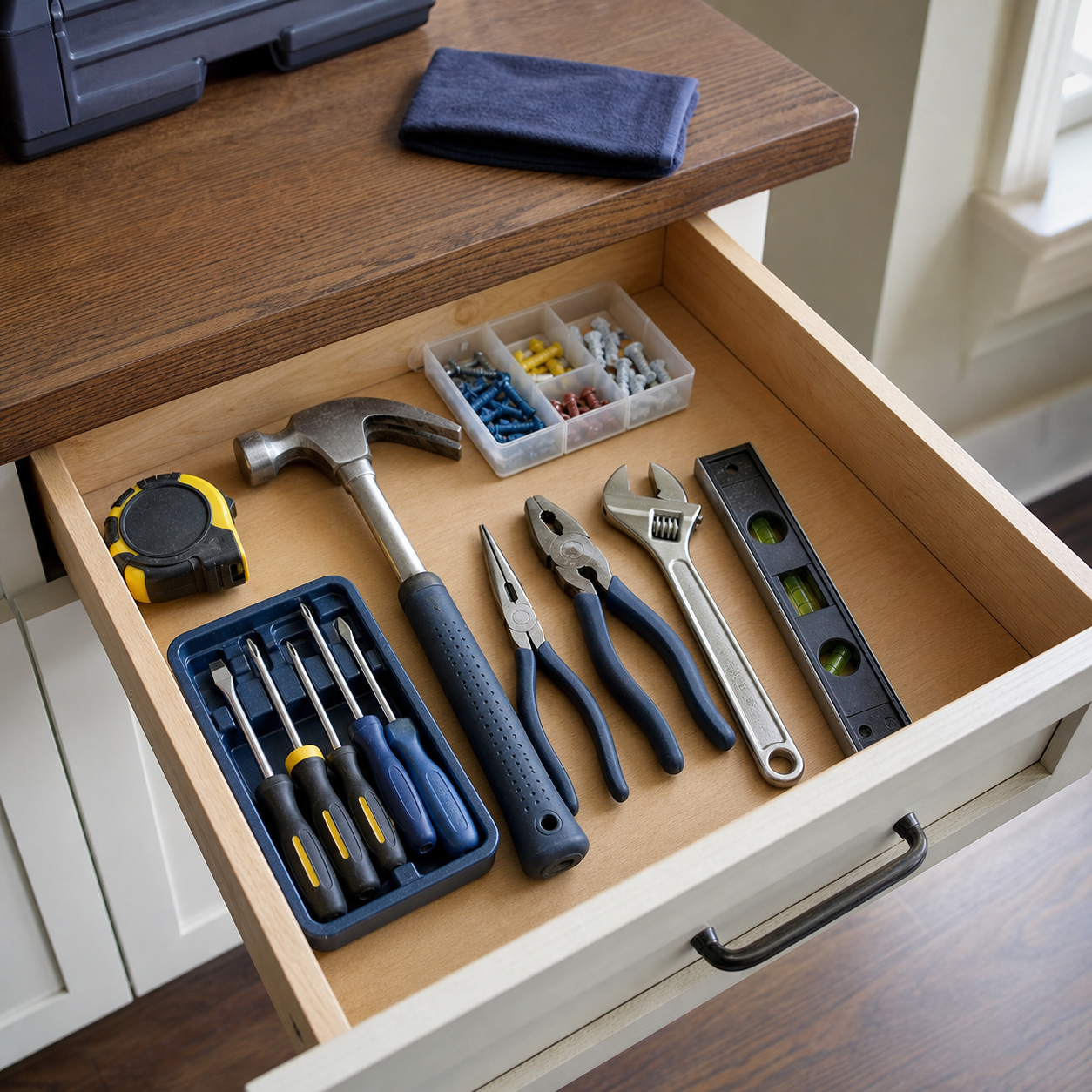
Start with a tape measure, a basic screwdriver and bit set, a claw hammer, adjustable wrench, slip-joint pliers, a torpedo level, a utility knife with safely stored replacement blades, a bright flashlight, a small assortment of fasteners, and disposable work gloves. Add eye protection before jobs that can create flying debris.
- Keep the tools together in a tote or shallow box you can carry to a room.
- Read a tool’s instructions before its first use, especially for blades, batteries, or ladders.
- Label your main water shutoff and electrical panel before an urgent situation—not during one.
What can wait
Power tools, specialty plumbing tools, large ladder systems, and project-specific saws can wait until a defined project and its instructions justify them. Buying these early often creates storage clutter without improving preparedness.
If a task involves energized electrical equipment, gas, structural work, roof access, major plumbing changes, mold, or hazardous materials, a tool purchase is not a substitute for qualified help.
How to grow the kit
Add one category at a time when it solves a recurring need. A caulk gun belongs in the kit when you have a specific compatible caulk and a suitable surface. A leak detector belongs in the plan when you know the risk location, the alert method, and the product’s limitations.
When to call a professional
Stop and contact a qualified professional if the work involves electrical wiring, gas, structural damage, roof access, major plumbing changes, mold, lead, asbestos, or another hazardous material.
Related guides
Sources
Affiliate disclosure
No affiliate links appear in this guide. If a reviewed recommendation is added, the disclosure will appear beside it.