
Own simple items that support visibility, cleanup, records, and safe response: a flashlight, gloves, basic hand tools, a tape measure, absorbent materials, and an emergency kit. Wait on specialized tools until a defined, safe task and its instructions justify them.

Keep replacement bulbs specific to an actual fixture
Before adding spare household bulbs to a supply kit, identify the fixture and the complete permitted replacement specification. Record brightness and light appearance separately from actual input power, base/size, enclosure and control requirements. The light-bulb label guide explains a two-package comparison and a short replacement note. A familiar “60-watt replacement” claim alone is not enough to make a spare useful; resolve unknown requirements before buying more.
Review temporary power without adding another cord by default
Before adding an extension cord to a fall kit, name the actual device and check whether its manual permits that use. Keep the cord’s label, length, rating and intended environment with the task record. The extension-cord label guide explains a mismatch example and a blank planning record. Do not treat a higher rating as permission to use a cord for a space heater or as a substitute for suitable permanent outlets; unresolved electrical questions need qualified help.
Own the simple readiness basics
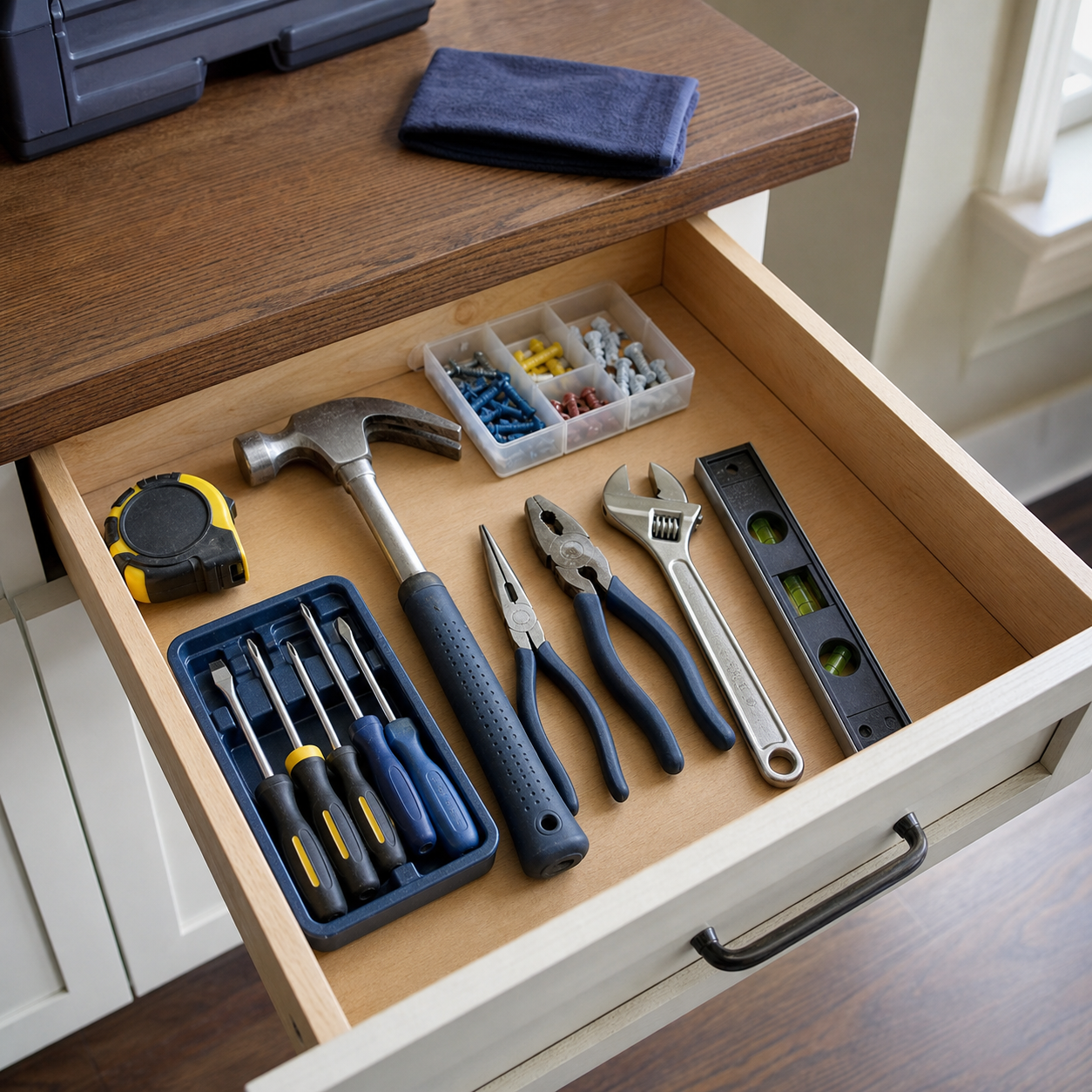
A fall-ready home does not need a garage full of specialty tools. Keep a flashlight or work light with a usable power source, work gloves, a tape measure, a basic screwdriver and plier set, a bucket or shallow tray for a small contained cleanup, absorbent materials, and a way to record model numbers and observations.
Ready.gov recommends a household emergency kit tailored to the people, pets, climate, and local hazards involved. Build that kit around actual needs and local guidance rather than buying duplicate gear for a checklist.
Wait on the tools that change the risk
Exterior ladders, roof-access equipment, drain-clearing machines, electrical test equipment, gas-related tools, HVAC diagnostic tools, and specialized plumbing tools can wait. Owning a tool does not create the training, access, information, or conditions needed to use it safely.
For any product considered later, verify its exact model, package contents, instructions, safety notices, recall status, storage needs, and the task it is intended to solve. Level & Latch does not yet make product-specific recommendations in this guide.
Make storage part of preparedness
Store useful basics in a dry, easy-to-reach location, with sharp tools and batteries handled according to their instructions. After a season, note what you actually used and what you did not. That record is a better reason to add a tool than a generic seasonal shopping list.
When to call a professional
Stop and contact a qualified professional if the work involves electrical wiring, gas, structural damage, roof access, major plumbing changes, mold, lead, asbestos, or another hazardous material.
Related guides
Sources
Free next step
Download the free seasonal maintenance checklist to record observations and follow-up tasks. See the seasonal maintenance routine for more context.
Affiliate disclosure
No affiliate links appear in this guide. If a reviewed recommendation is added, the disclosure will appear beside it.