
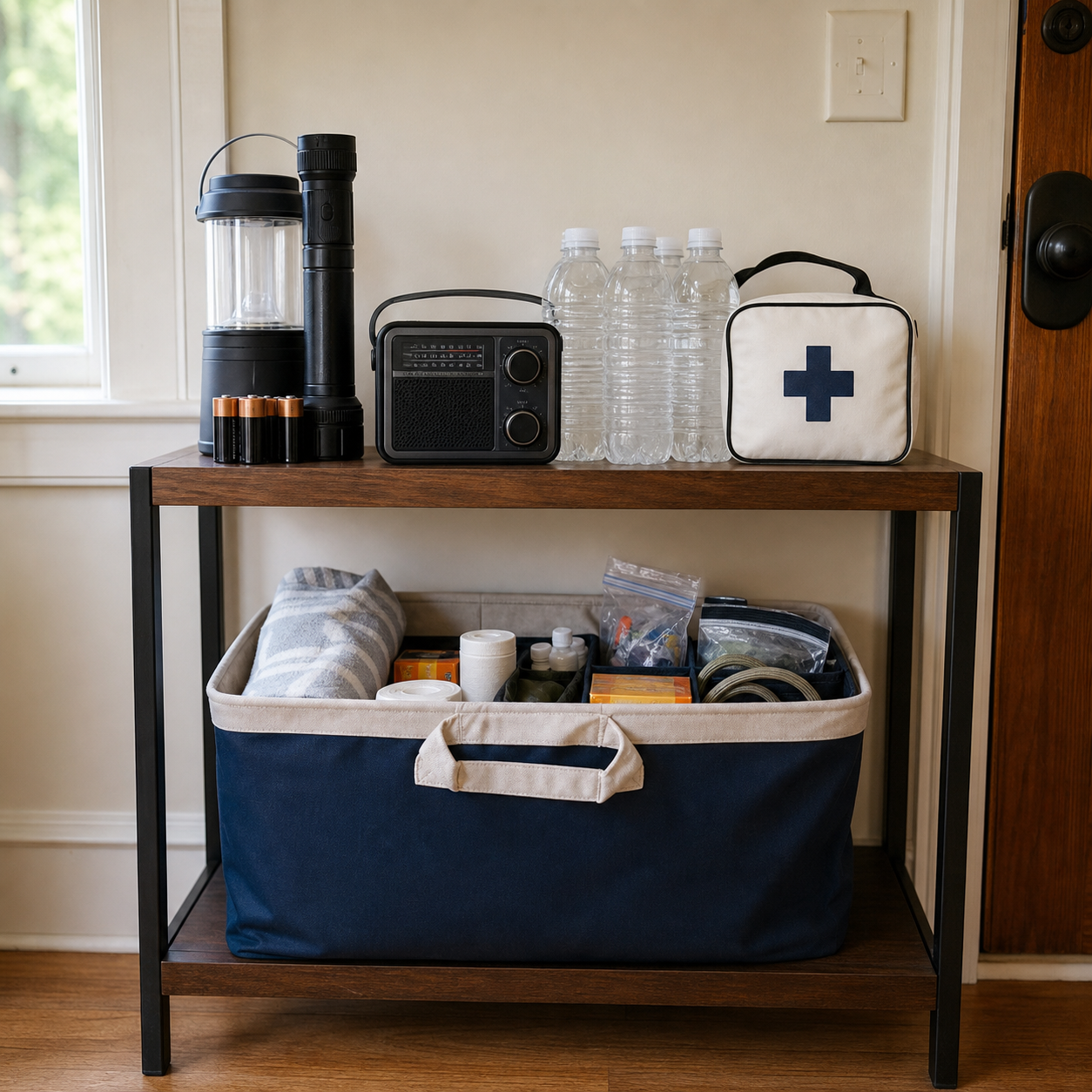
Keep battery-powered lights, phone-charging options, food and water, first aid, warm clothing and bedding, emergency contacts, and local-alert access ready. Never use a generator, grill, camp stove, or gas oven indoors or near openings.

Keep sump backup information in the outage plan
Before an outage, retain the primary pump, backup and controller identities, applicable manuals and service contact if the home has a sump system. A battery-backed controller or an audible unit does not by itself establish that enough water is being removed.
For an alarm or rising water, the sump-response guide has safe observations and an urgent-service call record. Do not enter basement water, add an extension cord or handle batteries to keep the system going. Use qualified help for unsafe access and equipment faults; emergency directions take priority over household checks.
Prepare temperature information before an outage
Keep suitable refrigerator/freezer thermometers and their instructions with the household plan, and know how the appliance’s normal control or display is interpreted. A cold reading after power returns cannot by itself establish the food’s entire storage history. The refrigerator-temperature guide separates routine checks from immediate food-safety decisions and links to FDA’s specific outage guidance. Keep doors closed as much as possible and address uncertain food exposure through that guidance rather than waiting for another equipment check.
Build the basics before the forecast
Ready.gov advises a communications plan, battery-powered lights, and emergency supplies for outages. Include medications, mobility needs, pet supplies, and a household plan for anyone who depends on medical equipment or a temperature-sensitive health need.
Keep the home safer during an outage
Use flashlights, lanterns, and other battery-powered lights. Ready.gov warns that generators, camp stoves, and charcoal grills belong outdoors and at least 20 feet from building openings; gas stoves, ovens, grills, and dryers are not indoor heating tools.
Follow local direction
Pay attention to official emergency information and utility notices. If temperatures make the home unsafe, a household checklist is not a substitute for local shelter, evacuation, medical, or emergency guidance.
When to call a professional
Call emergency services for an immediate danger. For electrical, gas, structural, medical, or hazardous-material concerns, do not rely on a consumer product or a beginner repair attempt—contact qualified help.
Related guides
Sources
Free next step
Download the free seasonal maintenance checklist to record observations and follow-up tasks. See the seasonal maintenance routine for more context.
Affiliate disclosure
No affiliate links appear in this guide. If a reviewed recommendation is added, the disclosure will appear beside it.