
If basement water is rising or a sump system reports high water, keep people out of the wet area and call an urgent sump-pump/plumbing service or the building emergency contact. Do not enter water to reach a plug, breaker, controller or battery. Record the exact message and any safely visible water trend; leave unknown details blank. Pump noise, a ready light or a silenced alarm does not prove that enough water is being removed. Follow emergency directions for immediate danger and the actual installed system instructions for any safe control action.
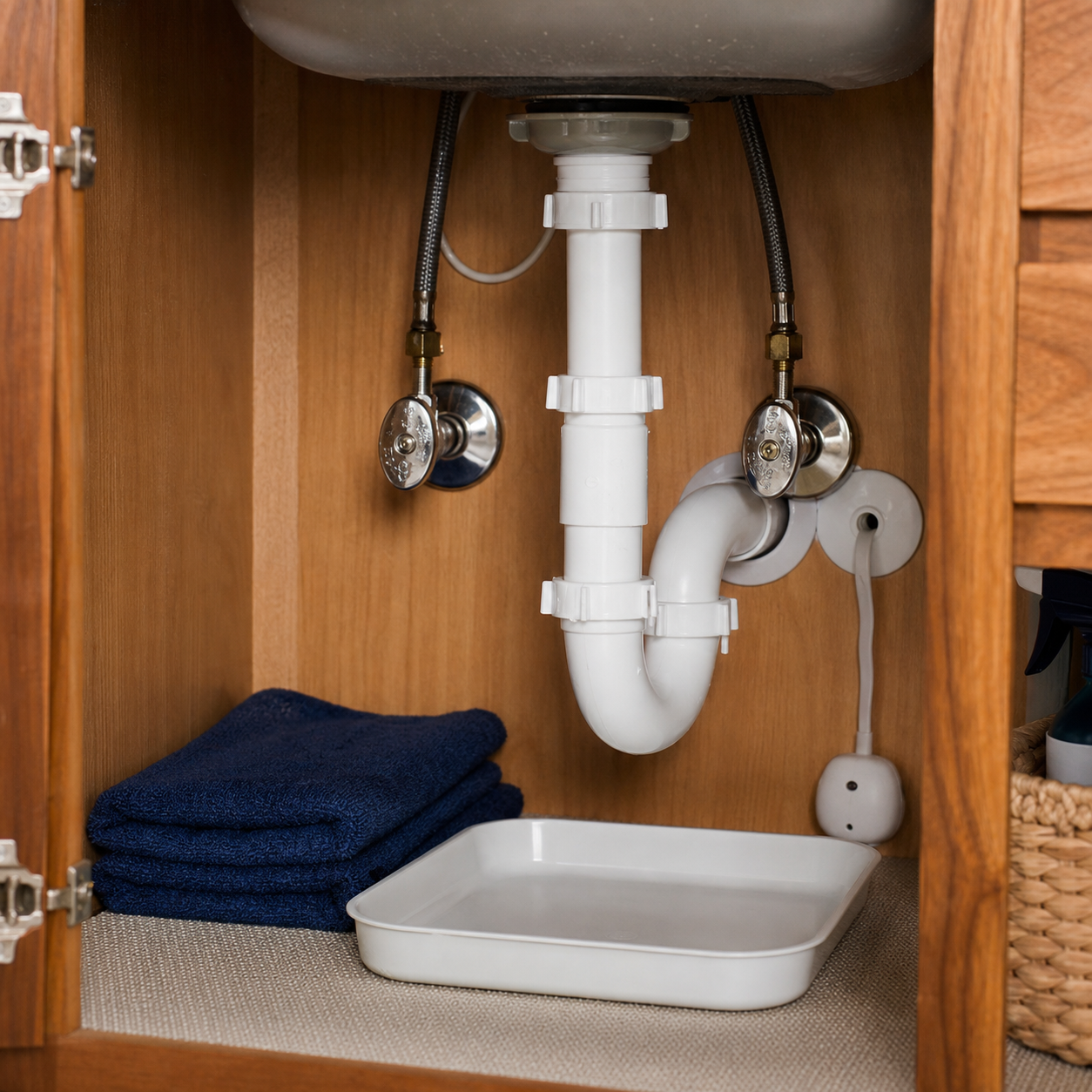

Keep people safe before approaching the equipment
Stay out of basement water and keep children and pets away. Do not enter water to unplug the pump, reset a breaker or inspect its battery. CDC warns against operating power or electrical equipment while standing in water. If electrical isolation cannot be reached safely from a dry location, obtain qualified electrical or emergency help.
Leave and call 911 for immediate danger, fire, injury or unsafe escape conditions. Follow local evacuation or flood instructions. If a carbon monoxide alarm sounds, CPSC advises getting everyone outside to fresh air and calling emergency services; stay out until responders permit return. Do not assume an alarm near a backup battery is false.
Request urgent pump/plumbing help for rising water even if a motor can still be heard. Tell the responder whether access is dry and whether water is reaching electrical equipment or occupied areas. Do not wait for a low-battery indicator or the pump to stop before reporting an ongoing rise.
Report three separate observations
Keep the controller message, pump sound and visible water condition as separate entries. A photograph from an existing safe position can help, but do not remove a cover, lean over a pit or enter water to improve the record. If you cannot see a water level safely, say “not observable.”
Zoeller’s FM3167 troubleshooting describes a backup pump that can keep running with too little battery power to remove enough water. The same document discusses other causes of poor removal. Those possibilities explain why sound alone is insufficient; they do not diagnose your battery, discharge or pump.
| Observation already available | Useful report and limitation |
|---|---|
| Exact alarm, light label and steady/flashing state | Copy the words and pattern; do not translate every beep into “high water.” |
| Which unit seems to be running, if known | Identify primary or backup from records; sound alone does not establish water removal. |
| Visible water level or affected area over time | Record times and rising/falling/unknown only from a safe position. |
| Power interruption already known | Give its start time and current status; do not test an outlet or wet controls. |
| Water near wiring, outlets or equipment | Keep clear and report the electrical-access concern immediately. |
Match the primary pump, backup and controller separately
A primary AC pump, battery backup and separate high-water alarm can be different devices. Use installation records to identify each one and who services it. A familiar pump name on the basin paperwork does not identify every attached controller or backup configuration.
The current Zoeller page for the M53 ProPak with Z Control set to “No” shows SKU 508-0006 and links the March 2026 FM3167 instructions for Aquanot Spin 508/53 or 508/98. Its controller table distinguishes steady and flashing states, and its silence/reset and test functions differ. This is a document example; do not apply its buttons, colors or test routine to another system.
Send service the full model/controller information already available. Use only the actual applicable instructions for any safe ordinary control action. Do not clear messages, factory-reset controls or unplug equipment merely to quiet it before the condition has been assessed.
Leave pit, float and battery work to the right service
Do not reach into the pit, lift a float, clear an intake, drill a hole, bypass a switch or disconnect piping during this response. Do not open a battery box, swap a fuse or improvise a power connection in a wet area. Zoeller’s selected manual prohibits extension cords and assigns pump/electrical service to appropriately qualified help.
An installation or maintenance test can involve steps that are unsuitable during an active water emergency. Ask the service professional to establish safe access, the actual fault and the appropriate check after repair. Do not add water to a sump that is already struggling in order to demonstrate the problem.
Keep groundwater, supply leaks and sewage responses distinct
Tell the responder whether the installation is identified as a groundwater sump or a sewage/ejector system; “unknown” is useful information too. Do not treat every covered pit as the same equipment. The manufacturer’s groundwater/backup pumping limits do not authorize pumping sewage or an unknown liquid.
A household supply shutoff controls incoming supply water; do not assume it stops rain-related groundwater entering a basement. If a broken supply pipe is also suspected, use the existing leak/shutoff response and qualified help for that separate source. Avoid guessing at valves or discharge routes.
If wastewater is returning through a toilet or drain, use the dedicated wastewater-backup contact plan. For contaminated water, EPA recommends a professional experienced in that damage. Do not judge water as clean from its appearance or start ordinary drying equipment before safety and contamination have been assessed.
Copy this private urgent-service note
Call first for rising water or an unsafe area. Fill in only facts already available safely; the household does not need to complete every blank before requesting help.
- Affected area, immediate hazard and safe access: ___.
- First alarm/time and exact words or light label: ___.
- Steady or flashing pattern already visible: ___.
- Primary pump, backup and controller models from records: ___.
- Which unit is running, stopped or unknown: ___.
- Safely visible water trend and observation times, or not observable: ___.
- Known power interruption and any automatic backup activity: ___.
- Groundwater sump, sewage system or uncertain: ___.
- Controls already used; who used them and when: ___.
- Installer/building/service contact, case number and next update: ___.
Example: the backup can be heard but water keeps rising
Fictional example: during a power interruption, a household hears its documented backup unit and sees water spreading toward the basement doorway from a dry, safe position. They call urgent pump service and report the outage time, exact visible message and changing affected area.
They do not conclude “the backup is working” from the noise or enter the basement to unplug it. Their record says “unit audible; water still spreading; cause unknown.” If the water level cannot be safely observed, they report that limit. The technician handles diagnosis and any safe equipment intervention. No battery runtime or repair outcome is promised by this example.
After the level falls, close the remaining jobs
Ask who will verify the primary pump, backup, alarm/control and discharge arrangement under the actual system instructions. Record the source of the problem, completed work and any limits on returning to normal use. A quiet alarm or one lower level is not a complete service record.
Address wet materials separately. EPA advises prompt water-problem repair and drying within 24–48 hours to help prevent mold; this is not a waiting period or proof that concealed materials are dry. Use experienced help for significant damage, sewage or uncertain hidden wet areas. Track equipment and material follow-up on the free homeowner checklist.
Before the next storm or outage, keep the correct manuals and service contacts with the household plan. The existing heavy-rain walkthrough and winter-outage guide help with broader preparation. Neither replaces urgent service when water is rising.
A sewage-pumping basin needs its own wastewater-use restriction
If existing records identify a sewage ejector or grinder system, pause fixtures and appliances feeding it and obtain urgent advice through its actual pump/plumbing or sewer-provider route. If the connections are unknown, pause household drain-producing activities while seeking prompt guidance. A groundwater sump’s response does not identify who maintains a sewage station or authorize pumping its contents.
The sewage-ejector alarm or leak guide adds a service-request table, a fictional alarm-before-backup example and separate system/pump/alarm documentation questions. Keep covers closed and stay clear of escaped water. A quiet alarm, audible motor or lowered level does not establish permission to resume use, and uncertain electrical/gas access needs appropriate safety help first.
When to call a professional
Stop and contact a qualified plumber or other appropriate professional if water is actively spreading, you cannot safely find the shutoff, the leak involves a wall or ceiling, or a repair would require changing plumbing.
Related guides
Sources
- Zoeller: Aquanot 508 Backup — current M53 ProPak/no-Z-Control configuration and resources
- Zoeller: Aquanot Spin 508/53 and 508/98, FM3167, March 2026, 155923-F (PDF; safety, troubleshooting and controller functions)
- CDC: Reentering Your Flooded Home — electrical access and water hazards
- CPSC: Carbon Monoxide Questions and Answers — alarm response
- EPA: A Brief Guide to Mold, Moisture and Your Home — contamination, source repair and drying
- Sammamish Plateau Water: Grinder Pump Issues — local alarm, water-use and service response
- Mid-Ohio Water & Sewer District: Grinder Pump Info — local shared-system and alarm response
- Liberty Pumps: Pro380-Series — current system resources and support
- Liberty Pumps: Simplex Sewage/Grinder Systems, 7225000L, ©2023 — bounded safety, component and service example (PDF)
- Liberty Pumps: LE50-Series — actual separately linked pump manual and model distinctions
- Liberty Pumps: LE/LEH pump instructions, 7034000N, ©2022 — safety and qualified service limits (PDF)
- Liberty Pumps: ALM-2W — actual alarm-variant documentation selector
- Liberty Pumps: packaged ALM-2W User Guide 7599000B — alarm indication is separate from pump repair (PDF)
- Liberty Pumps: Repairs & Replacement Parts — purchase-source, distributor and manufacturer assistance
- Wisconsin Department of Health Services: Air — Sewer Gas; hazardous accumulation and ignition boundaries
- EPA: Mold Cleanup in Your Home — experienced help for sewage-contaminated damage
- ESFI: Water-Damaged Electrical Equipment — evaluation before restoring power
- CPSC: current recalls and product-safety warnings
Free next step
Download the free seasonal maintenance checklist to record observations and follow-up tasks. See the seasonal maintenance routine for more context.
Affiliate disclosure
No affiliate links appear in this guide. If a reviewed recommendation is added, the disclosure will appear beside it.