
Stop using fixtures and appliances that send wastewater to the affected sewage-pumping system, and request urgent help through its established service or sewer-provider route. If the connected fixtures are unknown, pause household activities that send water down drains while obtaining prompt guidance. Keep people away from escaped water and leave basin covers, floats, plugs, panels and valves alone. Do not test-flush, bypass a switch or treat a silenced alarm as a repair. Unsafe electrical access or suspected hazardous gas needs emergency or qualified safety help first.
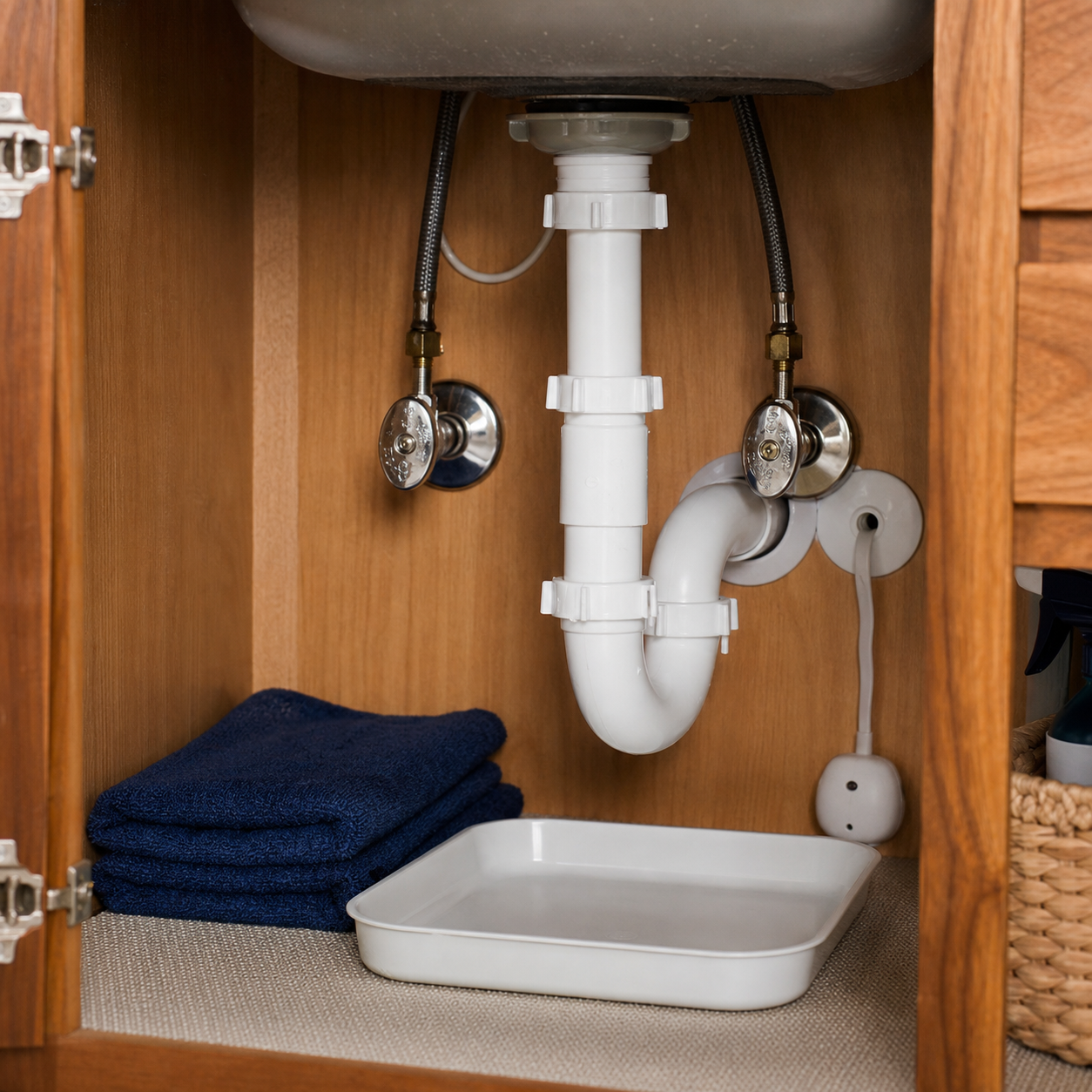

Stop sending more wastewater to the affected system
Tell the household to pause toilet flushing, showers, laundry, dishwashing and other drain use feeding the affected system. Stop an already running appliance only through its ordinary controls when safely accessible from a dry position. Do not enter wastewater to reach it. If you do not know which drains connect, pause household drain-producing activities and ask the responsible provider to define the restriction promptly.
Sammamish Plateau Water tells its grinder-pump customers not to flush or use water during an alarm and to call its service route. Mid-Ohio’s instructions likewise stop water use and require a service call. These are local examples of limiting incoming wastewater; their phone numbers, ownership arrangements and control instructions do not apply nationwide.
Do not flush again, run a sink or add water to see whether a pump starts. An alarm can precede a visible backup. Report the alarm promptly even if the floor is still dry, and report escaped water even when no alarm is sounding. Ask who can respond now and what the household should do while waiting.
Pausing wastewater use is different from shutting off an incoming water supply, turning off the pump or closing a sewer valve. Do not guess at those controls. Stored wastewater and flows from other connections may still need attention. If the restriction will last, ask the building/service contact about safe household sanitation arrangements rather than resuming use because the alarm became quiet.
Keep the cover closed and the wet area clear
Keep children, pets and others away from the basin, escaped water and wet electrical equipment. Do not step on a cover, loosen its bolts, open an inspection port, reach for a float or look inside with a phone. A small access cover can still be part of a sealed wastewater system. Do not climb into any pump basin or tank.
Liberty’s sewage-system safety instructions identify electrical, wastewater and gas hazards and assign installation and maintenance to qualified personnel. Its LE/LEH pump manual expressly prohibits entry into a used basin. A maintenance drawing or an instruction that a part is accessible does not make this an appropriate active-leak task for a homeowner.
For suspected dangerous gas accumulation in an enclosed area, leave and call the fire department from safety. Wisconsin’s health guidance warns against ignition sources and explains that smell is not a reliable safety test at high concentrations. Do not follow an odor toward a basin, operate switches, open a cover or attempt to ventilate the equipment as an investigation. Seek emergency medical help for a person overcome or severely ill.
CDC warns against using electrical equipment or switching power while standing in water. Keep clear of wet plugs, receptacles and panels; obtain urgent qualified help for unsafe isolation. Do not reset protection, unplug a pump, connect an extension cord or choose a generator connection. The provider must resolve safe equipment control for the actual installation.
Choose the service route from records, not the shape of the pit
An indoor sewage ejector may serve below-grade fixtures; a property’s grinder station may be part of a pressure-sewer arrangement. A groundwater sump, septic alarm and sewage-pumping package are not interchangeable. Use existing inspection, installation or service records to identify what is installed and who maintains it. “Unknown” is better than opening the cover to identify a pump.
Mid-Ohio describes some shared grinder units with controls at another property. Other homes have privately serviced equipment. Ask the building contact or actual sewer provider whether it maintains this station and who should attend. Do not enter a neighbor’s property, common equipment room or locked service area to look for controls.
Use this original call table with observations already available safely. It identifies the next request without diagnosing a float, pump, blockage or public sewer fault.
| Already known condition | Contact or question to prioritize |
|---|---|
| Sewage-system alarm, but no visible overflow | Pause connected wastewater use and call the established pump/service or sewer-provider route now; do not test-flush. |
| Water escaping at the basin, pipe or surrounding floor | Keep clear and request urgent sewage-pump/plumbing help. Report the location without opening or tightening anything. |
| Shared or utility-maintained grinder station in the records | Notify the responsible building/sewer emergency contact; ask who attends and whether other connected users need coordination. |
| Wastewater returning through a toilet, shower or floor drain | Use the drain-backup contact plan as well; have plumbing and the actual sewer/septic provider coordinate the source investigation. |
| Power interruption or pump sounds already noticed | Give the known timing, sound and exact message separately. Ask for actual-system instructions without a reset, bypass or trial run. |
| Wet electrics, unsafe access or possible gas danger | Keep away; obtain appropriate emergency/qualified safety help before equipment inspection. |
| System identity or connected fixtures uncertain | Say unknown. Use retained records and ask who establishes identity, safe restrictions and service responsibility. |
Identify the basin, pump and alarm separately
The currently linked Pro380 system instructions, 7225000L, show different inlet, discharge, vent and cover arrangements and refer operation and troubleshooting to the supplied pump, control and alarm instructions. That is a reason to collect the complete equipment record, not permission to turn a nearby valve or use a diagram to open the basin.
Liberty’s LE50 resource page separately links LE/LEH pump manual 7034000N. The ALM-2W resource page has a decision sheet for two alarm versions; the packaged version links User Guide 7599000B. Do not select a procedure merely because the same alarm name appears on a search result. These are bounded documentation examples, not identification of your installed equipment.
Give service the maker, full models, existing case number and safe-access limitations already known. Ask whether there are separate controllers, sensors or backups and which current instructions apply. Keep full serial numbers and property/access details private. Do not approach a wet label or remove a housing for a better photo.
Use the recall guide and official manufacturer/CPSC sources for any applicable product notice. Match all required identifiers with support; no search result, missing search match or current manual provides general safety clearance. A replacement-part order or remedy registration is separate from completed work.
A quiet alarm or running motor does not close the problem
Record the exact words or labels already visible, whether a light was steady or flashing, and whether water was escaping. Keep those facts separate from pump sound. Do not translate every beep into the same fault or infer that a running motor is removing wastewater effectively.
The packaged ALM-2W guide distinguishes silencing its buzzer from clearing the sensed condition. Its test and silence functions depend on the current state. Mid-Ohio’s local instructions require speaking with its representative before disabling an alarm. This guide therefore supplies no universal button sequence, light-color diagnosis or permission to disconnect an alarm.
Do not lift a float, bypass its switch, plug a motor directly into an outlet, open a vent, clear an intake or alter discharge piping to make the pump run. Do not add drain chemicals or try to plug an active overflow. Report any chemical, control action or attempted work already used so responders can account for it.
Ask the responsible provider what established the source, what was repaired and how the complete system was verified under its applicable instructions. A falling level, return of power or cleared notification does not by itself establish safe normal wastewater use. Obtain explicit instructions for resuming use and what to do if the condition returns.
Arrange contamination and electrical follow-up alongside repair
Treat escaped sewage as a separate restoration problem. Do not judge cleanliness from color, lack of visible solids or a floor that looks dry. EPA recommends experienced professional help for sewage-contaminated damage. Keep traffic out and arrange prompt assessment of affected floors, wall bases, contents and concealed areas.
Do not start a fan, wet vacuum or dehumidifier in the affected area before electrical safety and contamination controls are established. Ask restoration help which materials need cleaning, removal or further assessment. This guide provides no disinfectant mixture, demolition or household sewage-pumping procedure.
Where electrical equipment was exposed, obtain qualified evaluation and specific return-to-use instructions. ESFI warns that drying alone does not establish safety. Pump service, household electrical assessment, safe plumbing use and material recovery may have different responsible providers; record each open action.
Keep service findings, completed work, restrictions and the next update together. The repair-estimate guide helps distinguish access, equipment and restoration scope. Use the free homeowner checklist for follow-up tasks while retaining detailed records privately. Source correction and cleanup both need completion; silencing the alarm completes neither.
Example: a basement alarm before any drain backs up
Fictional planning example: Marcus hears a sewage-system alarm in the basement after laundry was used. From an existing dry position he sees a labeled alarm but cannot safely observe the basin or identify which fixtures connect. There is no visible drain backup.
He tells the household to pause activities that send water down drains and calls the installer’s service route using retained records. He reports “alarm sounding; water level not observable; connected fixtures uncertain,” rather than adding water to test the pump. He asks who will attend and what restrictions apply while waiting.
If the provider finds a shared or utility-maintained arrangement, the responsible contacts coordinate the response. If escaped water is found, contamination assessment is added. A later quiet alarm does not cancel the call or establish permission to resume laundry. This illustrates a reporting decision, not a tested fault or promised repair outcome.
Private notes for the urgent call and completion record
Call first. Use only information already available from safety; a worksheet or photo must not delay help. Keep exact identifiers, addresses, access arrangements and service documents private.
- First alarm or escaped-water location and time: ___.
- Exact message, label and known light pattern; no test: ___.
- Wet electrical, gas, structural, contamination or access concern: ___.
- Wastewater-producing activities paused; connected fixtures known or unknown: ___.
- Known power interruption, pump sound and water observation recorded separately: ___.
- System/pump/alarm identity and responsible service from existing records: ___.
- Provider, sewer/building and restoration contacts; instructions and next update: ___.
- Confirmed source, completed work, provider verification and permission/restrictions for normal use: ___.
When to call a professional
Leave and call 911 from safety for fire, sparking, severe illness, a person overcome, an unsafe escape route or suspected dangerous gas accumulation in an enclosed space. Do not enter a basin or attempt a rescue inside it. For an alarm, escaped wastewater or continuing rise without immediate danger, obtain urgent sewage-pump/plumbing or responsible sewer-service help and notify building management where applicable. Arrange experienced contaminated-water restoration separately from equipment repair.
Related guides
Sources
- Sammamish Plateau Water: Grinder Pump Issues — local alarm, water-use and service response
- Mid-Ohio Water & Sewer District: Grinder Pump Info — local shared-system and alarm response
- Liberty Pumps: Pro380-Series — current system resources and support
- Liberty Pumps: Simplex Sewage/Grinder Systems, 7225000L, ©2023 — bounded safety, component and service example (PDF)
- Liberty Pumps: LE50-Series — actual separately linked pump manual and model distinctions
- Liberty Pumps: LE/LEH pump instructions, 7034000N, ©2022 — safety and qualified service limits (PDF)
- Liberty Pumps: ALM-2W — actual alarm-variant documentation selector
- Liberty Pumps: packaged ALM-2W User Guide 7599000B — alarm indication is separate from pump repair (PDF)
- Liberty Pumps: Repairs & Replacement Parts — purchase-source, distributor and manufacturer assistance
- Wisconsin Department of Health Services: Air — Sewer Gas; hazardous accumulation and ignition boundaries
- CDC: Reentering Your Flooded Home — standing-water electrical boundary
- EPA: Mold Cleanup in Your Home — experienced help for sewage-contaminated damage
- ESFI: Water-Damaged Electrical Equipment — evaluation before restoring power
- CPSC: current recalls and product-safety warnings
Free next step
Download the free seasonal maintenance checklist to record observations and follow-up tasks. See the seasonal maintenance routine for more context.
Affiliate disclosure
No affiliate links appear in this guide. If a reviewed recommendation is added, the disclosure will appear beside it.