
Stop flushing and stop using plumbing that drains to the affected sewer system while arranging urgent help. Keep children and pets away from wastewater. Do not step into water or touch wet electrical equipment. Contact a qualified plumber and follow your local sewer agency’s emergency reporting instructions; notify building management for shared plumbing. For septic systems, contact a qualified septic service and the local health department as appropriate. Arrange experienced contaminated-water cleanup. A falling water level does not establish a repair.
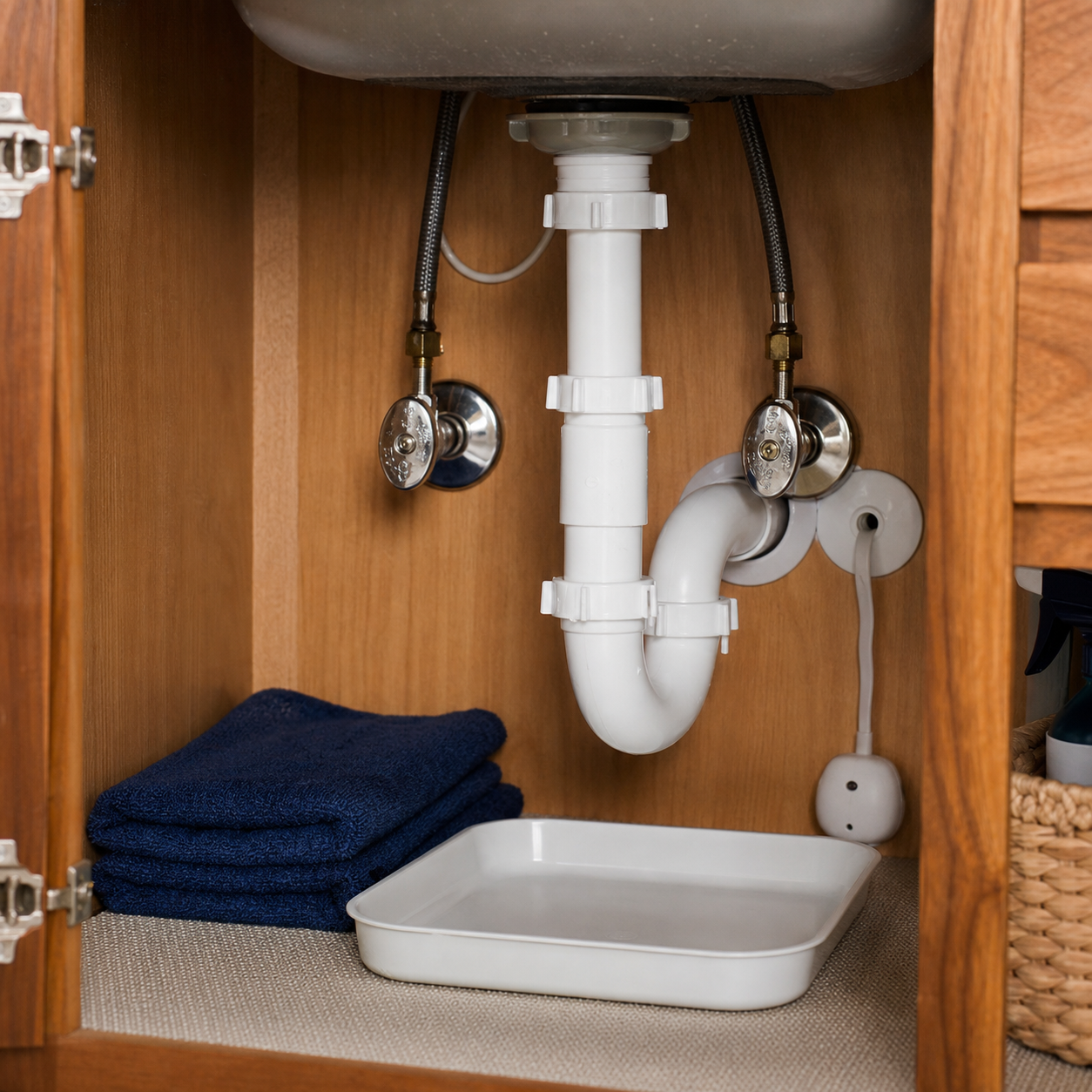

Water beside a toilet can need a different plumbing investigation
Water escaping around a fixture is a separate observation from wastewater coming up through a drain. If water was noticed beside the toilet or after recent installation, stop using that fixture and report the visible location and timing without another test flush. The toilet floor-water guide provides an installer/plumber call record and model-specific source limits.
If wastewater is actually returning through the bowl or other drains, keep using this backup response and its sewer/septic contact plan. A dry-looking base after water recedes does not close either investigation.
Do these things before investigating a cause
King County’s response card says to stay out of flooded areas and stop using plumbing that drains to the sewer system. Tell the household to pause toilet use, showers, laundry and dishwashing while the backup is being addressed. Do not run another fixture or flush again to see whether the problem repeats.
Keep people and pets out of the affected area. For immediate danger, injury, fire or unsafe escape conditions, leave and call 911. CDC warns against operating electrical equipment or power controls while standing in water. Do not cross wastewater to reach a breaker, plug, pump or appliance. Obtain qualified electrical or emergency help when safe isolation is uncertain.
Do not try to plug a drain that is bringing sewage up. Seattle’s guidance specifically warns against trying to stop that returning flow. Do not open a sewer cleanout, lift a manhole, use drain-clearing equipment or pour chemicals into the problem as part of this response.
Describe what you can see without a test flush
Wastewater coming up through a toilet, shower or floor drain needs an immediate response. For a separate, quiet tank-to-bowl leak, the silent-toilet-leak guide explains a dye check for a suitable tank. Do not perform that check during an active backup.
Report which opening first released water, when it began, whether it is continuing and which other symptoms were already observed. One affected fixture does not establish where a blockage is, and several affected drains do not prove that the public main is responsible. A professional investigation determines the source.
Do not assume that closing the house’s incoming water supply prevents sewage returning through a drain. Describe any known controls already used to the plumber. Do not experiment with shared supplies, sewer valves or unfamiliar equipment.
| What you already know | Next contact or request |
|---|---|
| Wastewater is entering a home connected to a public sewer | Qualified plumber and the local sewer agency’s emergency route; ask how they coordinate the investigation. |
| The home uses a septic system | Qualified septic service or plumber, with local health-department guidance for the sewage response. |
| Plumbing or the affected area is shared or building-managed | Building emergency contact promptly; identify who arranges plumbing and cleanup. |
| Water is near electrical equipment or safe access is uncertain | Keep clear and arrange appropriate emergency or electrical help. |
| Wastewater reached flooring, walls or contents | Experienced contaminated-water restoration assessment alongside source repair. |
Use your local sewer procedure, not another city’s phone number
Seattle Public Utilities tells residents to call a plumber and then contact the utility if the contractor suspects its mainline or connection. Raleigh Water provides a reporting route for backups and distinguishes private service blockages from public-main problems. Those are local examples, not one national call order or a promise about who pays.
Use the current emergency contact on your own sewer provider’s official website or bill. Ask: “Do you need to inspect the public system now, and should the plumber call you directly?” Keep each case number and the instructions received. For a septic property, use the septic-service and local-health route instead of assuming a municipal sewer crew serves it.
If you rent or live in a managed building, notify the emergency contact immediately and describe the affected location. Do not enter another unit or open common service equipment to investigate. Leave responsibility and access arrangements with the authorized contacts.
Treat cleanup as a separate urgent job
Sewage can contaminate people, belongings and building materials. Do not judge whether it is safe from its color or from a lack of visible solids. Connecticut’s public-health fact sheet advises keeping children and pets away, avoiding direct contact, contacting the relevant sewer or health authority and arranging restoration help.
EPA recommends a professional experienced with sewage or contaminated-water damage. Arrange that assessment promptly alongside source repair. Its 24–48-hour drying advice for water-damaged materials is not permission to leave sewage in place or proof that a wiped surface is safe.
Do not start a fan, wet vacuum or dehumidifier in the affected area before electrical safety and contamination controls are established. Keep traffic out so wet shoes and tools do not carry contamination elsewhere. Ask the restoration professional what must be cleaned, removed or assessed, including concealed materials. This guide supplies no bleach mixture, demolition or DIY sewage-cleaning procedure.
Copy this private call record
Make the urgent calls first. Fill in only information already available from a safe location. Photographs are optional; a picture is not worth entering wastewater.
- Location and first observed opening: ___.
- Time noticed; continuing, slowing or uncertain: ___.
- Other affected fixtures or outside overflow already observed without testing: ___.
- Public sewer, septic or unknown; provider/building contact: ___.
- Immediate access, electrical or vulnerable-occupant concern: ___.
- Plumbing use stopped and household notified at: ___.
- Plumber/septic service, utility and restoration case numbers: ___.
- Any chemicals or attempted work already used — tell responders: ___.
- Instructions received, responsible contact and next update time: ___.
Example: a shower drain backs up after toilet use
Fictional example: someone notices dirty water emerging at the downstairs shower after a toilet was used. The household stops using the affected sewer-connected plumbing and keeps people away. From a dry location, they call the plumber and use their sewer agency’s official emergency instructions. They report the sequence already observed rather than flushing upstairs to reproduce it.
The note says “source unconfirmed,” with the plumber and utility case numbers. Even if the shower water recedes before help arrives, they keep the investigation open and ask when normal use can safely resume. They arrange contaminated-material assessment separately. This example does not diagnose a blocked main, establish legal responsibility or guarantee insurance coverage.
Before calling the incident finished
Ask the responding professionals to distinguish source repair, permission to resume plumbing use, electrical clearance where relevant, and cleanup of affected materials. Record what was actually completed and who owns any remaining task.
Keep available safe photos, service reports and invoices together. Ask the insurer or property manager how to document damage without delaying urgent safety or mitigation work. Payment and coverage depend on the actual policy and circumstances. Use the free homeowner checklist to track unresolved tasks; a stopped overflow, empty floor drain or silent alarm is not a completion record.
A sewage-pump alarm can need action before a drain backs up
If a sewage ejector or grinder system alarms, do not wait for a toilet or drain to overflow before requesting urgent help. Pause wastewater-producing activities feeding it and use the actual service, sewer or building route to establish safe restrictions. Do not flush to compare symptoms or open a covered basin to confirm a water level.
The sewage-ejector response guide distinguishes a private pump package from a shared or utility-maintained station and asks for system, pump and alarm records separately. Use its call table when identity or responsibility is uncertain. If wastewater is also returning through drains, retain this backup guide’s coordinated sewer/septic and contaminated-material response; a silent alarm does not close either job.
When to call a professional
Stop and contact a qualified plumber or other appropriate professional if water is actively spreading, you cannot safely find the shutoff, the leak involves a wall or ceiling, or a repair would require changing plumbing.
Related guides
Sources
- American Standard FAQ14: Newly installed toilet leaking around the base when flushed
- King County: Know Your Sewer System, Know Who To Call — response and contact card (PDF)
- Seattle Public Utilities: Side Sewer Backups — response, exposure and local utility role
- Raleigh Water: Sanitary Sewer Overflows — reporting and public/private sewer responsibilities
- Connecticut Department of Public Health: Sewage Back-Ups — immediate actions and professional assessment (PDF, November 2008)
- CDC: Reentering Your Flooded Home — safe electrical access
- EPA: A Brief Guide to Mold, Moisture and Your Home — contaminated-water and moisture response
- Sammamish Plateau Water: Grinder Pump Issues — local alarm, water-use and service response
- Mid-Ohio Water & Sewer District: Grinder Pump Info — local shared-system and alarm response
- Liberty Pumps: Pro380-Series — current system resources and support
- Liberty Pumps: Simplex Sewage/Grinder Systems, 7225000L, ©2023 — bounded safety, component and service example (PDF)
- Liberty Pumps: LE50-Series — actual separately linked pump manual and model distinctions
- Liberty Pumps: LE/LEH pump instructions, 7034000N, ©2022 — safety and qualified service limits (PDF)
- Liberty Pumps: ALM-2W — actual alarm-variant documentation selector
- Liberty Pumps: packaged ALM-2W User Guide 7599000B — alarm indication is separate from pump repair (PDF)
- Liberty Pumps: Repairs & Replacement Parts — purchase-source, distributor and manufacturer assistance
- Wisconsin Department of Health Services: Air — Sewer Gas; hazardous accumulation and ignition boundaries
- EPA: Mold Cleanup in Your Home — experienced help for sewage-contaminated damage
- ESFI: Water-Damaged Electrical Equipment — evaluation before restoring power
- CPSC: current recalls and product-safety warnings
Free next step
Download the free seasonal maintenance checklist to record observations and follow-up tasks. See the seasonal maintenance routine for more context.
Affiliate disclosure
No affiliate links appear in this guide. If a reviewed recommendation is added, the disclosure will appear beside it.