
To turn off a water leak alarm safely, keep people away from standing water, confirm the alert location only if the area is safe, and follow the exact device instructions to silence or reset it. If water is spreading, near electricity, or unexplained, use qualified help instead of forcing a reset.
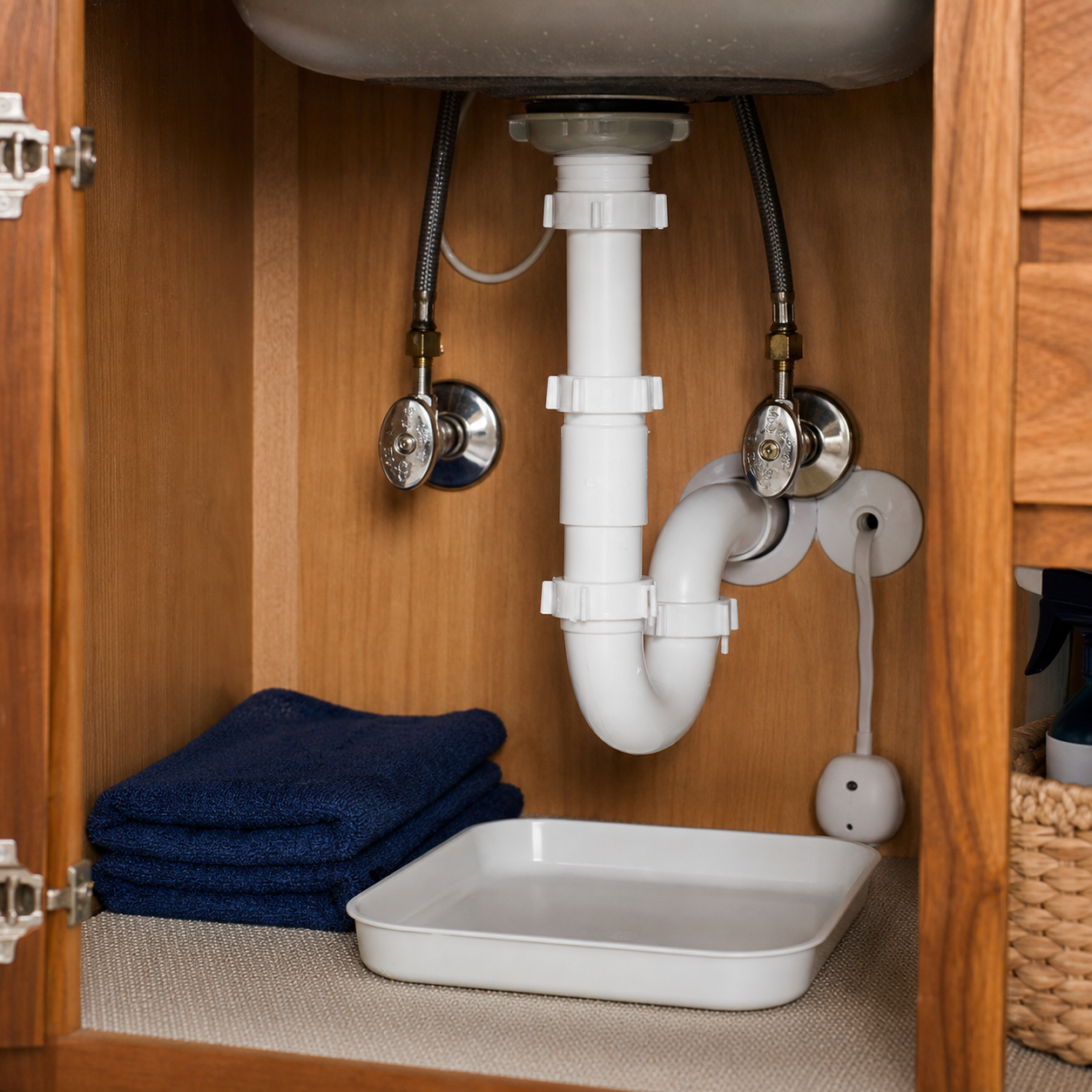
First, make the area safe
Do not walk into standing water near outlets, appliances, cords, or electrical equipment. Keep children and pets away from the area. If there is an immediate electrical hazard, fire risk, or a large uncontrolled release of water, use local emergency guidance and qualified help rather than trying to troubleshoot the source yourself.
If the area is dry, the alert may be a low battery, a moved sensor, condensation, a spill, or an issue with the device. Follow the device manufacturer’s instructions before resetting or silencing it.
If you can see a small, contained leak
If it is safe, identify whether water is coming from a fixture, an appliance connection, or a cabinet floor. Catch or absorb only the water you can reach without moving appliances, opening walls, or touching electrical equipment. Take a photo and note the time; that information can help a plumber or insurer understand what happened.
If you already know your main water shutoff and it is accessible and safe to operate, turning off the home water supply may limit ongoing damage. Do not force an unfamiliar valve or treat a hard-to-reach shutoff as a beginner repair task.
After the immediate response
EPA recommends regular leak checks and notes that a water-meter reading that changes during a period with no water use can indicate a household leak. That can help with a suspected hidden leak, but it does not identify the source or replace professional diagnosis.
Before returning the alarm to service, dry the sensor area as directed, check the device’s battery or connection, and record what caused the alert if known. If the source is unknown, recurring, behind a finished surface, or connected to an appliance or water heater, contact a qualified professional.
When to call a professional
Stop and contact a qualified plumber or other appropriate professional if water is actively spreading, you cannot safely find the shutoff, the leak involves a wall or ceiling, or a repair would require changing plumbing.
Related guides
Sources
Affiliate disclosure
No affiliate links appear in this guide. If a reviewed recommendation is added, the disclosure will appear beside it.