
For a first detector, start with a simple moisture sensor at a high-risk location and confirm how it alerts you, how it is powered, and what happens if internet or power is unavailable. A detector cannot identify every leak or replace professional diagnosis.
Tested elsewhere
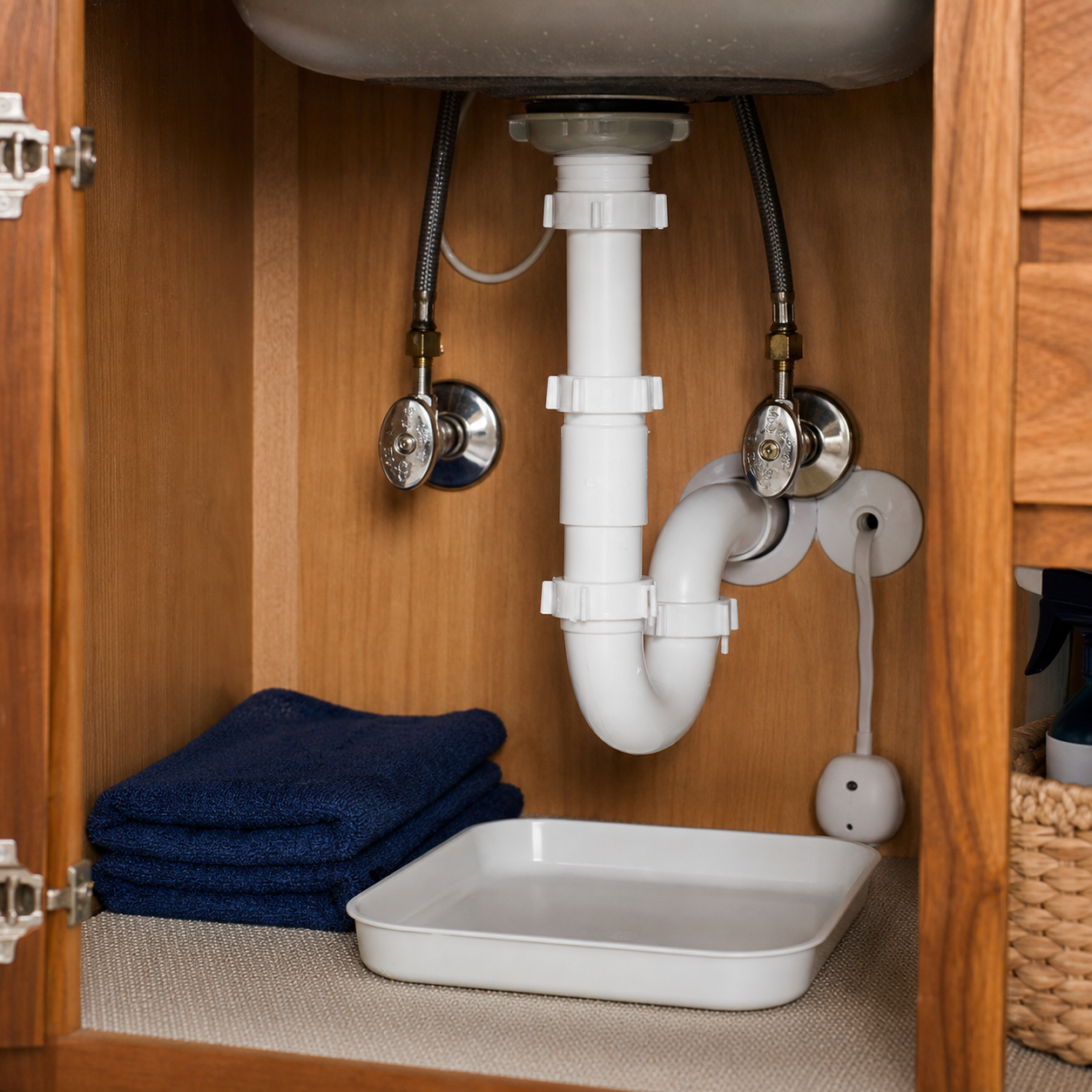
Moen Flo Detector (formerly Moen Smart Water / Smart Leak Detector), model 920-004
A sensible first Wi-Fi detector for a homeowner who wants a small, app-connected sensor near a water heater, washer, or under-sink cabinet. Recent hands-on reviews from WIRED and Tom’s Guide both selected it among their leading standalone sensors; Tom’s Guide also measured its alert and evaluated setup. Moen’s documentation confirms app pairing, local Wi-Fi, and location naming during setup.
Know before buying: It alerts but does not shut off the home’s water on its own. It depends on Wi-Fi, app setup, and a reachable sensor location; Tom’s Guide found its built-in alarm relatively quiet. Do not confuse it with Moen’s separately installed whole-home shutoff products. A 2023 CPSC recall concerned an optional lithium-ion battery backup for a whole-home Flo monitor—not this detector—but check current recalls before buying.
Level & Latch has not physically tested this product. This is a research-backed recommendation based on independently reported hands-on testing, manufacturer documentation, and a current safety check. There are no affiliate links in this guide.
Tested elsewhere
Govee WiFi Water Leak Detector 3-Pack with Gateway, models H5040 + H5054
A research-backed alternative for a homeowner who wants to cover several water-prone locations with one hub and receive local alarms plus remote app/email alerts. WIRED tested this Govee three-pack with drips, pooled water, and flooding; it found the sensors quick to install and effective at detecting water, with a loud local siren. The exact current listing identifies the H5040 gateway and H5054 sensors.
Know before buying: It does not shut off water, needs a gateway outlet and 2.4 GHz Wi-Fi, has no smart-home integration, and does not offer a sensing cable. WIRED also reported that its push alerts did not reliably reach a phone on mobile data in testing, although email did. Set up and test the alert path at home; do not assume every phone notification will arrive in every condition.
Level & Latch has not physically tested this product. This is a limited, non-affiliate recommendation based on WIRED’s exact-product hands-on testing, current model documentation, and a current CPSC recall-source review. There are no affiliate links in this guide.
Know the two broad categories
Moisture sensors alert when water reaches their contacts. Flow-monitoring devices look for unusual water use. EPA WaterSense describes these as different types of leak-detection technology, so compare them by the problem they can actually observe rather than treating every device as the same.
A simple sensor can be a practical first step where a leak may collect on the floor. It may not notice a leak inside a wall, above the sensor, or in a different drainage path.
Questions to answer before buying
Identify the exact location, whether an audible alert is enough, who needs a remote alert, and whether the location has dependable connectivity. Read the manufacturer documentation for placement, battery or power requirements, maintenance, app support, and any subscription terms.
Do not rely on claims that a device prevents damage. An alert only helps if someone can respond safely and promptly.
- Check the exact model's instructions and support period.
- Record the installation date and test schedule.
- Keep the main water-shutoff location documented separately.
Product research comes before a recommendation
A recommendation should name the exact model, describe who it fits, acknowledge meaningful limits, and distinguish independent testing from manufacturer claims. We do not treat a product listing, star rating, or commission as testing evidence.
When to call a professional
Stop and contact a qualified plumber or other appropriate professional if water is actively spreading, you cannot safely find the shutoff, the leak involves a wall or ceiling, or a repair would require changing plumbing.
Related guides
Sources
- WIRED: The Best Water Leak Detectors for Your Home
- Tom’s Guide: Best Water Leak Detectors
- Moen: Flo Detector setup
- Govee: H5040 gateway + 3-sensor model documentation
- CPSC: Recalls & Product Safety Warnings
- CPSC: Moen Flo battery-backup recall
- EPA WaterSense: Leak Detection and Flow Monitoring Devices
Affiliate disclosure
No affiliate links appear in this guide. If a reviewed recommendation is added, the disclosure will appear beside it.