
After conditions are safe, look from the ground for visible water, new staining, drainage changes, and affected access areas. Document what you can see, follow local alerts, and use qualified help for standing water near electricity, active leaks, roof concerns, structural changes, or anything unsafe to approach.
Wait until conditions are safe
Follow local emergency alerts and do not go outside during dangerous weather. Stay away from downed lines, floodwater, unstable trees or structures, damaged electrical equipment, and any area that feels unsafe. Ready.gov emphasizes that local emergency instructions take priority during severe weather and flooding.
Once it is safe, start with a phone, a notepad, and a ground-level route. You are looking for changes that may need follow-up—not trying to prove a cause or repair damage.
Make a short, visible-water record
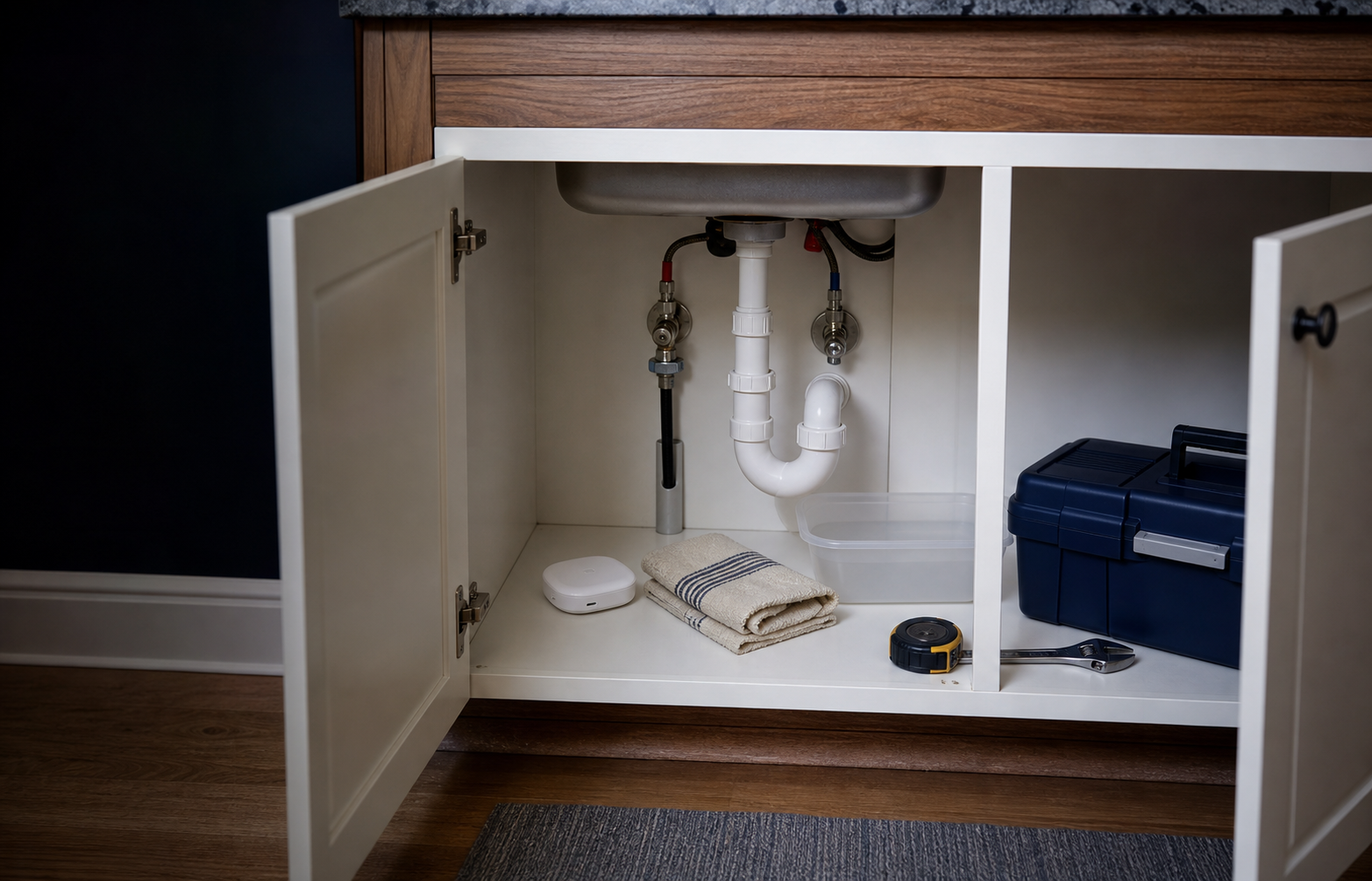
From accessible areas, note water that is collecting near the home, new staining around doors or windows, drips under sinks or around equipment, and changes to ordinary pathways or drainage. Photograph the location, time, weather conditions, and whether the condition is ongoing.
Do not enter a crawlspace, climb a ladder or roof, move heavy wet items, open walls, or touch equipment near water. Water can travel away from its source, so a visible pattern is useful information for qualified help, not a diagnosis.
Know when the next step is professional help
Use qualified help for water entering the home, damage around electrical equipment, a roof or ceiling concern, unexplained recurring water, visible structural change, a septic or sewer issue, or a drainage condition that threatens safe access. If responsibility is shared, check with your HOA or building management and retain the photos and notes.
When to call a professional
Stop and contact a qualified professional if the work involves electrical wiring, gas, structural damage, roof access, major plumbing changes, mold, lead, asbestos, or another hazardous material.
Related guides
Sources
Affiliate disclosure
No affiliate links appear in this guide. If a reviewed recommendation is added, the disclosure will appear beside it.