
Use local alerts first. Keep battery-powered light, communication options, emergency supplies, and important contacts ready, and avoid downed lines, floodwater, damaged electrical equipment, and fuel-burning equipment indoors.
Prepare before the alert
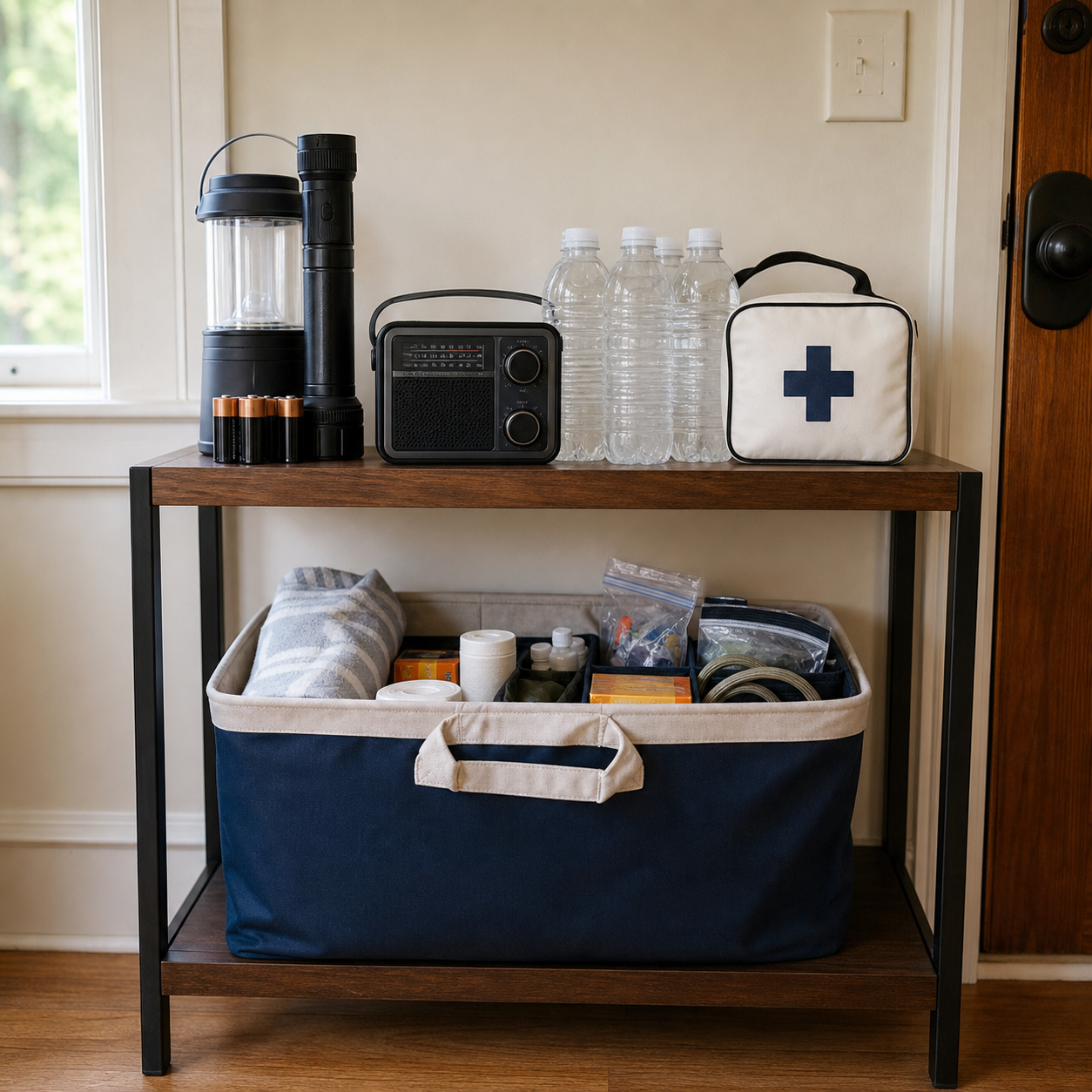
Keep emergency contacts, flashlights, suitable batteries or power, drinking water, first aid, and a way to receive local information accessible. Include medications, pets, and household-specific needs in the plan.
During an outage
Use battery-powered lights and follow official local direction. Ready.gov warns against using generators, camp stoves, or charcoal grills indoors or near openings, and against using a gas stove or oven to heat a home.
After a storm
Do not approach downed lines, floodwater, damaged electrical systems, unstable structures, or suspected gas leaks. Document conditions only from a safe location and contact emergency services, the utility, or qualified help when a hazard is present.
When to call a professional
Call emergency services for an immediate danger. For electrical, gas, structural, medical, or hazardous-material concerns, do not rely on a consumer product or a beginner repair attempt—contact qualified help.
Related guides
Sources
Affiliate disclosure
No affiliate links appear in this guide. If a reviewed recommendation is added, the disclosure will appear beside it.