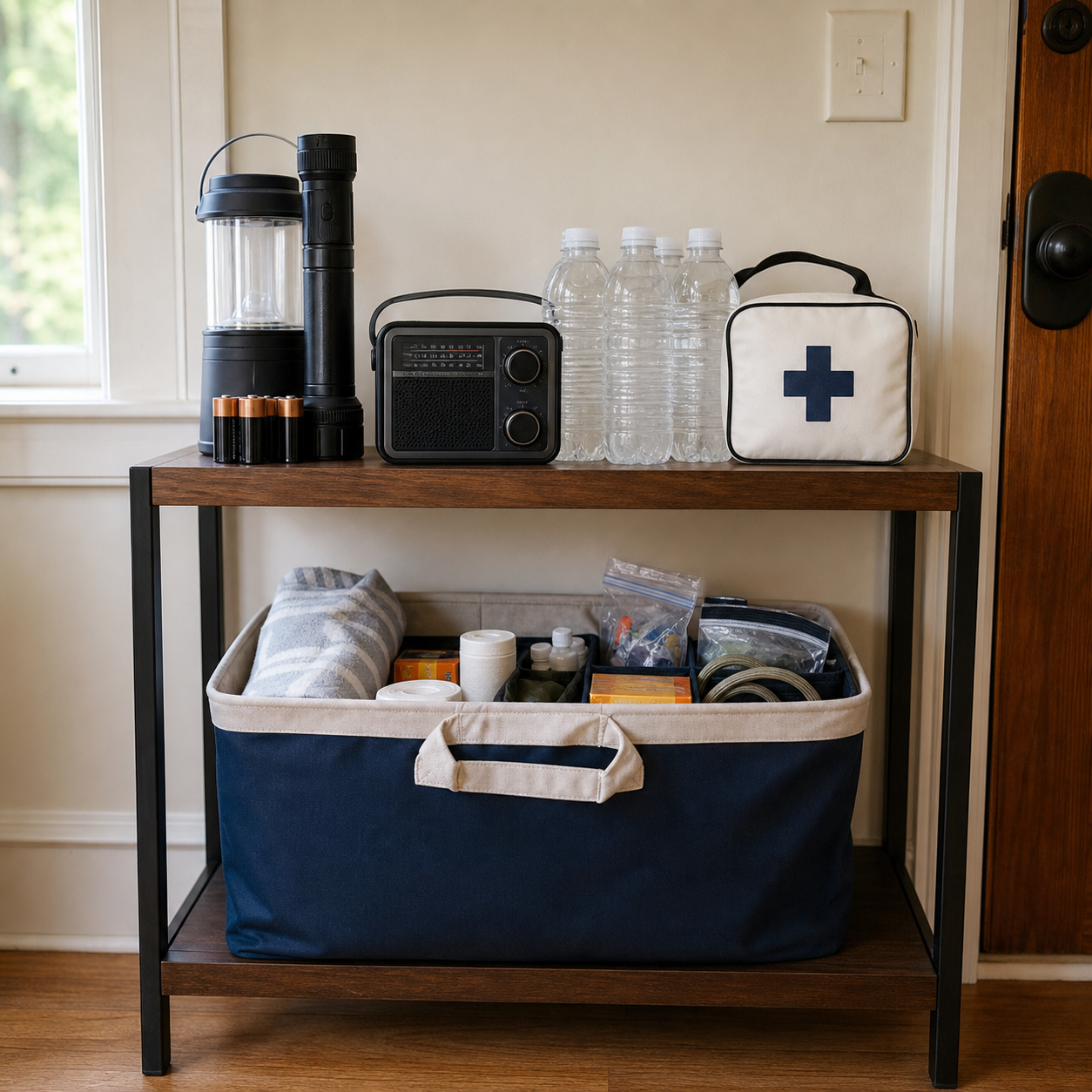
Keep water, several days of nonperishable food, light, batteries or other suitable power, a first-aid kit, a way to receive information, and personal essentials. Adjust the kit for medications, mobility needs, pets, climate, and local hazards.
Start with a basic kit
Ready.gov’s current basic-kit guidance includes water, food, battery-powered or hand-crank radio, flashlight, first-aid kit, whistle, dust mask, plastic sheeting and duct tape, moist towelettes, wrench or pliers, manual can opener, local maps, cell phone with chargers and a backup battery. The right list for a household changes with location and individual needs.
For water, Ready.gov advises one gallon per person per day for several days for drinking and sanitation. Store and rotate supplies according to their labels and the needs of the people who depend on them.
- Keep a copy of important contacts and local emergency information where it can be reached without internet service.
- Include prescriptions, mobility items, infant supplies, pet supplies, and any medically necessary equipment plan that applies to your household.
- Choose a known, dry, accessible storage location and tell everyone in the household where it is.
Choose light and power with safety in mind
For a power outage, Ready.gov recommends flashlights, lanterns, and other battery-powered lights. It warns against using a gas stove, oven, grill, or dryer to heat the home, and against running generators or fuel-burning equipment indoors or near openings.
A flashlight is useful only if the people in the home can find it and its power source still works. Test lights periodically and follow the exact manufacturer instructions for batteries, charging, and storage.
Make it a household plan, not a shopping pile
A useful kit connects to a communication plan, a local-hazard plan, and any evacuation or shelter guidance for your area. Review it at least once a year and after a move, a change in household members, or a change in medical, pet, or transportation needs.
When to call a professional
Call emergency services for an immediate danger. For electrical, gas, structural, medical, or hazardous-material concerns, do not rely on a consumer product or a beginner repair attempt—contact qualified help.
Related guides
Sources
Affiliate disclosure
No affiliate links appear in this guide. If a reviewed recommendation is added, the disclosure will appear beside it.