
Look for visible water, staining, corrosion, drips, and dampness around accessible fixtures and appliances. Record what you find, and contact qualified help for active, recurring, hidden, or unsafe water concerns.
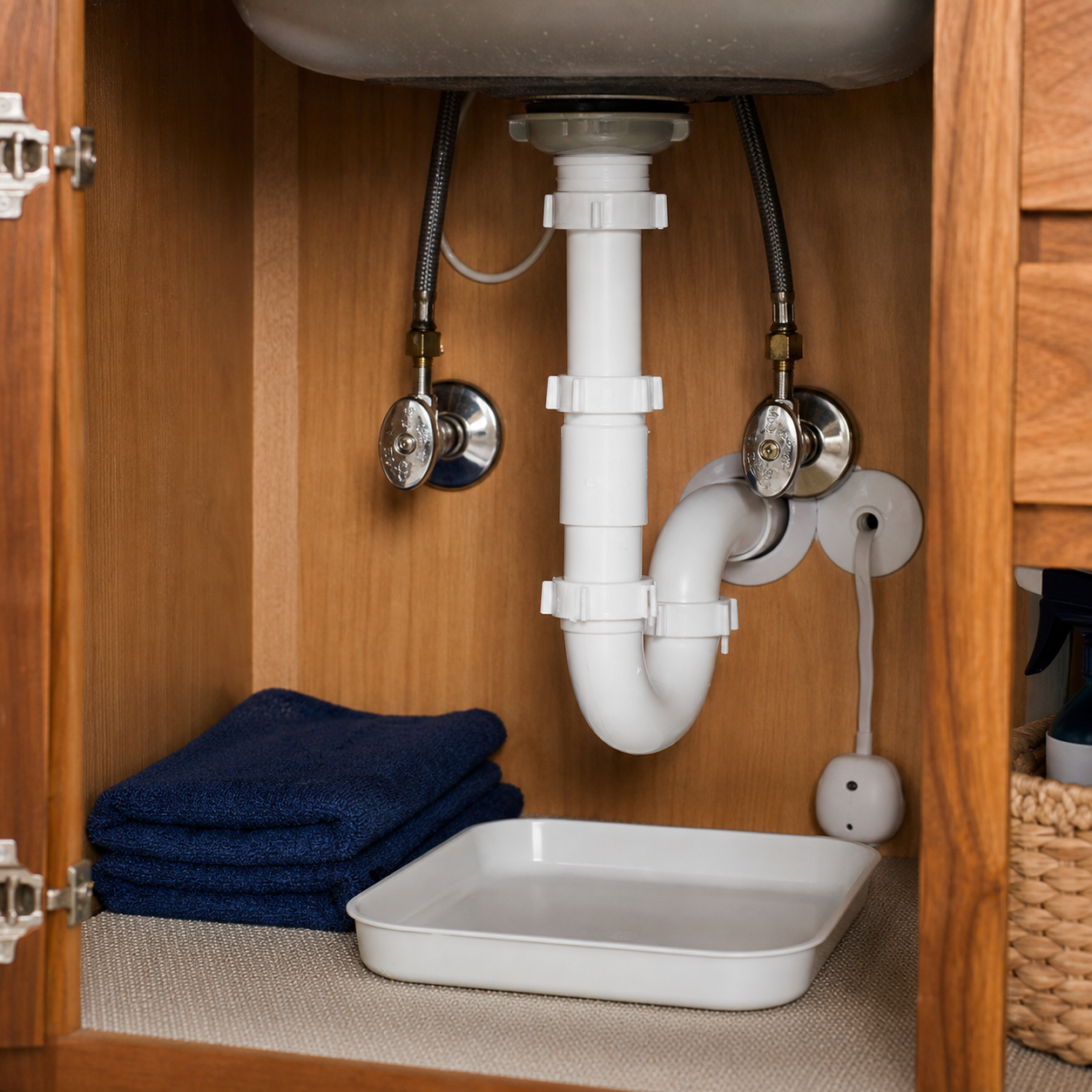
Where to look
Check accessible areas under sinks, around toilets, at appliance water connections, near the water heater, and wherever you notice a new stain or odor. EPA recommends watching for drips, puddling, and leaks at pipe connections as part of ordinary home maintenance.
What to record
Take a photo, note the date and location, and describe whether the area is damp, actively dripping, stained, or only discolored. Do not open walls, move heavy appliances, or use tools to investigate a source you cannot safely identify.
When to call
Use qualified help if water is active, recurring, near electricity, behind a finished surface, connected to major equipment, or causing damage. If a leak alarm sounds, treat it as a reason to look safely and follow the device and home emergency plan—not as a diagnosis.
When to call a professional
Stop and contact a qualified plumber or other appropriate professional if water is actively spreading, you cannot safely find the shutoff, the leak involves a wall or ceiling, or a repair would require changing plumbing.
Related guides
Sources
Affiliate disclosure
No affiliate links appear in this guide. If a reviewed recommendation is added, the disclosure will appear beside it.