
A dial number is a control setting, not a temperature measurement. Even a display with degrees needs its model’s explanation: it may show a selected setting or another defined reading. Use a suitable refrigerator/freezer thermometer and the appliance’s checking instructions to verify conditions. FDA advises refrigerator temperatures of 40°F or below and a freezer at 0°F; a cold reading now does not establish the food’s earlier storage history.

Handle an escaped-water problem separately from the temperature check
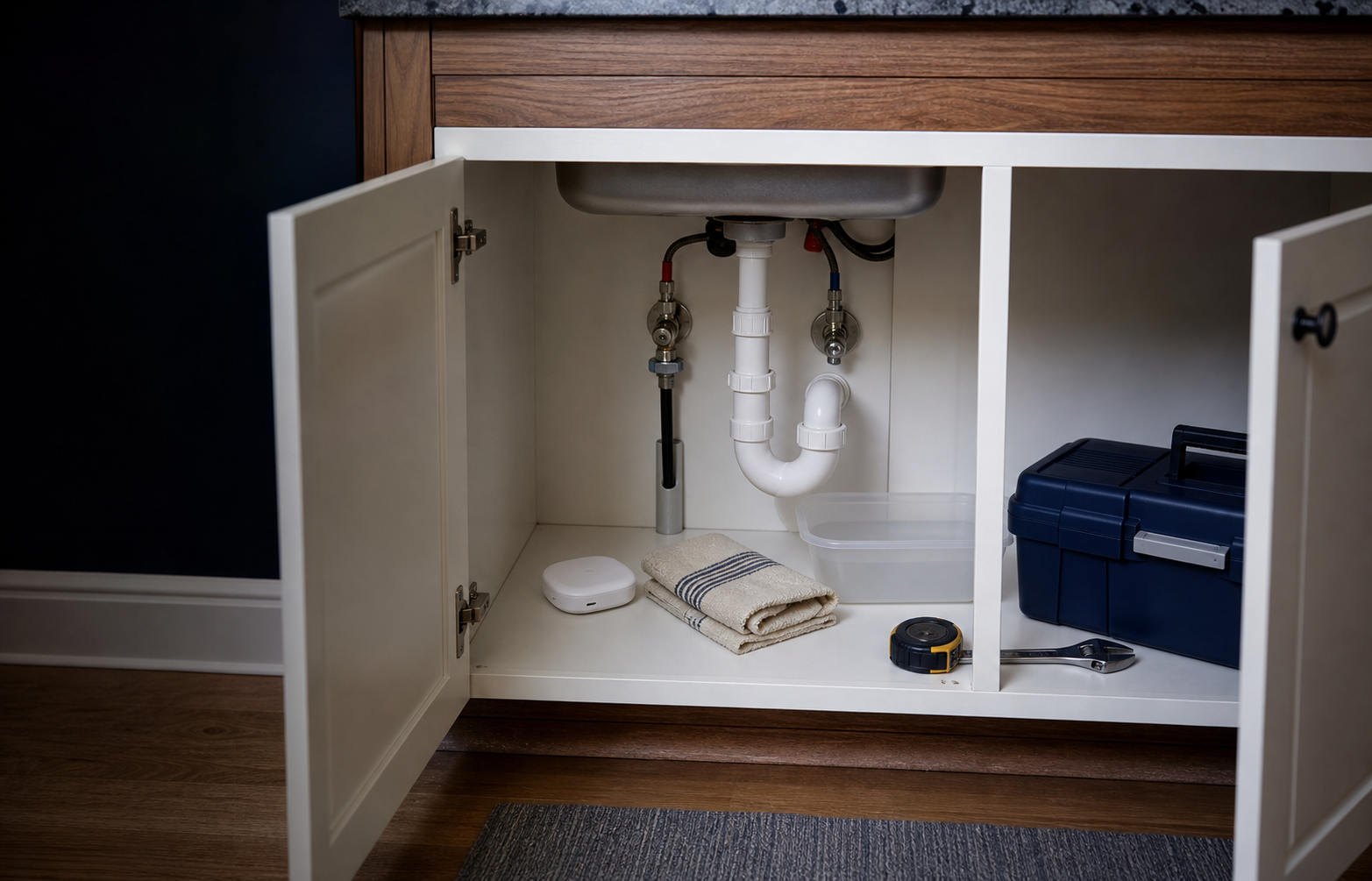
If water is escaping around the refrigerator, keep clear of wet equipment and use appropriate urgent help before attempting a routine thermometer check. Do not move the refrigerator or touch a wet plug to obtain a reading. The refrigerator floor-leak guide separates known supply controls, appliance and plumbing contacts, and a useful repair-call record.
If cooling is interrupted during that response, handle the food-exposure question promptly through FDA guidance. Restored cooling or a later cold reading does not establish that food remained safe earlier. Keep source repair, electrical clearance, drying and the routine temperature record as separate follow-ups.
Keep energy-label estimates separate from temperature evidence
An EnergyGuide annual-cost figure does not measure the temperature of food or establish that a refrigerator is working correctly. Keep the actual temperature observations and any food-exposure decision separate from a purchasing comparison. The EnergyGuide guide explains model/capacity matching, annual kWh, printed price assumptions and a clearly fictional common-rate calculation. Do not change safe temperature settings to try to reproduce a label’s dollar amount.
Deal with a warm appliance or uncertain food history first
If cooling has failed or food may already have warmed, use the FDA food-storage and outage guidance linked below now. Do not leave a food-safety question unresolved while waiting for a thermometer or a control adjustment to settle. Getting the appliance cold again does not reconstruct what happened earlier.
FDA warns that food can be unsafe without looking, smelling or tasting spoiled, and directs discarding food when unsafe temperature exposure cannot be resolved. A routine appliance check cannot clear a questionable item for eating. Keep doors closed as much as possible during an outage and follow current official food-safety advice.
Find out what the control is telling you
Use the exact refrigerator’s owner manual to identify the compartment and the meaning of its dial, bars or display. PNNL illustrates both numbered controls and temperature-based settings. A marking such as “3” is not automatically 3°F or 3°C.
Copy the setting exactly, including any °F or °C indicator. Ask what the display represents before comparing it with a separate instrument: a selected target and a measurement are different entries in the record. Samsung’s support guide describes its display and checking method; Whirlpool directs readers to the model-specific Use & Care Guide. Neither is a universal explanation for every refrigerator.
Also identify whether you are looking at the refrigerator or freezer compartment. Do not use the freezer’s storage target as the refrigerator’s target, or copy a control direction from a different appliance.
Choose a thermometer and method that belong together
Use a thermometer intended for refrigerator/freezer conditions, with a range and instructions suitable for the compartment being checked. Read its mounting, use and care directions as well as the refrigerator instructions. A household room-temperature display is not automatically an appropriate substitute.
A stand-or-hang air thermometer and a permitted liquid/probe check are different methods. For example, Taylor’s current 3507 dial-thermometer care information says not to immerse it in water. This is an illustration of a use restriction, not a product recommendation or a claim of Level & Latch testing.
Do not put an unspecified thermometer in a glass of water because a refrigerator article describes that method. If an appliance’s suggested procedure does not fit your instrument’s instructions, obtain a compatible method from the manufacturer. Do not put a glass of water in the freezer.
Make one comparable, documented check
For an appropriate air-temperature check, Whirlpool’s general guidance places an appliance thermometer near the center of the compartment, away from walls, doors and vents. PNNL advises leaving a refrigerator thermometer in place for 5–8 hours and avoiding frequent door opening. These are general references; resolve any different instrument or model-specific directions before starting.
A thermometer settling in place and a refrigerator stabilizing after a control change are separate waits. Whirlpool’s linked guidance calls for 24 hours between adjustments. Other manufacturer procedures can differ. Follow the applicable instructions rather than repeatedly turning the dial and comparing immediate readings. A waiting period for equipment does not authorize keeping food under unsafe conditions.
- Record the appliance, compartment, current control setting and instruction source.
- Position the suitable instrument as directed without blocking vents or disturbing appliance parts.
- Record when it was positioned and any recent control change or prolonged door opening.
- Allow the applicable measurement interval, then copy the reading and units without converting a dial number into degrees.
- If a permitted control adjustment is needed, record it separately and use the specified recheck interval. Seek service for persistent cooling trouble.
Read the result without overclaiming
Record the observation before naming a cause. A disagreement between a selected setting and an instrument does not by itself identify a failed thermostat, sensor or compressor. Likewise, one spot check is not a continuous record of every shelf or food item.
| Observation | What to do with it |
|---|---|
| Dial says 3; no thermometer reading | Record “setting 3.” Identify the control and arrange the appropriate temperature check; do not label it 3 degrees. |
| A properly taken reading differs from the selected target | Keep the units, location, method and times. Follow model-specific checking guidance or ask the manufacturer/service provider. |
| Reading indicates the compartment is too warm | Address food protection using official guidance now; pursue the appropriate control or service follow-up separately. |
| Current reading is cold after a possible outage | It describes the present observation, not the entire outage or whether every food item remains safe. |
Example: keep a setting and a reading in separate fields
Fictional example: the kitchen refrigerator has a numbered dial set to 3. After using the documented method and waiting period, the household records an appliance-thermometer reading of 38°F in the refrigerator compartment. The log contains two entries: “Control: 3” and “Measured: 38°F,” with the time and location. It does not claim that each dial increment equals a fixed number of degrees.
If the same household is unsure whether power failed overnight, that current reading does not answer the storage-history question. It follows official food-safety guidance for uncertain exposure instead of treating the routine check as an all-clear. This is an invented record example, not a tested refrigerator or a diagnosis.
Keep a short reference for future checks or service
Use the free homeowner checklist’s equipment and follow-up areas to point to this record. Keep a booked service visit separate from a completed repair and a later verified check.
- Appliance model and owner-manual reference: ___.
- Compartment, control setting and display units/meaning: ___.
- Thermometer identification and permitted method: ___.
- Placement, start time and reading time: ___.
- Reading and units; recent door use, loading or control change: ___.
- Food-safety question handled separately; service or recheck action and responsible person: ___.
Keep the follow-up within ordinary access
FDA notes that overpacking can obstruct cold-air circulation. Keep ordinary loading observations in the record, and follow the appliance’s instructions for routine use. Do not move a heavy appliance, open electrical panels, handle refrigerant or replace components to complete this check.
For persistent inability to maintain appropriate conditions, unusual messages, unexplained readings or unfamiliar controls, use manufacturer support or qualified appliance service. During an outage, use the wider winter-readiness guide for household response while following FDA’s food-specific guidance. This article covers routine control and measurement interpretation, not repair or a food-by-food disposal chart.
When to call a professional
Stop and contact a qualified professional if the work involves electrical wiring, gas, structural damage, roof access, major plumbing changes, mold, lead, asbestos, or another hazardous material.
Related guides
Sources
- FDA: Refrigerator Thermometers — Cold Facts about Food Safety
- PNNL Building America Solution Center: Check Refrigerator Temperature
- Whirlpool: Tips for Properly Setting the Controls — model-specific limits, placement and rechecks
- Samsung: Refrigerator temperature settings and thermometer-checking method
- Taylor: 3507 refrigerator/freezer dial thermometer — use and care restrictions (illustration only)
Free next step
Download the free seasonal maintenance checklist to record observations and follow-up tasks. See the seasonal maintenance routine for more context.
Affiliate disclosure
No affiliate links appear in this guide. If a reviewed recommendation is added, the disclosure will appear beside it.