
Use the first month to locate shutoffs and panels, identify water-using appliances, test ordinary safety devices according to their instructions, record maintenance information, and schedule qualified help for anything unclear or unsafe.
Week one: make a home reference
Find the main water shutoff, electrical panel, water heater, HVAC equipment, water meter, and appliance model labels. Take clear photos and write down any existing issues, service dates, warranty information, and utility contacts. Do not open panel covers, disassemble equipment, or force stuck valves while gathering information.
EPA WaterSense recommends keeping up with water-using fixtures and systems, including regular leak checks. Knowing where the systems are is the first step toward noticing a change early.
Weeks two and three: look, listen, and document
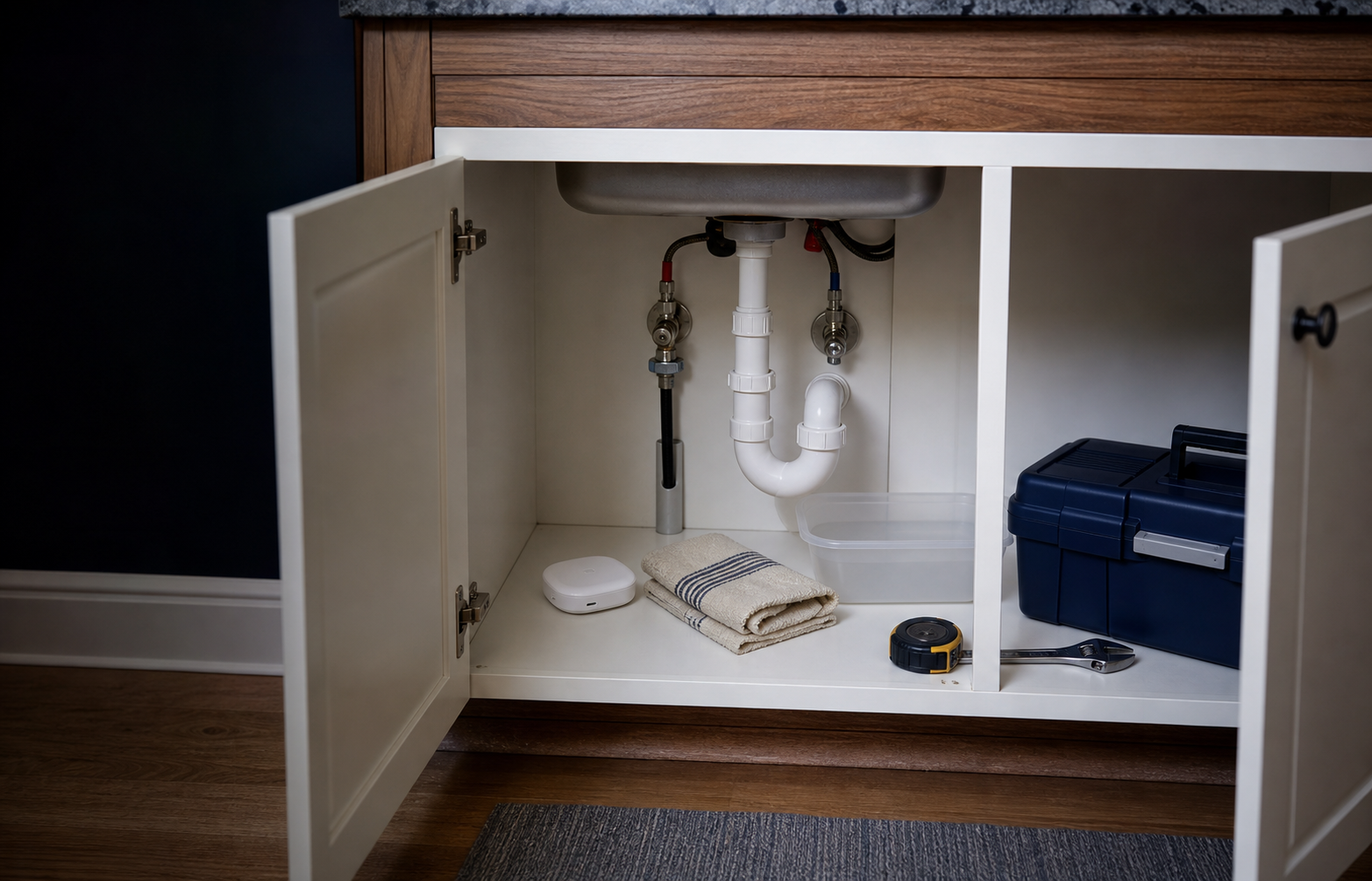
Look under sinks and around toilets, dishwashers, washing machines, refrigerator water lines, and the water heater for visible water, staining, corrosion, or unusual odor. Listen for drips or continuous toilet filling. A visual check is not a diagnosis; it is a way to recognize when something deserves a professional’s attention.
If there is no water use, compare the water meter at two points in time only if you can safely access it. EPA notes that a changed reading over two hours can indicate a likely household leak. Record the result and the conditions rather than drawing conclusions from one unusual reading.
Week four: build a routine
Create a simple seasonal reminder list for air filters, visible leak checks, appliance manuals, and emergency supplies. Keep the list short enough to use. Add a task only after you understand the manufacturer’s instructions and whether it is appropriate for a homeowner.
Schedule qualified service instead of experimenting with electrical panels, gas equipment, roof access, major plumbing changes, mold, structural concerns, or hazardous materials.
When to call a professional
Stop and contact a qualified professional if the work involves electrical wiring, gas, structural damage, roof access, major plumbing changes, mold, lead, asbestos, or another hazardous material.
Related guides
Sources
Affiliate disclosure
No affiliate links appear in this guide. If a reviewed recommendation is added, the disclosure will appear beside it.