
For ordinary heating-season preparation, identify the installed system, find its instructions and service history, confirm appropriate filter care and arrange qualified pre-season maintenance. A suspected gas leak or CO warning is an emergency response, not a startup check: get outside and seek emergency help from a safe location.
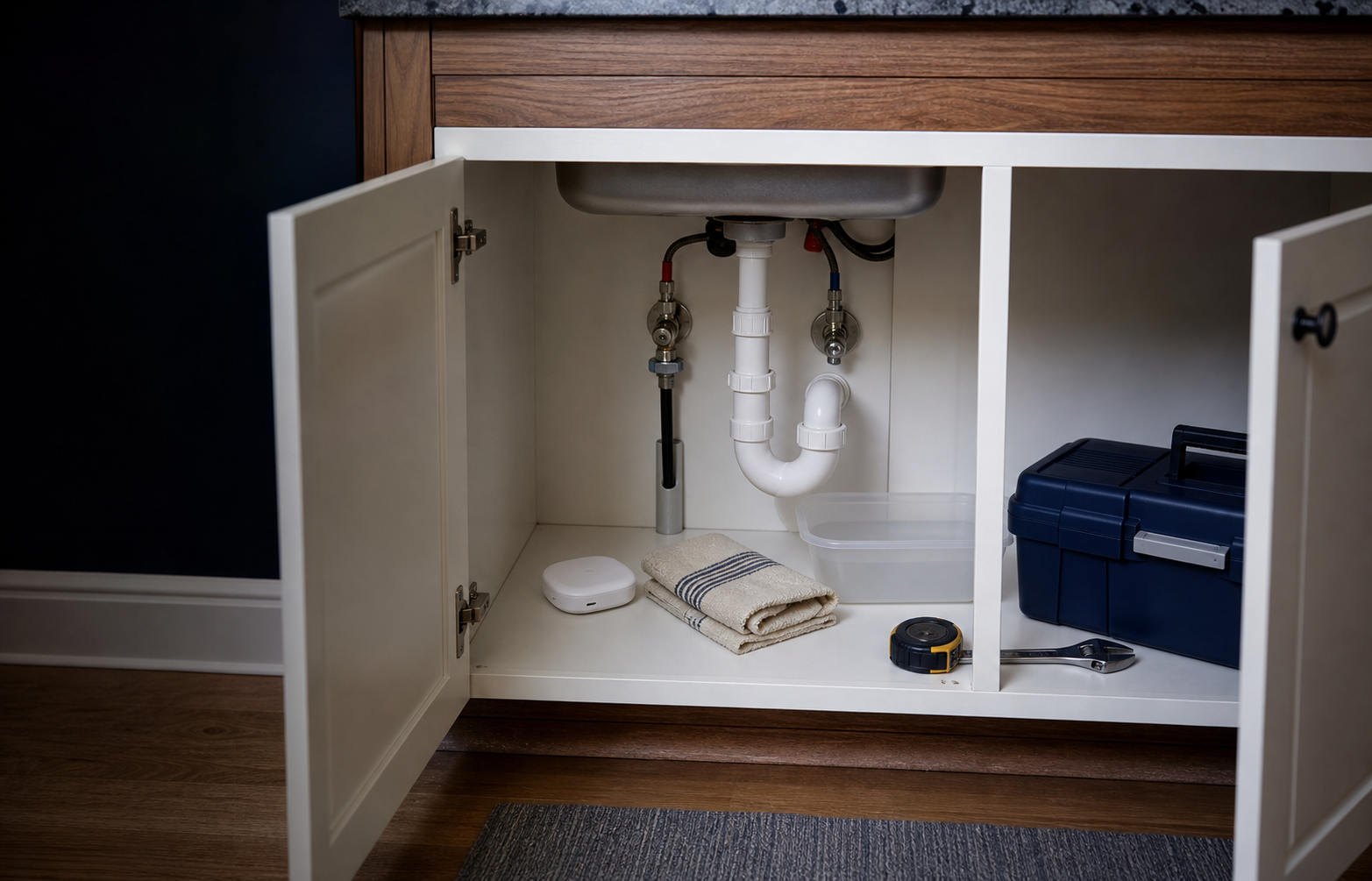

Resolve a water-exposed furnace before seasonal startup
If water reached or may have reached the furnace, keep it out of use and request prompt qualified HVAC/building help. Follow gas/CO and unsafe-electrical emergency precautions before any control action. Do not start heat, reset equipment or open a panel to complete this seasonal checklist; use only established safe stopping instructions when access and conditions permit, or obtain urgent help.
The water-exposed-furnace guide adds a six-row service-scope table and a fictional pipe-fixed/thermostat-lit example. It separates the actual exposure, fuel and electrical equipment, connected air/vent systems and household heat plan. A routine service record, new filter or repaired source is not permission to use a furnace after a new water event.
Treat escaped condensate as a service problem before startup
If water appears beside the furnace, air handler or condensate pump, pause routine heating preparation. From a dry, safe location use the affected system’s normal thermostat as instructed and arrange qualified HVAC or building help. Report whether heat has stopped and whether water is spreading; do not open the cabinet or bypass an overflow switch to complete a startup check.
The condensate-response guide adds an observation table and service-call record. Ask the provider to identify the source, check drainage and protective controls, and explain safe use until repair. Keep the household-temperature plan separate from the equipment task; lost heat does not authorize an unsafe substitute heat source.
Deal with a warning before trying the heat
If you suspect a natural-gas leak, leave immediately and call 911 and your gas utility from a safe distance. Atmos Energy’s emergency guidance makes that leave-first sequence explicit. Do not remain by the equipment to collect its model number or decide whether another startup attempt would help.
For a sounding CO alarm or suspected CO exposure, Oregon’s fire marshal advises getting everyone outside, calling 911 from outside and staying out until responders permit return. Do not use a generic beep chart or a maintenance appointment to dismiss a possible emergency. Keep the exact alarm instructions and household response plan available before a warning occurs.
Identify what is installed and who maintains it
Use the equipment label when safely accessible, the manual and prior service paperwork to record the system’s make and model. A home may have more than one heating arrangement, so name the equipment and location that each record covers. If the home is rented or a system is building-managed, establish the responsible contact first.
Keep the last documented service date separate from the move-in date, a thermostat purchase or a filter change. If history is unknown, write that down and ask a qualified service provider what needs to be assessed. A blank record is a question to resolve, not evidence that the equipment was recently serviced.
Make a small heating-season preparation record
Use this worksheet for ordinary planning. It does not authorize opening equipment, running an unfamiliar test or servicing a component. Record the actual instruction or service source, who handles the item and whether it is confirmed, awaiting help or complete.
| Item | Information to gather | Useful next action |
|---|---|---|
| Equipment and responsibility | Make/model, location, manual and responsible person | Resolve an unknown system or shared-building responsibility |
| Ordinary owner care | The tasks and access points approved by the instructions | Ask for a demonstration if the procedure or access is unclear |
| Filter, if applicable | Confirmed location, size/type and care instructions | Use the filter-size and HVAC-filter guides for the separate decisions |
| Heating service | Last documented visit and unresolved findings | Arrange the appropriate qualified pre-season check |
| Household readiness | Alarm instructions, service/emergency contacts and outage plan | Keep the information accessible to the people who may need it |
Separate an owner check from a contractor check-up
ENERGY STAR recommends annual pre-season contractor check-ups, with heating maintenance planned for fall. Its contractor list includes electrical connections and controls; for gas or oil heating it also includes fuel connections, combustion and the heat exchanger. Those are service items, not a homeowner’s internal inspection list.
For the ordinary tasks the instructions allow, keep household storage away from required equipment access and follow the specified clearances. Use the confirmed filter information and approved care procedure when a filter task applies. A thermostat setting, filter change or clear path to the unit does not establish that the full system has passed a professional check.
The U.S. Fire Administration also recommends professional annual cleaning and inspection of heating equipment and chimneys. If a fireplace, stove or chimney is part of the home, identify that separate responsibility rather than assuming one HVAC appointment includes every heat source.
Leave the service conversation with clear answers
Ask what equipment the appointment covers and what findings will be documented. Tell the provider about existing messages or changes already observed; do not repeatedly run a suspect system to gather evidence. A factual note is more useful than a guessed failed part.
- Which system and components does this visit cover?
- What ordinary care may the homeowner perform, and can you show the approved access and method?
- Which filter arrangement and specification, if any, were confirmed?
- Are any findings unresolved, what is the next action, and what operating guidance applies until they are resolved?
Try the distinction on a fictional home
A fictional homeowner changed an accessible filter in spring and installed a new thermostat in summer. Neither record establishes that the heating system received its pre-season contractor check-up. The useful autumn note keeps those completed actions, marks the service history as unknown and records the provider’s advice and appointment details.
An appointment booking belongs under “scheduled.” Move it to “completed” only after the visit and retain any outstanding findings separately. This example illustrates recordkeeping; it does not approve operating an unfamiliar or faulty system while waiting for service.
Prepare for an interruption as a separate task
Keep the service number, local emergency information and a plan for household members who may need help if heat or power is lost. Use the winter-outage guide for lighting, supplies and safe response planning. The U.S. Fire Administration warns against using an oven to heat the home; an equipment concern is not a reason to improvise another unsafe heat source.
If the equipment has damage, an unfamiliar warning or abnormal operation, follow the exact instructions and qualified guidance. Do not repeatedly reset, bypass or disassemble it. Keep the observation, advice, completed action and remaining follow-up in the household record and free homeowner checklist.
Give an active boiler-water leak its own service plan
For water at a heating boiler or its connected piping, pause routine preparation and contact qualified heating service or the building emergency contact. Keep clear of hot discharge and wet controls. Use existing equipment records for identification; do not start the boiler, refill it or open its jacket to finish the seasonal checklist.
The heating-boiler leak guide adds a service-report table, water-exposure questions and a separate loss-of-heat plan. Ask the provider for safe instructions for the actual installation. A condensate-pump response, household water valve or domestic water-heater sequence does not supply a universal boiler shutdown or restart procedure.
Resolve a humidifier water leak before routine seasonal care
If a whole-house humidifier is leaking, pause its routine panel-change or startup task and arrange qualified HVAC service. Use only its established safe owner-control instructions; a furnace thermostat, humidistat and water-supply valve are different controls. Steam equipment can also contain hot components after operation stops.
The humidifier-leak guide supplies a service-report table and separates source repair, safe use and wet-material follow-up. Do not raise the humidity setting, run a test/reset cycle or reopen equipment to complete seasonal preparation. Report lost heat separately and obtain household-temperature guidance while the affected system is assessed.
Report room-radiator or baseboard water before a startup task
If water appears at a radiator, connection or baseboard enclosure, pause seasonal startup and contact the qualified heating provider or building emergency service. Keep clear of hot fluid, steam and wet electrical equipment. Do not turn a nearby valve, bleed a vent or repeat a heating cycle to complete the checklist.
The heating-boiler response now includes room-emitter reporting questions and a fictional radiator-leak handoff. Give the room, first visible water and system identity from existing records; leave an unknown arrangement unconfirmed. Ask who handles safe isolation, source repair and affected materials, and keep any loss-of-heat plan separate. The heater’s shape or thermostat setting does not establish a safe repair procedure.
Water exposure at a fireplace interrupts routine seasonal preparation
If water appears in or around a fireplace, pause routine startup and involve the appropriate chimney/fireplace professional and actual appliance dealer or service route. Report whether it was operating and any safe normal stopping action already taken. A prior annual inspection or a roof repair does not establish the condition after this new water event.
The fireplace-rainwater guide adds a coordination table and a fictional source-repair-versus-safe-use handoff. Keep fire, CO, suspected gas, wet electrical equipment and unstable material on their urgent response paths. Do not relight, use backup ignition or close an unfamiliar flue to investigate; obtain instructions for the actual system and keep the household heat plan separate.
When to call a professional
Stop and contact a qualified professional if the work involves electrical wiring, gas, structural damage, roof access, major plumbing changes, mold, lead, asbestos, or another hazardous material.
Related guides
Sources
- Trane: Air Handler Dripping Water — stopping the affected system and arranging service
- ENERGY STAR: Maintenance Checklist
- U.S. Fire Administration: Heating Fire Safety
- Atmos Energy: Gas Emergency
- Oregon State Fire Marshal: Carbon Monoxide Safety
- Weil-McLain: U.S. FAQ — leaking-boiler contact and model-specific manuals
- Weil-McLain: User Manual 550-100-226/0425 — listed gas-boiler models; safety, water contact, leaks and relief-discharge warnings
- AprilAire FAQ: evaporative drain-through leakage, normal drainage and continued water flow — model-specific examples
- Resideo: HE240/HE280 instructions 69-2685ES-07 — safety and water-leak troubleshooting, not universal owner repair permission
- Resideo: HM700A1000 installation instructions 33-00118EFS-03 — high voltage, hot steam/drain water and controller versus primary power
- Caleffi: Troubleshooting Process, January 3, 2023 — hydronic technician audience, leakage and heat-emitter context; service procedures not owner instructions
- Cadet: Technical Troubleshooting FAQ — SoftHeat fluid example and electric-heater controls; not identification or cleanup instructions for an unknown heater
- Heat & Glo: Using Your Fireplace During a Power Outage — water-exposure warning and dealer referral; startup advice not adopted
- Heat & Glo: Owner Resources — actual product instructions and dealer service route
- CSIA: Level 2 Inspection of a Factory-Built Fireplace, revision April 5, 2019 — professional scope, water-entry observations and report limits
- CSIA: Level 2 Inspection of a Masonry Fireplace, revision April 5, 2019 — different assembly and professional assessment scope
- CDC: Reentering Your Flooded Home — standing-water electrical boundary
- EPA: Mold Cleanup in Your Home — water correction, drying and experienced contaminated-water help
- Trane U.S.: Owner’s Manuals — currently linked gas-heating-system document and actual product identification
- Trane: Gas Heating Systems — Owner’s Information, Doc. 32-5083-1C-EN, ©2024; water, gas and qualified-service warnings (PDF)
- AHRI: Floods and HVACR Equipment — qualified furnace, control, duct and vent assessment; flood-specific scope
- CPSC: July 11, 2023 flood-victim warning — wet appliances, underwater controls and alarm response
Free next step
Download the free seasonal maintenance checklist to record observations and follow-up tasks. See the seasonal maintenance routine for more context.
Affiliate disclosure
No affiliate links appear in this guide. If a reviewed recommendation is added, the disclosure will appear beside it.