
Before freezing weather, identify who maintains each system, resolve the correct outdoor-water instructions, keep the home’s heating plan in place and make a response plan for an outage or time away. Record unfinished items and arrange qualified help before the cold arrives; a general checklist cannot determine your home’s plumbing setup.
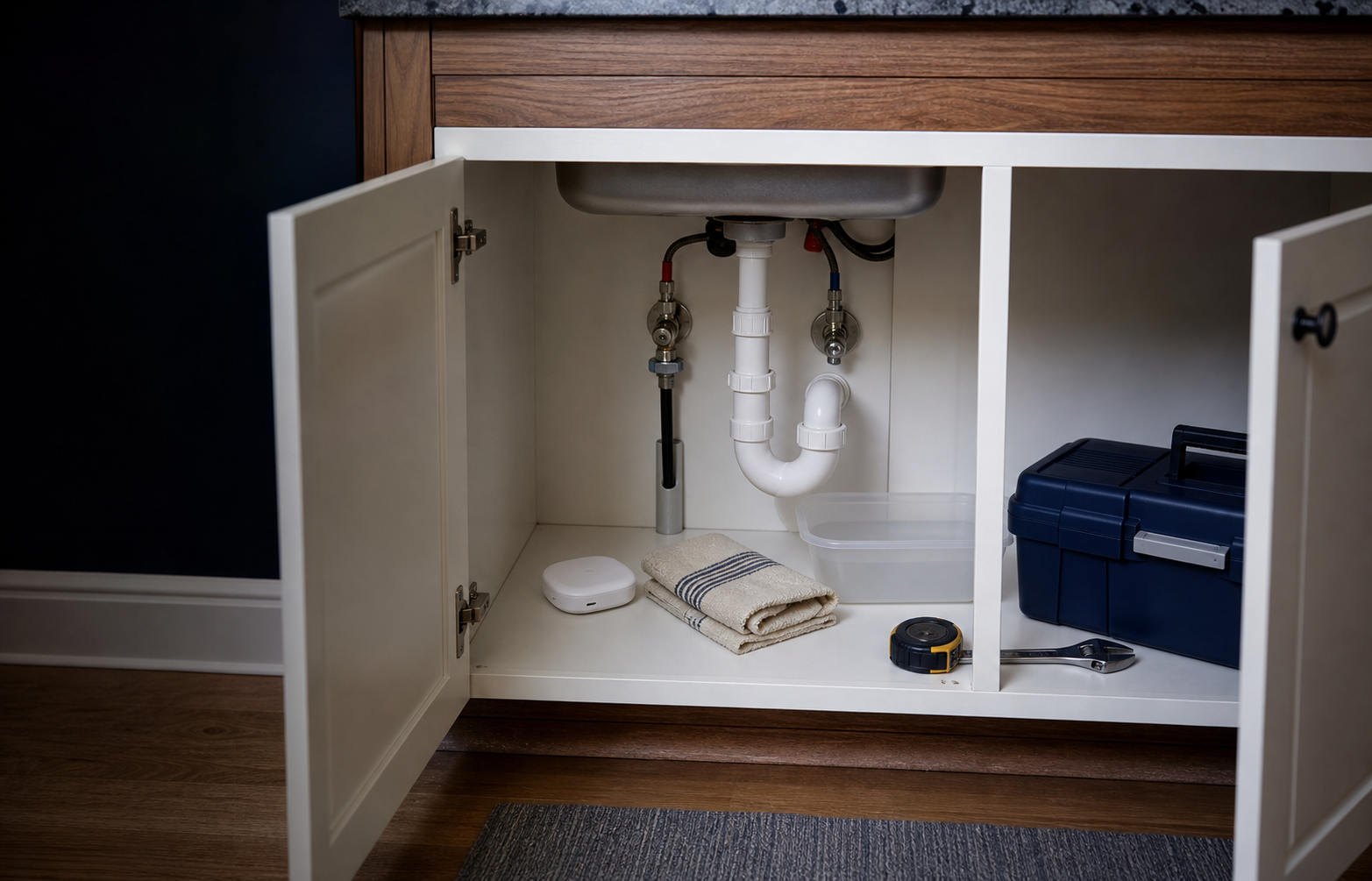

When a tap stops flowing, switch from preparation to response
An unexpected trickle or loss of water during a freeze needs prompt attention. First separate an active escaped-water problem from no visible leak: keep clear of hazards and seek urgent help for spreading water; otherwise check the utility’s service notices and report affected taps to the utility or building contact and a licensed plumber as appropriate. A trickle alone does not locate or confirm ice.
The little-or-no-water guide provides a response table and a short call record. Keep source repair, safe restoration and any drying follow-up separate. Do not assemble a thawing sequence from different websites or treat flow returning as proof that the plumbing is undamaged.
Decide what applies before the forecast
Start with local weather and utility information, then name the parts of the home you actually maintain. A detached house, condo, rental and seasonal home can have different water connections, heating arrangements and responsibilities. Write “not applicable” for an absent system and “ask the manager” for a shared one.
Gather the heating manual, any outdoor-faucet instructions, known shutoff information and the plumber or building contact. Identify uncertain equipment while the home is calm. If its label or valve cannot be reached safely, use records or arrange help instead of entering a crawlspace or moving equipment to find it.
Make a before-freeze plan
Use the following worksheet to turn an observation into a named next action. It is a planning aid, not a declaration that a system has been winterized. Add the applicable instruction or service record, the responsible person and a realistic completion date to your private household copy.
| Area | Information to resolve | Useful next action |
|---|---|---|
| Outdoor water | Which faucet, hose connection or separate system is yours? | Find its instructions; assign any unfamiliar draining or winterizing to qualified help |
| Indoor plumbing | Are any known water lines in unheated areas? | Ask the plumber about protection appropriate to those locations |
| Heat | Which instructions and responsible contact apply? | Resolve service needs and the occupied or away setting before cold weather |
| Shutoff information | Is the correct location already identified and safely accessible? | Record the location and utility/plumber guidance; resolve an unknown valve |
| Power interruption | Who needs help if heat or power is lost? | Keep lighting, alerts, contacts and a safe destination plan accessible |
| Time away | Who can notice a problem and arrange a safe response? | Confirm the contact, backup and the limits of any remote alert |
Resolve the outdoor-water instructions
EPA recommends shutting off and draining outdoor spigots before freezing weather. That recommendation still needs to be matched to the actual installation. A frost-free faucet, a separate indoor shutoff, irrigation equipment and shared building plumbing should not be treated as interchangeable arrangements.
Use the outdoor-faucet guide for an identification and completion record. It separates an ordinary hose task from plumbing or irrigation work that needs the manufacturer, installer or a qualified professional. Keep any unresolved connection on the follow-up list rather than marking the whole home complete.
Keep heat and water planning connected
The Red Cross identifies water lines in unheated areas as a freezing concern. Record locations you already know about, such as an unheated garage or an exterior-wall cabinet, without opening walls or entering an unsafe space. Ask a qualified plumber which protective measures suit the actual installation.
For cold-weather absences, the Red Cross advises leaving heat on and setting the thermostat no lower than 55°F. Treat that as general preparedness guidance, not proof that every pipe in a particular home will stay warm. A room thermostat does not establish conditions inside a wall or an unheated area; resolve the appropriate setting and monitoring plan for your home with qualified advice.
Keep the heating instructions with the plan and note any unresolved service issue. Do not improvise a pipe-heating cable, alter wiring or change combustion equipment as a substitute for that advice.
Plan for an empty home or a power interruption
A remote alert is useful only when somebody can receive it and act. Confirm who will respond if you are away, how they contact you or the building manager, and which qualified service to call. An app notification does not establish that heating or water controls can be operated remotely.
Keep battery-powered light, charging arrangements and local emergency information easy to find. EPA warns against using gas ovens or grills to heat a home and against operating fuel-powered generators indoors. Use the winter-outage guide for the fuller supplies and safety plan. If the home becomes unsafe, follow local shelter or emergency direction rather than staying to finish a maintenance list.
- Primary household or building contact and backup: ___.
- Known shutoff and heating instructions are kept: ___.
- Unresolved task, responsible person and follow-up date: ___.
- Plan if alerts cannot be received or nobody can respond: ___.
Try the plan on a fictional home
A fictional condo household has a balcony hose connection, shared building water and a trip planned during cold weather. The useful action is to ask management who maintains that connection and obtain the applicable instructions. It is not to operate an unmarked communal valve. The household separately records its heating plan and a contact who can report an outage.
If the management answer is still pending, that row stays “awaiting confirmation.” The example illustrates responsibility and follow-up; it does not describe every condo or approve a particular setting or valve operation.
Recognize when preparation becomes a service call
After cold weather, an unexpected loss of water or only a trickle deserves prompt attention, but a general article cannot identify its cause. The Red Cross says a frozen pipe is a possibility when only a trickle comes from a faucet. Contact the water utility or a qualified plumber as appropriate; use a licensed plumber for inaccessible or unresolved suspected frozen plumbing.
If water is spreading or near electrical equipment, keep people away and use appropriate emergency help. Do not apply an open flame to a pipe. This guide does not provide a thawing procedure. Keep the observed change, time and service response in the follow-up log, then use the exact instructions for returning any affected equipment to service.
Keep a winter roof-leak plan beside the pipe plan
Water appearing after snow or a thaw may need roofing/building assessment rather than a pipe-thawing response. Record the roof or building contact and a safe alternate route if ice threatens an entrance. Interior wet electricity or a damaged ceiling needs urgent safety help before maintenance planning.
The suspected ice-dam guide separates immediate mitigation, underlying-cause assessment and drying. It explains why roof-assembly and heat-loss questions need qualified assessment; a household shutoff does not stop roof snowmelt. Keep a future service action on the checklist rather than climbing, removing ice or altering attic ventilation yourself.
An actively leaking hot tub needs an urgent retained-water plan
If a residential hot tub is already losing water, report the actual freezing forecast, known power state and uncertain circulation to its official service route promptly. Ask who can coordinate safe isolation and protection for water left in plumbing or equipment. Do not treat an empty-looking shell as completed winterization or transfer a household faucet routine to a spa.
Use the hot-tub leak response guide for its contact table and service-call prompts. Personal safety comes first: cold weather does not justify approaching wet electrical equipment, resetting protection or running an unsafe tub. Do not improvise a drain, refill, antifreeze, added-heat or restart procedure; obtain applicable model instructions and qualified assistance.
When to call a professional
Stop and contact a qualified professional if the work involves electrical wiring, gas, structural damage, roof access, major plumbing changes, mold, lead, asbestos, or another hazardous material.
Related guides
Sources
- EPA: Winter Weather and Indoor Air Quality
- American Red Cross: Preventing and Thawing Frozen Pipes
- DOE/PNNL: Construct Roofs and Attics for Ice Dam Prevention — formation and assembly-dependent planning
- NWS Grand Rapids: Preventing Roof Ice Dams — winter melt/refreeze and contractor assessment
- Minnesota Commerce: Ice Dams, February15,2021 — experienced removal help and damage cautions; regional guidance
- CPSC: Don’t Swim With Shocks — electrical hazards around pools and spas
- Hot Spring: current Hot Spot collection manual selector — match collection, year and model
- Hot Spring: 2026 Hot Spot Owner’s Manual, 303761.26 C (06/26), 60Hz — bounded safety, controls, draining and freezing example (PDF)
- Hot Spring: official contact route for spa operation and maintenance questions
- Hot Spring: service and support FAQ — actual manual and dealer assistance
- CPSC: February 12, 2026 Hydromassage rotary-jet recall — exact-product example, not leak diagnosis or unit clearance
- Hot Spring: current Hydromassage recall and linked official identification assistance
- ESFI: Water-Damaged Electrical Equipment — qualified evaluation before restoring power
- EPA: Mold Cleanup in Your Home — source correction, drying and contamination limits
Free next step
Download the free seasonal maintenance checklist to record observations and follow-up tasks. See the seasonal maintenance routine for more context.
Affiliate disclosure
No affiliate links appear in this guide. If a reviewed recommendation is added, the disclosure will appear beside it.