
Choose a kit with the basic hand tools you will actually use, clear storage, and room to add items later. Do not choose a kit by tool count alone or use it as a reason to take on electrical, gas, structural, or major plumbing work.
Tested elsewhere
Kobalt 158-Piece Blue Household Tool Set with Folding Case, model 55285
A research-backed choice for a first-time homeowner who wants one locally supported hand-tool kit instead of buying a large mechanic’s set. Popular Mechanics tested it in household tasks and called out its practical tool selection: screwdrivers, hammer, utility knife, pliers, wire cutters, bit driver, small socket set, scissors, and torpedo level. Lowe’s identifies the current exact kit as the Kobalt 55285 158-piece folding-case set.
Know before buying: Its 6-inch adjustable wrench has limited leverage for stubborn or larger fittings, and the kit does not include a cordless drill for drilling pilot holes or mounting hardware. It does not turn electrical or plumbing work into a beginner task, or make every listed piece equally useful. Choose it only if the included tools match the jobs you realistically expect to do.
Level & Latch has not physically tested this product. This is a limited, non-affiliate recommendation based on independent hands-on testing, current retailer model identification, and a public CPSC recall-source review. There are no affiliate links in this guide.
What a beginner kit should cover
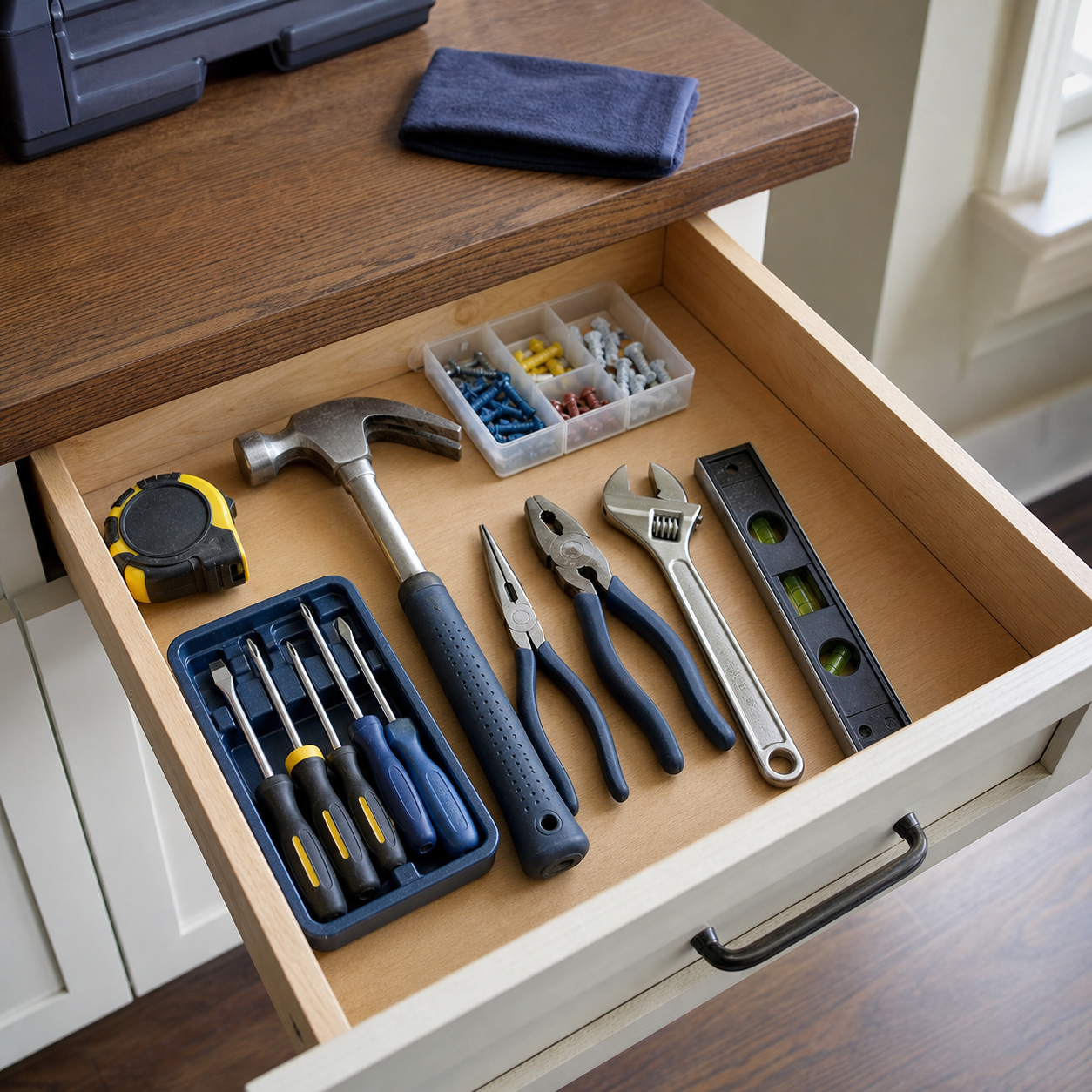
For most first homes, the useful core is measuring, fastening, gripping, light hammering, minor cutting, lighting, and cleanup. Look for a tape measure, a screwdriver or bit system, hammer, pliers, adjustable wrench, level, utility knife, flashlight, work gloves, and eye protection.
A big piece count can mean many duplicate bits, tiny fasteners, or specialty pieces rather than a more capable kit. Read the item list and look for ordinary tools you can identify and safely store.
Choose a kit you can maintain
A case should keep sharp items secured, make missing pieces noticeable, and fit where you will actually store it. Check the manufacturer instructions, warranty, and the replacement availability for consumables such as utility-knife blades or batteries.
Keep a simple note of what the kit includes and add project-specific tools only after you have read the relevant instructions. A tool kit is a preparedness purchase, not a substitute for a qualified professional.
- Avoid loose blades and damaged handles.
- Use eye protection for work that can create flying debris.
- Stop if the job involves electricity, gas, structural concerns, roof access, mold, or hazardous materials.
How Level & Latch will name products
A responsible kit recommendation names the exact model, shows why its included tools match real homeowner tasks, records a meaningful limitation, and separates independent testing from retailer claims. A larger piece count alone does not mean a kit is more useful.
When to call a professional
Stop and contact a qualified professional if the work involves electrical wiring, gas, structural damage, roof access, major plumbing changes, mold, lead, asbestos, or another hazardous material.
Related guides
Sources
Affiliate disclosure
No affiliate links appear in this guide. If a reviewed recommendation is added, the disclosure will appear beside it.