
Before leaving, document the home’s condition, confirm how you will receive alerts, keep emergency contacts available, and use only equipment settings you understand from the manual or qualified guidance.
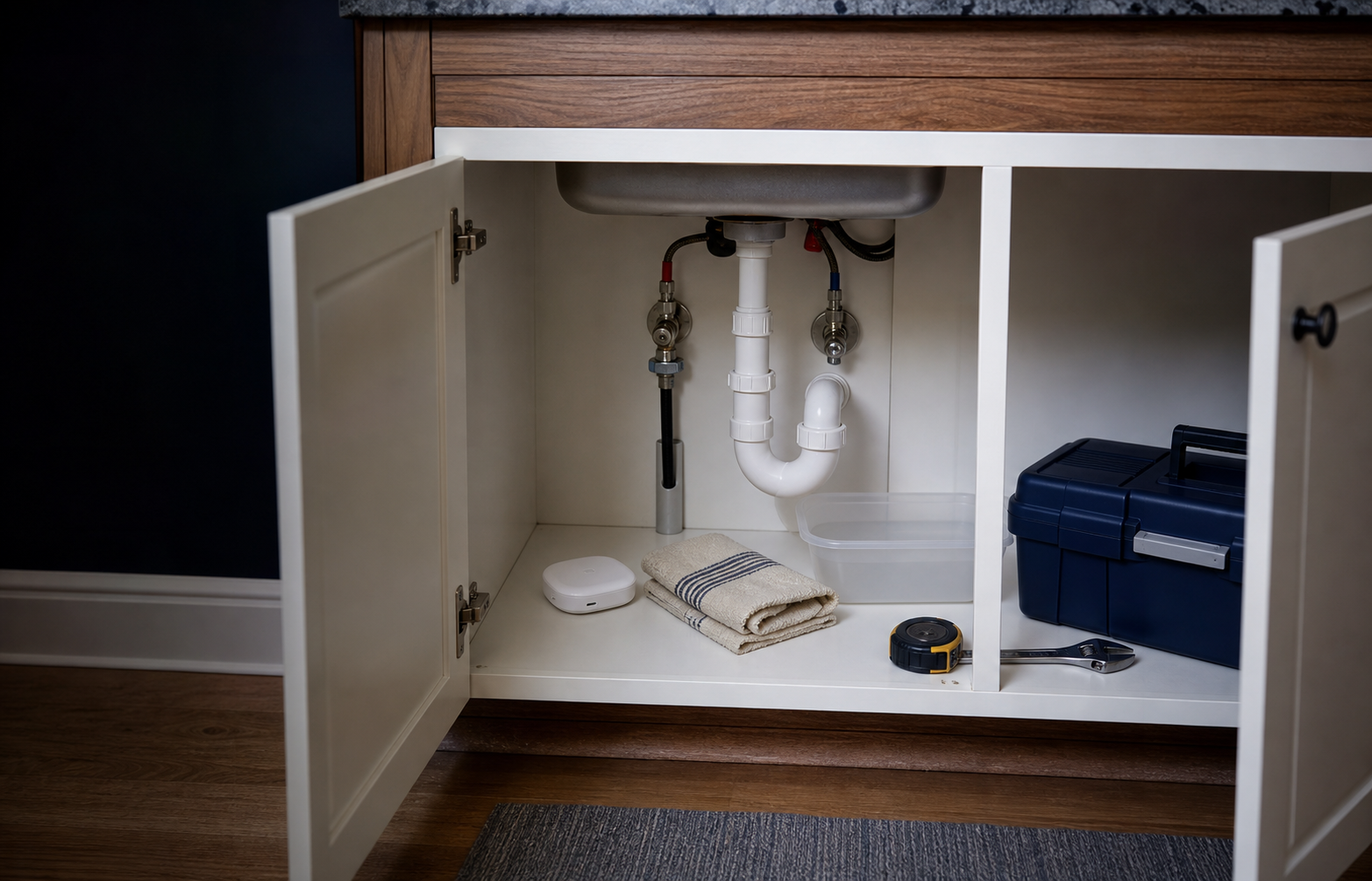
Make a simple record
Photograph visible water-prone areas, note the date, and make sure a trusted contact can reach you if appropriate. Keep emergency, utility, and property-management contacts accessible without relying on a single device.
Use systems only as designed
Follow the manufacturer instructions for appliances, thermostat settings, sensors, and other equipment. Do not force a shutoff, disconnect unfamiliar electrical equipment, or change gas, plumbing, or HVAC components just because you are leaving town.
Plan for alerts and an emergency
If you use leak sensors or other alerts, confirm the alert recipient and the plan for a safe response. An alert is a signal to investigate safely or call appropriate help—not proof that a remote device knows the cause.
When to call a professional
Stop and contact a qualified professional if the work involves electrical wiring, gas, structural damage, roof access, major plumbing changes, mold, lead, asbestos, or another hazardous material.
Related guides
Sources
Affiliate disclosure
No affiliate links appear in this guide. If a reviewed recommendation is added, the disclosure will appear beside it.