
If a leak may have reached beneath vinyl planks, arrange prompt source repair and water-damage assessment, then an experienced flooring installer’s assessment of the actual product and installation. Ask separately about the planks, any attached padding, adhesive bond and underlying materials. A waterproof label or unchanged surface is not evidence that those parts are dry or suitable to retain. Do not pull planks up, drill holes, add heat or glue down a raised edge to investigate. Keep clear of wet electrical equipment, contaminated water and unstable flooring.
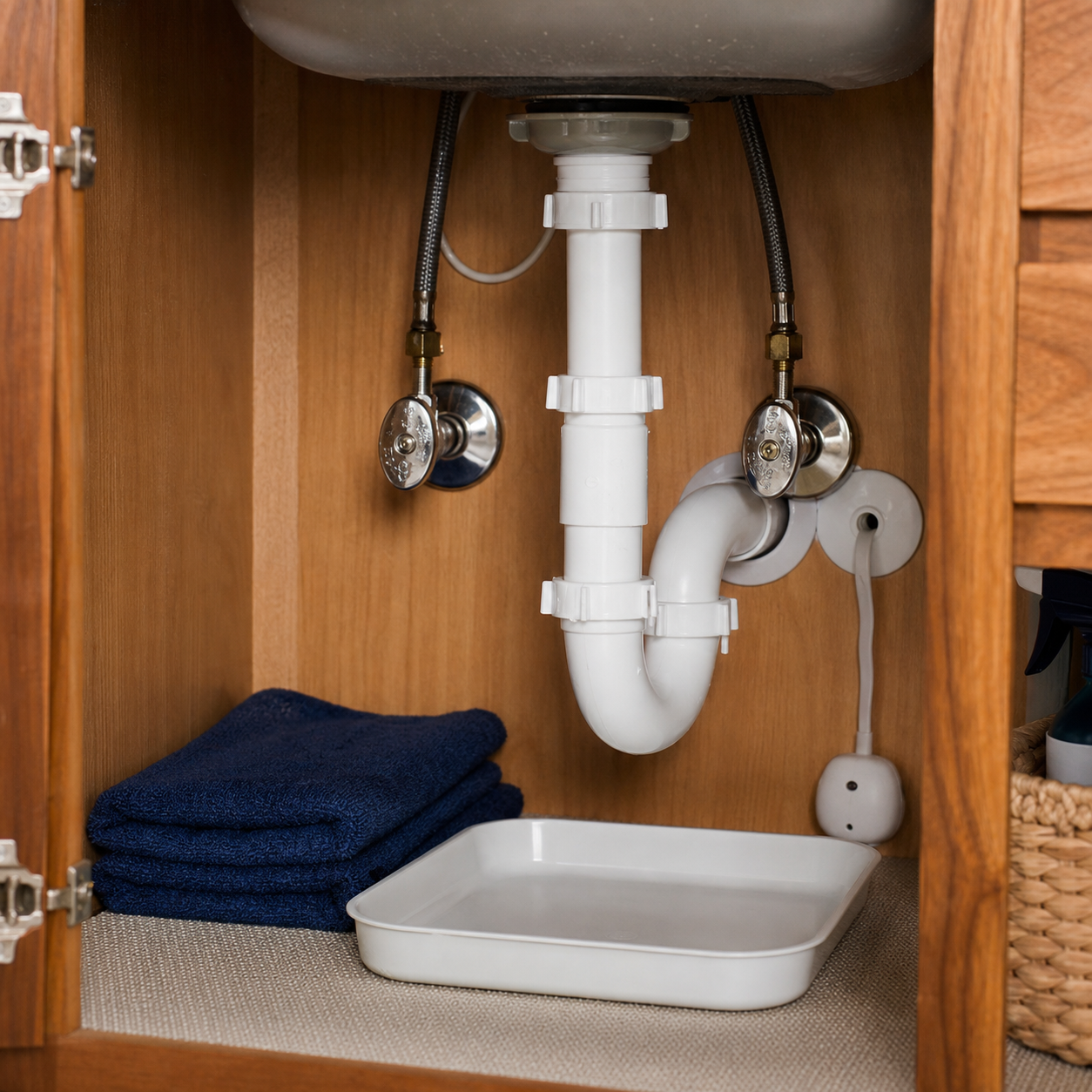

Get continuing water and unsafe access addressed first
Call for urgent source help if water is still entering or spreading. Use the appropriate pipe, appliance or ceiling response; stop ordinary use of the affected fixture only when safe. Use an already identified and authorized shutoff under its established safe instructions, or request isolation help. A flooring appointment cannot substitute for stopping ongoing damage.
Keep people and pets away from standing water, wet electrical equipment and raised or unstable flooring. Do not cross the affected area to reach a plug or test whether the floor feels solid. CDC warns against operating electrical equipment or power controls while standing in water. Leave immediate danger and call 911 from safety.
Arrange water-damage assessment promptly and report the known source, discovery time and uncertainty about duration. Tell the provider about suspected sewage or outside floodwater; EPA calls for experienced professional help with contaminated-water damage. Notify the responsible building contact for managed property. Do not delay the call until a manufacturer claim is resolved.
Identify the installation, not just the vinyl label
Use an existing invoice, product record or labeled spare-carton information to name the manufacturer, collection and known installation method. Give the flooring provider what is already available safely. Do not lift a seam, remove trim or cut a sample to fill a blank; an unknown installation needs to be identified by the provider.
Two current manufacturer examples explain why this matters. Mannington’s linked ADURA Max instructions describe a floating floor with attached padding. Its linked ADURA Flex instructions describe a fully adhered product. They have separate substrate and repair requirements. Neither example identifies what is installed in your home.
This original table names questions for those two arrangements. If records identify sheet vinyl, laminate or wood instead, obtain the appropriate product’s assessment; this guide’s plank discussion does not supply a repair for those materials.
| Known installation | Question for the flooring and restoration providers |
|---|---|
| Floating planks, with or without an attached pad | What are the joint, plank and padding findings, how will underlying areas be assessed, and what supports any proposed reuse? |
| Fully adhered planks | What is the condition of the bond and prepared substrate, and how does that affect the proposed access, retention or replacement? |
| Installation or layers unknown | Who will identify the assembly safely before choosing a removal, drying or reinstatement method? |
A waterproof plank is not a finding about every layer
Mannington’s ADURA Max instructions call the product waterproof while separately warning about excessive subfloor moisture and mold or mildew. The Flex instructions also retain substrate-moisture requirements despite the material’s moisture resistance. Read these as distinct product and building-material questions, not a blanket promise that water under a floor is harmless.
Ask the restoration provider which areas and layers were assessed and which remain inaccessible. Keep separate findings for the planks, attached pad if present, any other underlayment, adhesive where used and the subfloor. Do not infer their condition from a flat, clean-looking top.
Give observations already known: the leak location, a new raised edge, staining, an odor or a change first noticed after the event. These help explain the concern but do not prove the water path, mold, adhesive failure or a need to replace every plank. No household inspection test is required before requesting help.
Ask what supports retaining or replacing the installed materials
Have the providers explain each retained or replaced material and the basis for the affected boundary. A plank remaining visually unchanged does not establish that its joints or padding can be reused. Conversely, a leak alone does not establish that every plank throughout the home must be discarded.
The Max and Flex manuals both describe product-specific damaged-piece replacement, using different methods. Those procedures address their stated products and damage; they are not instructions to dismantle a wet floor or evidence that a local surface repair completes water recovery.
For a proposed local repair, ask what findings support keeping adjacent materials. For a wider replacement, ask what damage, access or compatibility constraint supports that boundary. Keep the product identity, available replacement material and any matching limits in the written scope.
| Part of the job | What to clarify |
|---|---|
| Source repair | What source was confirmed and repaired, and who receives a recurrence report? |
| Planks, joints and padding | Which parts can remain or be reused, what supports that decision and what is still uncertain? |
| Bond and underlying materials | For adhered flooring, what bond/substrate findings matter? Which underfloor areas were included or inaccessible? |
| Preparation before reinstatement | Which exact product and adhesive requirements apply, and who confirms they have been met? |
| Completion and handoff | What work actually finished, what instructions apply next and who owns the remaining tasks? |
Keep access and drying methods with the qualified work plan
Do not lift or disconnect planks, puncture the floor, apply a heater, inject adhesive, roll a raised area flat or weight it down as an experiment. A video about replacing a damaged piece is not a leak-assessment procedure. Ask the provider how it will obtain necessary access and coordinate any appliance, cabinet or service connections.
Both cited installation manuals warn about disturbing existing resilient flooring, backing and adhesives that may contain asbestos or crystalline silica. Tell the provider about older or unknown materials before sanding, scraping, grinding or removal is planned. Do not collect a sample or dry-scrape an exposed adhesive yourself.
The manuals contain installation moisture and substrate criteria that differ by product and method. Those numbers are not a universal household meter target or drying countdown. Where measurements support a decision, retain their date, location, material, method and interpretation. Ask the installer which requirements apply before the assembly is covered again.
Separate normal care, warranty correspondence and recovery
The currently linked ADURA Max warranty, revised August 11, 2023, contains flooding and moisture-related exclusions. Its routine floor-care section is a different topic from recovery beneath an installed floor. Ask the retailer or manufacturer which terms apply to the actual purchase and exposure; this guide does not determine coverage.
A routine steam-cleaning permission, surface-polish instruction or stain-removal chart does not establish a treatment for concealed water, a damaged adhesive bond or affected padding. Do not transfer the Max care advice to another collection or use a cleaner to decide whether underlying materials are sound.
EPA advises correcting water problems and drying items completely. Keep that material work, source repair and flooring reinstatement as separate tasks. Use the repair-estimate guide to name exclusions and responsible providers. A stopped leak, running dehumidifier, paid invoice or new surface finish does not complete every task.
Example: a supply repair leaves the vinyl-floor question open
Fictional example: a household has an identified appliance supply leak repaired. Its vinyl planks still look flat, but the water path and wetting duration are uncertain. It arranges restoration and flooring assessments rather than marking the room finished because the product was sold as waterproof.
The existing invoice identifies a floating product with attached padding. The household asks which planks, joints, pad and underlying areas were assessed and what supports any proposed reuse. If the record instead identified fully adhered planks, it would ask about the bond and prepared substrate rather than borrowing a floating-floor disassembly method.
Its private note separates the completed source repair, findings for retained/replaced materials and the actual reinstatement handoff. This invented example is a reporting exercise, not a prediction of salvage, a removal demonstration or room-use clearance.
Keep a compact private recovery record
Make urgent calls first. Use the free homeowner checklist for the next action and contact; keep detailed purchase, property and service documents privately. An incomplete record can still support a useful call.
- Location, first noticed and immediate safety or access concern: ___.
- Known source, discovery time, uncertain duration and completed source work: ___.
- Exact product and known floating/adhered installation from existing records: ___.
- Restoration and flooring contacts, assessment plan and next update: ___.
- Plank, joint, padding/bond and underlying-material findings: ___.
- Retained/replaced boundary, reasons, inaccessible areas and compatibility limits: ___.
- Applicable preparation requirements, responsible installer and separate claim response: ___.
- Actually completed work, reinstatement instructions and remaining follow-up: ___.
When to call a professional
Use the relevant plumbing, appliance or building provider for the source; qualified water-damage restoration help for exposure and affected materials; and an installer experienced with the actual vinyl-plank system for flooring assessment and reinstatement. Electrical, structural, contaminated-water and suspect hazardous-material concerns need the appropriate qualified help before access or disturbance.
Related guides
Sources
- Mannington U.S.: ADURA Max installation page — currently linked professional instructions
- Mannington: ADURA Max Installation Guidelines, rev. 05.16.2024 — floating construction, attached pad, subfloor and repair scope, pages 1–5
- Mannington U.S.: ADURA Flex installation page — currently linked fully adhered instructions
- Mannington: ADURA Flex Installation Guidelines, ©2026 — adhered construction, substrate and disturbance/repair limits, pages 1–3 and 6
- Mannington U.S.: ADURA Max warranty page — current linked terms
- Mannington: ADURA Max Warranties and Floor Care, rev. 08.11.2023 — moisture and flooding exclusions, page 3; routine-care scope, pages 4–5
- EPA: Mold Cleanup in Your Home — source correction, complete drying and contaminated-water expertise
- CDC: Reentering Your Flooded Home — standing-water electrical boundary
Free next step
Download the free seasonal maintenance checklist to record observations and follow-up tasks. See the seasonal maintenance routine for more context.
Affiliate disclosure
No affiliate links appear in this guide. If a reviewed recommendation is added, the disclosure will appear beside it.