
Deal with the active leak and unsafe access first. From a safe, clean area, protect dry, undamaged photos and arrange prompt advice for wet ones. An already-loose modern print with an intact image may be air-dried individually, flat and image-side up; do not rub the image or stack wet prints. Photos stuck to glass, albums or each other, older or unidentified formats, and irreplaceable originals need a photograph conservator before separation, washing or freezing. Suspected sewage, mold or other contamination also needs experienced water-damage help.
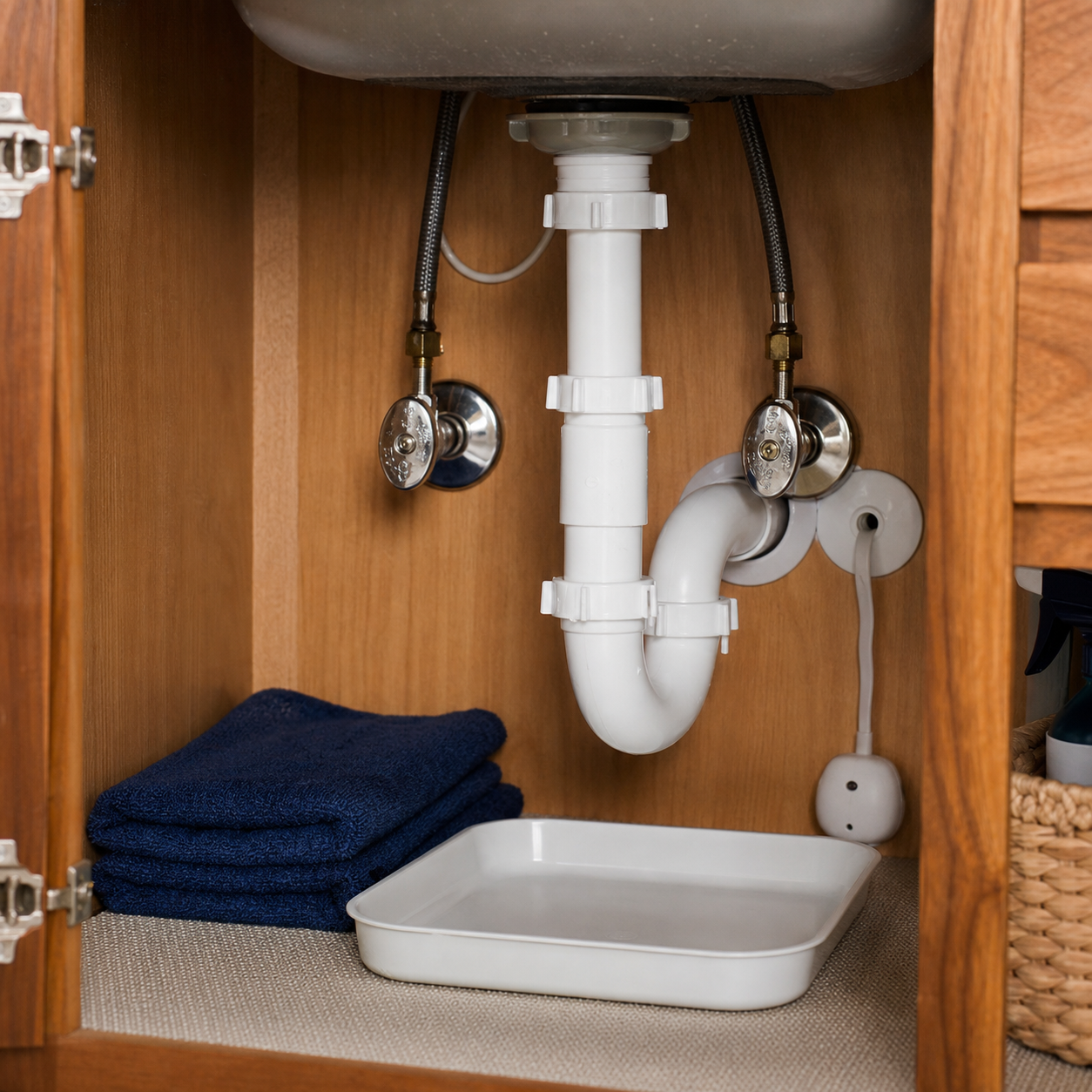

Make the room safe before rescuing a photograph
Do not go beneath a sagging ceiling or enter standing water to reach an album. Leave immediate danger, injury, fire or suspected collapse and call 911. Use the ceiling-leak guide for urgent source help; a bucket or stopped drip does not establish that the area is safe.
CDC warns against switching power or using electrical equipment while standing in water. Do not plug in a scanner, fan or hair dryer beside the leak, test wet equipment or cross water to reach a breaker. Qualified help must resolve the electrical hazard.
EPA recommends experienced professional help for sewage or other contaminated-water damage. Do not bring suspect wet contents onto a kitchen counter or treat a rinse as decontamination. Report visible mold, suspected contamination and unsafe access before arranging photo handling. Source repair and safe building recovery remain separate from saving the images.
Protect dry photos and identify what is wet
If safely accessible without disturbing damaged material, move dry, undamaged photographs to a clean, dry place away from the affected area. NPS recommends this triage and checking whether a digital original or undamaged negative can provide a replacement. A replaceable print and the only surviving family portrait may call for different decisions.
Write a brief description from what you already know: loose recent prints, an album, framed photographs, negatives/slides, older mounted portraits or unknown. Do not test the image with a wet finger or peel a corner to identify it. The Library of Congress explains that photographic materials and production process matter to care decisions.
Call promptly rather than waiting for a universal rescue deadline. NPS emphasizes the urgency of wet-photo deterioration, but neither a discovery time nor a dry-looking surface predicts what can be recovered. Tell the conservator when the leak was noticed and whether the actual wetting time is unknown.
For already-loose modern prints, keep handling minimal
This limited option is for safely accessible, already-loose modern prints with an intact image, without suspected mold or contaminated-water exposure. If the image is lifting, smearing or flaking, the format is uncertain, or the original is too important to risk, contact a photograph conservator for specific instructions instead.
Prepare a clean, dry, flat surface with enough room to keep the prints separate. Texas State Library describes air-drying an intact-image photograph flat with the image facing up. For known inkjet prints, RIT’s specific guide calls for individual, horizontal, face-up drying on blotter paper or fiberglass screens.
Support a wet print from underneath across its size rather than lifting it by one corner; RIT notes that wet inkjet prints are fragile. Keep fingers off the image. Place it image-side up without overlap. Do not wipe or blot the image surface: RIT warns this can smear colorants or damage coatings. Stop if handling causes visible change.
This is not a washing or stain-removal procedure. Do not press a wet print onto a scanner, sandwich its image against a towel, or apply tape or adhesive. Keep the work away from food and drink. If there is not enough suitable space or you cannot handle the prints safely, ask the conservator what to do immediately rather than stacking them to finish later.
Use the condition to choose the next conversation
NPS specifically directs valuable collections, clumps of stuck photographs and photos adhering to glass or album pages toward professional conservation. Do not pull them apart. Use this original triage table to describe the problem, not to diagnose the photographic process.
| What you have | Next step to discuss |
|---|---|
| Dry, undamaged photographs nearby | Protect them in a safe, clean, dry location; note which originals or copies are available. |
| Already-loose modern prints with intact images | Use the limited handling and individual face-up drying conditions above; seek advice if any condition is uncertain. |
| Prints stuck to glass, pages, sleeves or one another | Contact a photograph conservator promptly; do not peel, pry or force removal. |
| Older, valuable, unidentified or visibly damaged images | Describe format, importance and condition to the conservator before treatment; do not experiment on a corner. |
| Suspected mold, sewage or other contamination | Keep people out of unsafe exposure; coordinate experienced water-damage help with photograph conservation. |
Ask before washing, freezing or sending anything away
A household album may mix different photographic processes. NPS cautions against freezing older or valuable photos without consulting a professional. RIT’s fine-art inkjet guide describes conditional freezing, says it can cause additional damage, and does not recommend freeze-drying for those prints. Those are format-specific decisions, not permission to freeze every family photo.
Ask which exact items the advice covers, how stuck enclosures will be handled and what immediate stabilization is appropriate. Do not turn the availability of freezer space, a general paper-salvage tip or another family’s recovery story into a treatment choice. Avoid heat, chemical cleaning and attempts to dissolve adhesion without the conservator’s instructions.
The AIC directory offers Photographic Materials and Photographs specialties, location filtering and emergency recovery services. Ask the chosen professional about experience with the actual format, urgent availability, assessment charges, likely limits and specific transport instructions. Do not package or mail a wet collection before confirming how it should travel.
Later scanning or reprinting can preserve access to an image, but it does not restore or stabilize a damaged original. Keep treatment, replacement-copy decisions and the building repair in separate entries. For storage after recovery, Library of Congress guidance describes photo-safe enclosures and warns against adhesive album pages; ask what suits the actual material.
Example: a loose print and a portrait stuck to glass
Fictional example: after the leak and access hazards are addressed, a household finds several loose recent prints and a framed family portrait. An existing digital folder supplies replacement files for some recent pictures. The household protects the unaffected originals and records which copies it can actually open.
The portrait appears attached to the glass. Its note says “only known original; photographic process unknown; first noticed wet this afternoon.” The household contacts a photograph conservator without prying the frame apart or trying to scan the wet surface. It asks for immediate handling and transport advice and discloses what is known about the water.
The record keeps “source repaired,” “photo assessment pending” and “replacement files located” separate. This invented example demonstrates priorities; it does not establish the portrait’s salvage prospects or predict what another wet print can tolerate.
Keep a small private recovery record
Make urgent calls first. Connect an album or photograph-group reference to your private home-contents inventory; keep family images and household details private. The free homeowner checklist can hold the next action and responsible contact. A short honest record is more useful than an unsupported claim that the collection is restored.
- Photo/group reference, room and first noticed wet: ___.
- Known or unknown water source, wetting duration and access hazards: ___.
- Loose, framed, album, stuck, damaged-image or unidentified condition: ___.
- Irreplaceable originals and verified existing copies: ___.
- Conservator/contact, immediate instructions and items covered: ___.
- Contamination/building-recovery coordination and remaining tasks: ___.
- Agreed treatment/transport scope, limitations and next update: ___.
- Work actually completed and later copying/storage instructions: ___.
Keep bound books and photographic albums on the right recovery path
A wet shelf may contain ordinary books, glossy illustrated volumes and photographic albums. Their pages, bindings and image layers need different decisions. Do not apply the loose-print option to a bound volume or transfer a book-freezing method to unidentified photographs. Report mixed materials to the appropriate conservator.
The wet-books guide adds a separate wetness/material triage and book-conservation handoff, including glossy pages and important annotations. Its limited damp-book option excludes coated, stuck, valuable and uncertain material. Keep the actual album or photograph instructions with the affected group rather than combining all paper-looking objects into one treatment plan.
When to call a professional
Leave immediate danger and call 911. Use the appropriate plumber, roofer or building emergency contact for ongoing water, and qualified electrical/structural help for unsafe access. Contact a photograph conservator promptly for valuable, stuck, damaged-image or unidentified photographs. Experienced contaminated-water/mold professionals and the conservator need to coordinate where exposure makes handling unsafe.
Related guides
Sources
- National Park Service: Saving Wet Photographs — Mary F. Striegel; November 2020 PDF, web updated September 2022
- RIT Image Permanence Institute: Response and Recovery of Fine-Art Inkjet Prints during Water Emergencies — format-specific handling and drying limits
- Library of Congress: Care, Handling and Storage of Photographs — identification, handling, suitable housing and photograph conservators
- Texas State Library and Archives Commission: Water Emergencies — intact-image, face-up air-drying guidance; updated December 2018
- American Institute for Conservation: Find a Professional Member — Photographic Materials/Photographs specialty and emergency recovery services
- EPA: Mold Cleanup in Your Home — source repair, contaminated-water help and valuable-item specialists
- CDC: Reentering Your Flooded Home — standing-water electrical boundary
- National Park Service: Saving Wet Books After a Flood — Mary F. Striegel; November 2020 PDF, web updated September 2022; triage and supported handling
- Library of Congress: How to Air-Dry Collections — space, labor, wetness distinctions and possible lasting distortion; updated April 2025
- University of Michigan Library: How to Salvage Wet Books — four-page leaflet updated October 2002, currently linked by Library of Congress; damp-book scope and cautions
- National Archives: Bound Volumes with Coated (Glossy) Paper — emergency guidance dated April 2009; adhesion and specialized recovery
- Library of Congress: How to Freeze Collections — stabilization, format limits and professional drying options; updated April 2025
- National Archives: Wet Records — heat/sunlight damage and valuable-material preservation advice
Free next step
Download the free seasonal maintenance checklist to record observations and follow-up tasks. See the seasonal maintenance routine for more context.
Affiliate disclosure
No affiliate links appear in this guide. If a reviewed recommendation is added, the disclosure will appear beside it.