
Arrange prompt water-damage assessment for a leak-wet sofa or upholstered chair, with a furniture-restoration specialist for valuable pieces. Some clean-water damage may be recoverable, but a dry-looking cover or a W cleaning code does not establish that the whole piece is dry or suitable to use. Report the source, discovery time and what is unknown; suspected sewage or other contamination needs experienced professional help. Keep clear of unsafe water, ceilings and electricity, and do not move heavy furniture or plug in a wet powered chair to investigate. For a wet mattress, arrange another unaffected sleeping place while obtaining an item-specific recommendation; mattresses touched by floodwater or with visible mold have separate discard guidance below.
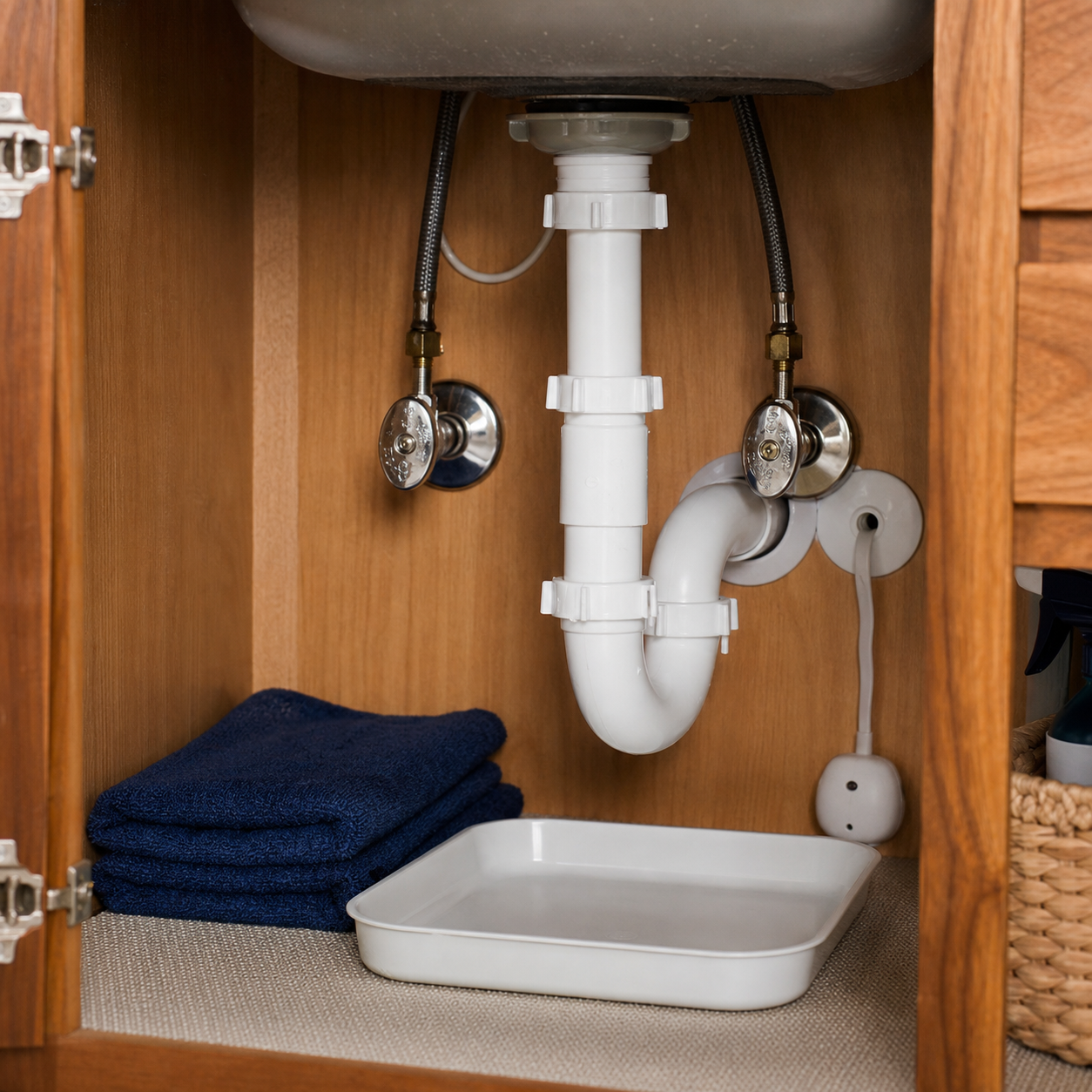

Make the leak and room safe before protecting the furniture
If water is still escaping, use the appropriate ceiling, appliance, plumbing or basement response and request urgent source help. Stop an already-running fixture only through ordinary safe controls. Use a known, authorized customer water shutoff only under its established instructions; request help if access or isolation is uncertain. A household valve cannot stop rain entering through a roof.
Keep people and pets away from sewage, standing water, unstable overhead material and wet electrical equipment. Leave and call 911 for immediate danger, injury or suspected collapse. Do not stand beneath a damaged ceiling to cover a sofa or rescue cushions.
CDC warns against using electrical equipment or switching power while standing in water. Do not enter water for a cord, start a drying machine or test a wet powered recliner. Keep affected powered furniture out of use and obtain the appropriate electrical and manufacturer/service guidance. Do not reach into its mechanism, disconnect wet components or open electrical housings.
A complete item record is not required before calling. Do not drag, tilt or dismantle heavy wet furniture to photograph the underside or protect a floor. Tell the provider where it is and ask who handles safe access and movement.
Start with exposure and uncertainty rather than a salvage promise
EPA’s clean-water response table includes upholstered furniture but notes that complete drying can be difficult within its prompt-response period. It suggests a furniture-specialist restoration or water-damage professional for valuable pieces. That is a reason to arrange assessment promptly, not a guarantee of retention.
Its footnotes limit the table to clean-water damage. They also warn against fans before water is established as clean or sanitary and explain that elapsed time alone does not decide whether mold has grown. Do not wait for a deadline or infer clean water from its appearance.
Report a confirmed source separately from a guess: identified supply-pipe leak, rain-associated ceiling water, wastewater backup or unknown. Keep “first noticed” distinct from “first became wet.” EPA recommends experienced professional help for sewage or other contaminated-water damage; that assessment should not be replaced by a routine upholstery-cleaning booking.
A wet mattress needs its own reuse and disposal decision
Keep an affected mattress out of use while its exposure and condition are resolved. Arrange another dry, unaffected sleeping place and prompt source and contents help. Do not sleep on it because the top feels dry, put new bedding over the uncertainty or wait for an odor to decide whether to call. Keep away from unsafe ceilings, water and electrical equipment; do not lift or flip the mattress for an inspection.
Minnesota’s current household flood-cleanup guidance identifies mattresses among porous items to discard when they touched floodwater or have visible mold growth. It explains that hidden surfaces and interiors can retain hazards. For that situation, plan appropriate disposal with the responsible provider; routine spot cleaning is not the missing flood-recovery step.
For a different building leak, give the actual manufacturer and experienced water-damage provider the known source, discovery time and product record promptly. Keep unknown exposure or contamination explicit. A reported supply-pipe repair does not establish what reached the bed, how long it was wet or whether it can be retained. Ask for the item-specific recommendation and its basis rather than a universal salvage promise.
Arrange safe handling and the applicable local collection route with the provider or waste service. Do not drag a wet mattress through clean rooms, cut it open or assume ordinary recycling accepts contaminated bedding. Source correction and room recovery still need their own completion records.
A washable cover does not answer the whole-bed question
Tempur-Pedic’s current U.S. support distinguishes ordinary mattress covers from separately sold protectors and says its ordinary covers are not waterproof. Its cover-care page also gives different care status for named lines. These are bounded examples of why “it has a cover” or “there is a zipper” does not identify the actual construction, care instruction or water exposure.
Its spill page concerns routine spills and warns about wetting the underlying material. Do not turn that page into a cleanup recipe for a soaked or contaminated bed. Do not unzip or remove an unidentified cover, steam-clean the mattress or apply a disinfectant to investigate. Give the provider the actual existing care record and ask which instructions apply.
Use this original component table to keep the handoffs specific. A decision about one part does not clear the other parts. It supplies no drying duration, moisture number, smell test or sleep-clearance method.
| Affected component or record | Question for the responsible provider |
|---|---|
| Mattress | What exposure is established, what finding supports disposal or another recommendation, and what remains unknown? |
| Ordinary cover or separate protector | Which item and actual care instructions were identified? Is its condition known separately from the mattress? |
| Sheets, pillows or other bedding | Which items need their own exposure and product-care decisions rather than the mattress recommendation? |
| Box spring, foundation or frame | Was it affected, what was assessed and who handles any separate material or structural concern? |
| Powered base, cord or control equipment | Who handles qualified electrical or manufacturer assessment and use restrictions? Do not operate it to demonstrate a dry-looking bed. |
| Room and handling | Who completes source, ceiling/floor and safe removal work, and what local collection instructions apply? |
Example: a dry protector is not a complete bed assessment
Fictional example: water from a ceiling leak reaches a bed. The household keeps away from the unsafe room, arranges source help and uses another unaffected sleeping place. An existing receipt identifies a mattress and a separately purchased protector; no one lifts the mattress or operates its powered base to obtain more detail.
The protector later looks dry. The household reports “protector surface looks dry; mattress, foundation and powered-base exposure unresolved” and asks the responsible providers for separate recommendations. A source repair or bedding wash is recorded as that completed task, without converting it into a whole-bed finding.
The private note links the existing item references to the exposure, assessment, actual work and remaining restriction. This invented example does not establish that a protector prevented entry or that the mattress can be saved.
- Existing mattress, protector, foundation/base and bedding references: ___.
- Known source, first discovery and unresolved exposure: ___.
- Provider’s item-specific recommendation, basis and unassessed areas: ___.
- Actual completed work, separate electrical/room/handling task and next contact: ___.
A cleaning code describes routine care, not the condition inside
Ashley’s current fabric-care table uses codes including W, S, SW/WS and X to describe different cleaning methods. Even its W and water-compatible spot-care entries restrict overwetting or saturation. The letter is useful product information for the provider; it is not a water-damage salvage label.
La-Z-Boy’s current Code W instructions do not recommend hot-water extraction or steam cleaning and say not to remove and launder cushion covers. This is an example of why a general W-equals-steam-cleaning assumption fails. Follow the actual item’s instructions rather than transferring a method from another manufacturer or fabric.
Do not unzip, peel back or remove a cover to see whether the cushion can be washed. A removable-looking cover, water-repellent finish or clean-looking face does not establish the condition of the padding and frame. Ask the provider to account for those parts and any product limitations.
This guide concerns furniture affected by a building-water event. An ordinary small spill on an otherwise sound item belongs under its actual care instructions. Do not turn routine spot-cleaning advice, a household carpet cleaner or a stain-removal video into a treatment plan for soaked or contaminated furniture.
Ask what the proposed recovery actually includes
Request a proposal that names the item, exposure and parts considered, rather than only “clean sofa.” Have the responsible provider explain the basis for retention, restoration, replacement of components or disposal. Keep inaccessible areas and uncertainty explicit.
For an important piece, ask whether a furniture-restoration specialist is needed and what any proposed reupholstery or component work covers. Compare the actual scope, expected appearance limitations and unresolved work before deciding on non-urgent expenditure. Do not assume every valuable item can be saved or that a new cover resolves all damage.
Use this original table for the conversation. It does not prescribe extraction equipment, chemicals, stripping, drying conditions or a health-clearance test.
| Decision to clarify | Question for the responsible provider |
|---|---|
| Water exposure and timing | What is known about the source, contamination and time wet, and how does uncertainty change the plan? |
| Product and care limits | What item/material and applicable care instructions were identified, and what information is still missing? |
| Parts and extent | Were the fabric, padding/cushions, frame and any powered components considered, and what remains inaccessible? |
| Treatment choice | What can be retained, restored, replaced or discarded, and what finding supports each part of that choice? |
| Completion and use | What work and verification are included, what limitations remain, and who gives the applicable return-to-use instructions? |
| Handling and coordination | Who safely handles movement or disposal, and who completes separate floor, source or electrical work? |
Keep furniture work separate from the room and electrical handoffs
Ask who assesses affected carpet, flooring, walls or ceiling as well as the contents. A decision about the sofa does not establish that the floor beneath it is dry or that a light or outlet may be used again. Keep source correction, building-material work and contents work as distinct tasks with responsible contacts.
If measurements or observations support a conclusion, retain their date, location, material and interpretation from the provider. This guide supplies no universal moisture percentage, drying time, smell test or surface-touch test for a complete upholstered piece.
EPA explains that mold can be difficult or impossible to remove fully from porous materials. Where mold or contamination is suspected, ask the experienced provider what that means for the actual item. Do not cover the problem with fragrance, steam, a stain treatment or a household disinfectant mixture. A better appearance alone is not the missing assessment.
For wet powered furniture, keep the furniture-material recommendation separate from electrical/service instructions. A cleaned cover or dried room does not authorize a plug-in test. Use the existing water-exposed electrical guide for that handoff.
Example: the cover looks dry after the pipe repair
Fictional example: an identified supply leak is repaired after water reaches an upholstered chair and the adjacent carpet. The household notices that the chair cover later looks dry. It keeps the affected item out of use pending assessment and reports the unknown wetting start time rather than treating the appearance as completion.
An existing purchase record identifies the item and its fabric-care instructions. The household gives that record to the water-damage/furniture provider and asks what was considered in the cushions, padding and frame. It also asks who handles the carpet and floor findings. It does not remove the cover or rent a steam cleaner because a label contains W.
The private note reads “source repaired; chair and floor decisions pending.” It is updated with the actual treatment and remaining work. This invented example illustrates scope and responsibility; it does not predict salvage, establish clean-water status or clear another item for use.
Keep a short private contents-recovery note
Make urgent calls first. Link existing item photos or receipts if available, and mark missing details unknown. Use the private home-contents inventory for item references and the free homeowner checklist for the next action. No one needs to move the furniture or post household photos publicly to fill in this record.
- Room/item reference and first known observation: ___.
- Confirmed or unknown water source, source-work status and exposure history: ___.
- Unsafe access, overhead, contamination or electrical concern: ___.
- Existing item/model/fabric-care record and missing details: ___.
- Assessed parts, inaccessible areas and provider findings: ___.
- Retention/restoration/replacement/disposal scope, basis and limitations: ___.
- Safe handling, room-material/electrical contacts and pending tasks: ___.
- Actually completed work, applicable use instructions and follow-up contact: ___.
Give wet photographs a separate conservation handoff
If family prints or albums were affected by the same leak, tell the water-damage provider and arrange photograph-conservation advice where needed. Furniture cleaning and photographic-image treatment require different decisions. Do not move heavy furniture to rescue an album or carry suspect contaminated contents into a clean work area.
The wet-family-photograph guide distinguishes already-loose modern prints from images stuck to glass, album pages or each other. It adds a triage table and private recovery record without a universal washing, freezing or salvage rule. Keep the furniture scope, photographic originals and room/source repairs assigned separately.
Give clothing and family textiles their own recovery plan
A furniture or mattress recommendation does not decide the treatment of clothing, a family quilt or a special garment affected by the same event. Give the responsible provider the actual item, exposure and existing care record; identify valuable or fragile pieces that may need textile-conservation advice. Do not transfer a sofa’s routine cleaning code or a mattress decision to those fabrics.
The clothing-and-textile guide adds an item-specific contact table, fictional basket-and-quilt example and private recovery prompts. Keep the accepted assessment and treatment for each item beside the furniture and room records. No garment wash, dye test, freezing or safe-handling procedure follows from an upholstery recommendation.
When to call a professional
Keep people away from unsafe water, ceilings and wet electricity, and call 911 from safety for immediate danger. Arrange source repair and experienced contents/water-damage help promptly; suspected contamination needs relevant experience. Ask the actual product manufacturer about a wet mattress or bed and coordinate qualified electrical service for an affected powered base. Safe handling, disposal and room-material work need assigned contacts; ordinary cleaning or a dry-looking cover does not resolve them.
Related guides
Sources
- EPA: Mold Remediation Guide Chapter 4, Table 1 and complete footnotes — clean-water upholstery recovery and valuable-piece specialist advice
- EPA: Mold Cleanup in Your Home — porous materials, source correction and experienced contaminated-water help
- Ashley: Care and Cleaning — current fabric cleaning-code table and no-saturation limits; routine care scope
- La-Z-Boy: Fabric and Leather Care — current Code W limits on steam/extraction and cushion-cover laundering; routine care scope
- CDC: Reentering Your Flooded Home — standing-water electrical boundary
- National Park Service: Saving Wet Photographs — Mary F. Striegel; November 2020 PDF, web updated September 2022
- RIT Image Permanence Institute: Response and Recovery of Fine-Art Inkjet Prints during Water Emergencies — format-specific handling and drying limits
- Library of Congress: Care, Handling and Storage of Photographs — identification, handling, suitable housing and photograph conservators
- Texas State Library and Archives Commission: Water Emergencies — intact-image, face-up air-drying guidance; updated December 2018
- American Institute for Conservation: Find a Professional Member — Photographic Materials/Photographs specialty and emergency recovery services
- Minnesota Department of Health: Clean-up for Home or Business after a Flood — reentry, electrical hazards and porous-material/mattress discard guidance; updated March 20, 2026
- Tempur-Pedic U.S.: How do I clean a spill on my mattress? — routine spill scope and actual care-label/material limits
- Tempur-Pedic U.S.: Can I clean the cover of my mattress? — different named models have different cover-care limits
- Tempur-Pedic U.S.: Is the cover of the mattress waterproof? — ordinary cover versus separate protector
- National Park Service: Saving Wet Textiles After a Flood — current gateway, updated September 29, 2022
Free next step
Download the free seasonal maintenance checklist to record observations and follow-up tasks. See the seasonal maintenance routine for more context.
Affiliate disclosure
No affiliate links appear in this guide. If a reviewed recommendation is added, the disclosure will appear beside it.