
Make the leak area safe before reaching for documents. For a few already-separate, ordinary uncoated sheets without suspected contamination, careful flat air-drying on clean absorbent material may help preserve the information. Do not peel stuck sheets, rub running ink or use heat. Valuable originals, glossy or unidentified material and mold/contamination concerns need prompt paper-conservation or experienced recovery help. Separately ask the issuing authority what a damaged official document requires; a dry surface or readable scan does not establish acceptance. Keep household records and identification details private.
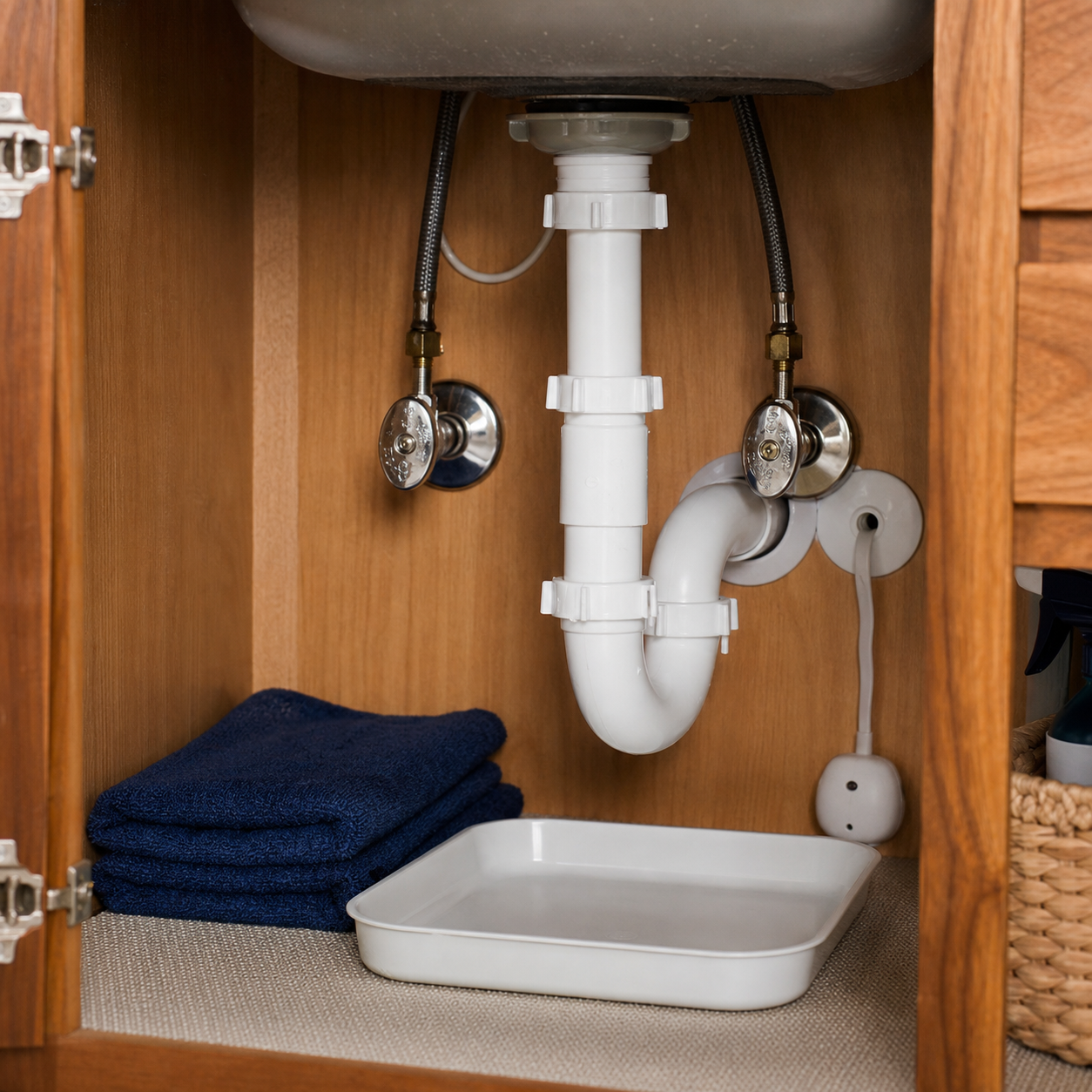

Safety and ongoing water come before the filing cabinet
Keep clear of standing water, wet electrical equipment, sagging ceilings and unstable furniture. Do not enter an unsafe room, pull a heavy wet cabinet or stand beneath damaged material to retrieve a folder. Leave immediate danger, injury, fire or suspected collapse and call 911. Use the ceiling-leak guide for the urgent source response.
CDC warns against switching power or operating electrical equipment while standing in water. Do not plug in a scanner, fan or dryer beside the affected papers, and do not reach into water for a cord or breaker. Qualified help must resolve the hazard.
Report sewage, chemical exposure, visible mold or an unknown water history before arranging handling. EPA recommends experienced professional help for contaminated-water damage. Do not spread suspect documents onto a kitchen table or treat a household rinse, disinfectant or freezer as decontamination.
Make two separate decisions for each important group
The preservation question is “How can this original be stabilized without losing more information?” The practical-use question is “What record or replacement will the receiving organization accept?” These may involve different people and different timescales. A conservator does not issue a new passport; an issuer does not repair a family letter.
From existing knowledge, identify unique originals, replaceable statements or printouts, and official documents needed for a particular task. Note any immediate appointment or deadline privately and contact the relevant organization promptly. Do not wait for every page to dry before asking about an urgent document need.
Protect safely accessible dry, unaffected records away from the leak. Use existing private digital files or account records to establish what information is available. Mark a copy as a copy and an unknown condition as unknown. Avoid destroying an original merely because a scan exists; establish the applicable preservation and issuer instructions first.
A limited option for already-separate ordinary sheets
This option is for a small amount of ordinary uncoated paper that is already loose and can be handled safely, without suspected mold or contaminated-water exposure. Exclude valuable or unique originals, official documents needing an issuer decision, glossy sheets, adhered pages, running media and unidentified materials. Ask a paper conservator if the conditions are uncertain.
Library of Congress notes that wet paper is heavy and fragile and needs full support on a flat, stable surface. Prepare a clean work area with enough room for individual sheets and clean, unprinted absorbent material that will not transfer dyes or ink. Do not pick up a fragile wet sheet by one corner or pull it from an attached pile.
National Archives guidance supports drying small quantities on clean blotting material. Its family-paper guidance describes flat document drying and changing the absorbent material underneath as it becomes soaked. Keep already-separate sheets flat and supported, with their order recorded separately; do not rub the text or press a wet surface against a scanner.
Monitor the work. If changing the support requires pulling stuck paper, the image starts moving or the quantity exceeds your safe space and attention, stop that handling task and request prompt recovery advice. Do not add wet sheets to a stack to make room.
The National Archives warns that high heat and harsh sunlight can permanently damage records. Air-drying can also leave distortion, as Library of Congress explains. A readable, dry-looking page is not a promise of full restoration, removal of contamination or acceptance for official use.
Use the material and purpose to choose the next contact
Describe what you can observe without separating or testing it: loose sheets, an adhered bundle, glossy coating, bleeding text, fragile seals, a photograph or a bound booklet. Library of Congress’s freezing guidance distinguishes formats and highlights glossy papers and bleeding media as urgent stabilization problems. Do not turn that institutional guidance into a general freezer recipe for a mixed household folder.
Use this original table for the first conversation. It separates the next decision from an assumed outcome; no row guarantees that a document can be saved or used.
| Paper or need | Next contact or decision |
|---|---|
| Few ordinary, already-loose uncoated sheets | Consider the limited handling conditions above; request help if they do not apply. |
| Unique letters, certificates, seals or valuable originals | Paper conservator for material-specific preservation advice; retain the original pending instructions. |
| Stuck, glossy, running-ink or unidentified material | Prompt advice from a paper conservator or recovery specialist; do not peel, rub, rinse or improvise freezing. |
| Official document needed for a particular purpose | Actual issuing authority or receiving organization for the damaged-document and acceptance requirements. |
| Bound books, photographs or mixed albums | Use their dedicated recovery guides and tell the specialist about the mixed materials. |
| Suspected mold, sewage, chemicals or unsafe access | Experienced water-damage help coordinated with conservation advice before handling. |
Use the actual damaged-document route
Two official examples show why “replace all wet documents the same way” is unreliable. The State Department’s passport FAQ says a damaged passport can cause boarding or travel difficulties and directs the holder to apply in person for a new one. It lists the damaged passport and a signed explanation among the required submission materials. Read the complete current instructions and contact Passport Services about uncertainty or urgent travel.
SSA’s replacement-card page says a physical Social Security card is not necessary in most cases when the number is known. If a replacement is needed, its official route determines whether an online request or office appointment applies. Do not infer that another institution will accept a damaged card or a phone photograph.
Use official issuer contact details you independently recognize. Describe the document as damaged when that is what happened; do not select a lost/stolen report merely because a general replacement directory lists one. For another country’s passport, state record, certificate or private document, obtain that issuer’s actual instructions.
Keep deadlines, required evidence, handling/submission instructions and unresolved questions with the document reference. This guide does not decide identity, citizenship, benefits, coverage or legal validity, and supplies no universal form, fee waiver or delivery promise. Keep conservation advice separate from whatever the issuer requires.
Protect the original and its information during follow-up
A paper conservator is the appropriate contact for important, damaged or uncertain originals. The AIC directory includes Book and Paper, Unbound Documents and emergency recovery services. Ask about relevant material experience, urgent availability, assessment charges and specific handling or transport instructions before packing or sending a wet group.
General National Archives archival-care guidance advises against repair tape, including products described as archival, and warns that removing existing adhesives can damage records. Do not tape a tear, glue fragments, laminate a wet original or try to dissolve a label to make it easier to copy. Tell the conservator about existing attachments.
Keep a neutral group reference such as “hall folder A” in the recovery list. Store sensitive contents, full identification numbers, account details and document images in your existing private records. Share only what the legitimate provider or issuer requires through its appropriate channel. No completed household record needs to be uploaded to this website.
Use the home-contents inventory to connect the affected group with existing records. Books and photographic images have separate recovery owners; loose-paper handling should not be applied to their bindings or image layers. Record source repair, original stabilization, information-copy access and official replacement as separate tasks.
Example: a family letter and a damaged official document
Fictional example: after a leak and access hazards are addressed, a household finds a folder containing ordinary printouts, an irreplaceable handwritten letter and a water-affected official document. It lists the group from a safe position and checks an existing private copy of the routine information.
The letter’s ink appears changed, so the household contacts a paper conservator rather than rubbing it, peeling an attached sheet or forcing a scan. It separately contacts the official document’s issuer, accurately describes the damage and asks about the actual replacement and submission requirements.
The record says “routine information located; letter preservation pending; issuer instructions requested.” It does not say “all restored” after the folder looks dry. This invented example illustrates parallel decisions and privacy; it does not establish salvage, issuer acceptance or the correct procedure for a particular document.
A short private document-recovery record
Make urgent calls first and keep the notes brief. Use the free homeowner checklist for the next action and responsible contact, while retaining sensitive details privately. A group reference and honest unknowns are enough to start.
- Neutral group reference, affected location and first discovery: ___.
- Known/unknown source, wetting duration, access and contamination concerns: ___.
- Observed material/condition without opening or separating: ___.
- Unique original, existing copy and practical need or deadline: ___.
- Conservator/recovery contact and exact items covered by advice: ___.
- Issuer/receiving organization, current instructions and unresolved questions: ___.
- Agreed handling, transport or submission plan and next update: ___.
- Work actually completed, replacement status and separate building tasks: ___.
When to call a professional
Leave immediate danger and call 911. Request appropriate urgent source, electrical and structural help before rescuing records. Contact a paper conservator for unique, stuck, damaged-media or uncertain documents; coordinate experienced water-damage help for contaminated water or mold. Contact the actual issuing authority about damaged official documents and any urgent need. This guide cannot determine a document’s acceptance or clear contaminated materials for handling.
Related guides
Sources
- National Archives: Wet Records — small-quantity drying, heat/sunlight limits and valuable-record advice
- Library of Congress: How to Air-Dry Collections — fragile wet paper, supported flat surfaces and suitable absorbent material; updated April 2025
- National Archives: Emergency Salvage of Flood Damaged Family Papers — August 1993 guidance, reviewed August 2016; limited document-drying and conservator scope
- National Archives: Paper-Based Records — general archival care, tape/adhesive and fragile-record limits; reviewed May 2023
- Library of Congress: How to Freeze Collections — format-specific stabilization and later drying; updated April 2025
- U.S. Department of State: Passport Services FAQ — Can you continue to use a passport if it is damaged?
- Social Security Administration: Replace Social Security card — official replacement route and whether a physical card is needed
- American Institute for Conservation: Find a Professional Member — Book and Paper/Unbound Documents and emergency recovery services
- EPA: Mold Cleanup in Your Home — experienced contaminated-water help and valuable-item specialists
- CDC: Reentering Your Flooded Home — standing-water electrical boundary
Free next step
Download the free seasonal maintenance checklist to record observations and follow-up tasks. See the seasonal maintenance routine for more context.
Affiliate disclosure
No affiliate links appear in this guide. If a reviewed recommendation is added, the disclosure will appear beside it.