
Stop using the affected bidet seat and leaking fixture. Keep people clear of wet plugs, outlets, cords, controls and flooring. Use only the actual seat’s established stopping and water-control instructions when access is dry, safe and authorized; continuing water or uncertain isolation needs urgent qualified plumbing, electrical or building help. Contact the seat manufacturer and installer with the model from existing records. Do not flush, activate the seat sensor, tighten a fitting or open the housing to identify the cause. A remote Stop button or quiet spray does not establish supply isolation or electrical safety.
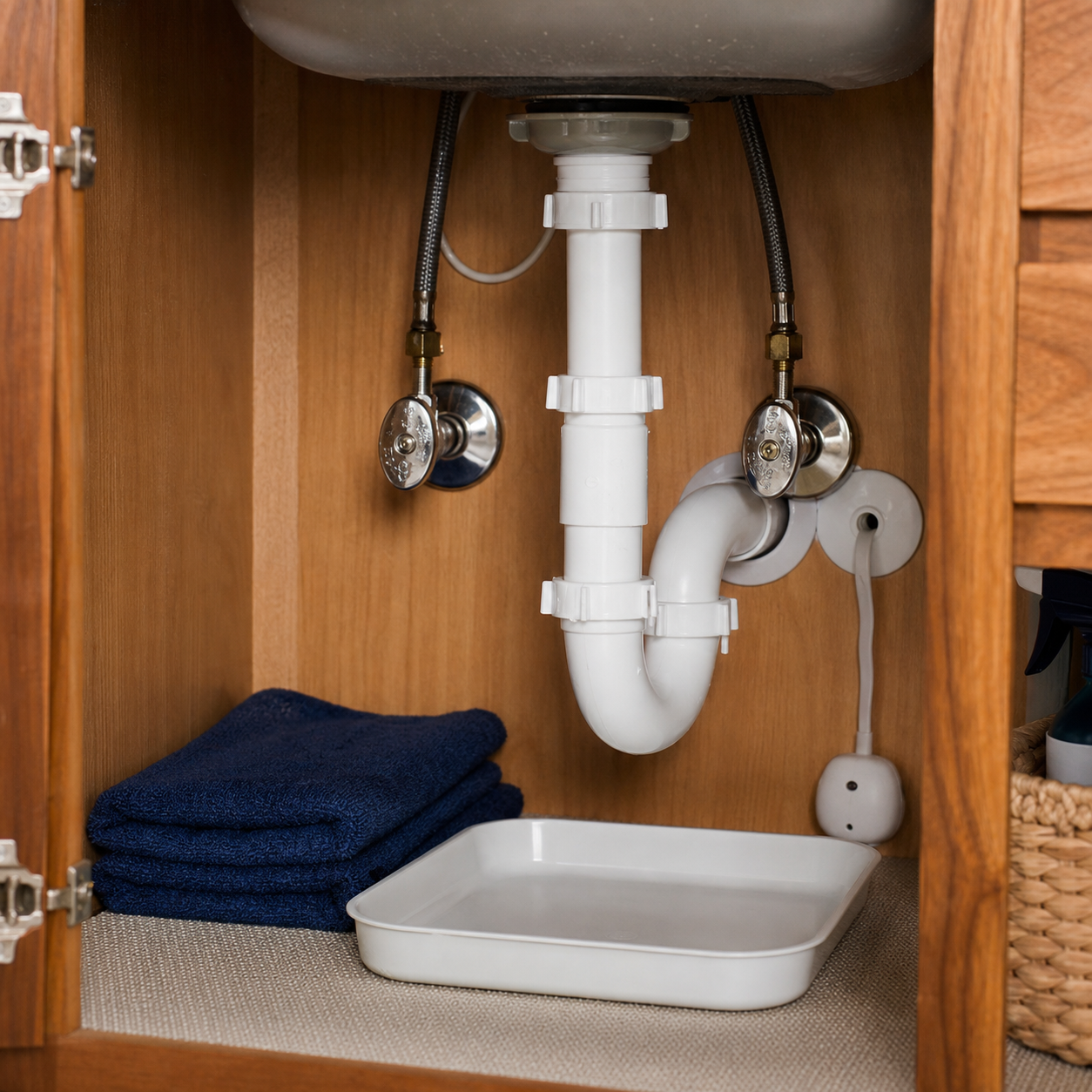

Keep wet electrical access ahead of the remote control
Keep children, pets and other people away from spreading water and the affected toilet. Do not touch a wet plug, outlet, cord, seat control or damaged housing. Do not enter water to reach a breaker or valve. CDC warns against operating power or electrical equipment while standing in water. Request urgent qualified help when access or safe isolation is uncertain.
If there is fire, sparking, injury or immediate danger, leave and call 911 from safety. Do not remain to photograph a label or test another seat function. Tell the building emergency contact if water, electrical equipment or access is shared or managed.
From a dry, safe position, follow only the known stopping and supply-control plan for the installed equipment. Do not force a valve or guess at a nearby shared control. Report what action was already taken and whether water continues. Closing a supply does not remove water already present, and an off remote is not permission to touch the seat or power connection.
Identify the electronic seat and toilet as separate equipment
Use a retained receipt, manual or equipment record to identify the seat and toilet models separately. A toilet model alone may not identify an add-on seat; an integrated electronic toilet has its own complete-system instructions. Give service the installation date and any recent work if already known. Leave missing information unknown rather than reaching behind the fixture.
This guide concerns electronic bidet seats and their water/electrical service handoff. For a purely mechanical attachment, use its actual manufacturer and plumbing instructions; do not borrow electronic-seat controls or a heated-seat procedure. Water appearing beside the toilet still needs the floor-leak response and a confirmed source.
Ask who assesses the seat, its actual supply connections and the toilet itself. An installer/plumber can need manufacturer support, and a water-exposed supply or receptacle needs appropriate electrical assessment. Do not assume that one appointment or one model number covers every part.
Separate intended bowl rinsing from escaped water
TOTO’s current FAQ explains that some models rinse around the wand before or after washing. Its named manual also describes automatic bowl and wand functions. That limited, model-specific context does not explain water outside the intended bowl area, continuous uncontrolled water or an unknown changing pattern.
Report where the water was already seen: inside the bowl near the wand, at the seat housing, at a supply connection, beside the base or below the bathroom. Use the actual model’s instructions or ask support to distinguish a known automatic function from a fault. Do not approach, sit down, cover a sensor or press a cleaning/wash button to reproduce it.
If the source is uncertain, retain that uncertainty in the call. A clear-looking floor puddle does not establish clean water, a failed toilet-floor seal or a defective internal valve. For wastewater rising through the toilet or another drain, follow the dedicated backup response and its sewer/septic contact plan.
Give the right provider the location and action already known
Make urgent calls before completing a record. Use the actual manufacturer’s official support route and the installer or qualified plumber; include qualified electrical and building help where needed. Existing photographs can be useful only if obtained without approaching wet equipment or delaying the response.
This original table organizes a handoff rather than diagnosing a part. Keep the water observation separate from the state of the washing or power controls.
| Already known observation | Request or next contact |
|---|---|
| Water at a plug, cord, outlet, control or damaged case | Keep clear; request urgent qualified electrical or building help and manufacturer assessment. |
| Water at a seat housing or supply connection | Tell manufacturer support and the installer or plumber the location and continuing flow; do not tighten or open anything. |
| Water was seen near the wand inside the bowl | Give the exact model and known timing. Ask whether its documented automatic function explains that observation; do not run a test. |
| Spray stopped after the ordinary control was used | Record that specific action separately. Ask what establishes water isolation, equipment restrictions and the actual source finding. |
| Water is beside the toilet or below the bathroom | Use the toilet-floor or ceiling response as appropriate; arrange diagnosis without another flush or a guessed seal repair. |
| Wastewater is returning through the bowl or another drain | Pause affected sewer-connected plumbing and use the backup guide’s urgent plumbing, sewer or septic and contaminated-material contact plan. |
Match the stopping instructions to the actual manual
TOTO’s current S7A SW4736 page links an English WASHLET manual marked D07G50R, dated 2024.10.25. Its cover includes SW4736 and other named families; available controls vary. The parts drawing says the shutoff’s shape and location vary with the bowl and tank. A diagram is not identification of the reader’s valve.
In that document, Stop ends washing or drying. The safety and preparation sections address power disconnection and the water shutoff separately. Follow the matching installed instructions only with safe, dry access; otherwise obtain urgent qualified help. Do not turn an ordinary Stop or remote Power setting into a claim that the water supply or electrical connection is isolated.
Its troubleshooting includes model-specific connection and maintenance rows. They do not authorize a guessed repair of unidentified wet equipment. Do not remove a filter/drain plug, move the seat from its mounting plate, clean or pull the wand, reset protection, adjust a connection or reopen water to demonstrate a result. TOTO’s current FAQ directs internal housing work to qualified or authorized service.
Example: the spray stopped but floor water remains
Fictional example: a household notices water beside an electronic bidet seat after ordinary use. It keeps people away, pauses the affected fixture and uses only the established safe stopping and authorized supply-control plan if access is safe. If water continues or electrical access is uncertain, it requests urgent help.
Its note separates “ordinary washing Stop used” from any confirmed water-control action and the floor-water observation. The household gives support separate seat and toilet models from the installation invoice. It does not trigger the sensor, flush again, open the seat housing or decide the puddle proves a particular valve failed.
The installer and manufacturer must establish the actual next step. Even after the visible drip stops, the record keeps source work, specific electrical/equipment-use instructions and wet-floor follow-up separate. This invented example provides a reporting pattern, not a diagnosis or proof of successful isolation.
Close source, equipment and wet-material tasks individually
Ask what source was confirmed, what work was completed and which specific instructions govern future seat and toilet use. Ask whether any electrical supply, cord, housing or concealed area remains unassessed. ESFI recommends qualified evaluation of water-damaged equipment; drying alone does not clear reuse. Do not try another outlet or repeatedly reset protective devices.
Use the actual current manufacturer contact page for the service route. TOTO’s main support page and FAQ display different phone-menu/hours details, so confirm current routing there rather than relying on a copied option. Request safe handling or return instructions before moving or shipping suspect equipment. No provider response, service availability, coverage or repair outcome is promised.
EPA advises correcting water problems promptly and drying affected items completely, with experienced help for sewage or contaminated-water damage. Seat repair does not finish wet flooring, a ceiling below or concealed moisture work. Put the responsible contact and next action on the free homeowner checklist; retain detailed property and service records privately.
- Seat model and toilet model from existing records; integrated system or add-on: ___.
- First wet location, discovery time, recurrence and continuing water: ___.
- Electrical, hot-water, building, contamination or unsafe-access concern: ___.
- Known use/automatic-function timing and recent installation/service: ___.
- Exact washing/power/supply action already taken, by whom and when: ___.
- Manufacturer, installer/plumber, electrical and building contacts and instructions: ___.
- Confirmed source, proposed versus completed work and specific use restrictions: ___.
- Wet-material follow-up, responsible person and next update: ___.
When to call a professional
Request urgent qualified plumbing, electrical or building assistance for continuing water, unsafe access or unresolved isolation. Coordinate the actual seat manufacturer and installer, and experienced contaminated-water help when needed. Use emergency responders for immediate danger; source repair, electrical/equipment-use instructions and affected materials require separate findings.
Related guides
Sources
- TOTO USA: WASHLET S7A SW4736 — current English instruction-manual gateway
- TOTO: WASHLET Instruction Manual D07G50R, 2024.10.25 — cover-listed families including SW4736; safety, parts, controls and leakage (PDF)
- TOTO USA: Product FAQ — model-specific rinsing, active leakage, housing/service and protective-device limits
- TOTO USA: Customer Support — current WASHLET/NEOREST after-sales service route
- CDC: Reentering Your Flooded Home — standing-water electrical boundaries
- ESFI: Water-Damaged Electrical Equipment — qualified evaluation before reuse
- EPA: Mold Cleanup in Your Home — prompt source correction, complete drying and contaminated-water experience
Free next step
Download the free seasonal maintenance checklist to record observations and follow-up tasks. See the seasonal maintenance routine for more context.
Affiliate disclosure
No affiliate links appear in this guide. If a reviewed recommendation is added, the disclosure will appear beside it.