
Stop using the affected bath and jets. Use ordinary stopping controls only when access is safe and the controls are understood; keep clear of wet electrical equipment and unsafe flooring or ceilings. Arrange prompt help from the actual bath manufacturer or qualified bath-service provider and a plumber; request urgent electrical or isolation help where access or continuing operation is unsafe. Say whether water remains in the tub. Turning jets off, closing a water valve or hearing the pump stop does not settle every water and energy question. Do not refill, drain or restart the bath to reproduce the leak, reset protection, remove jets or open panels to investigate.
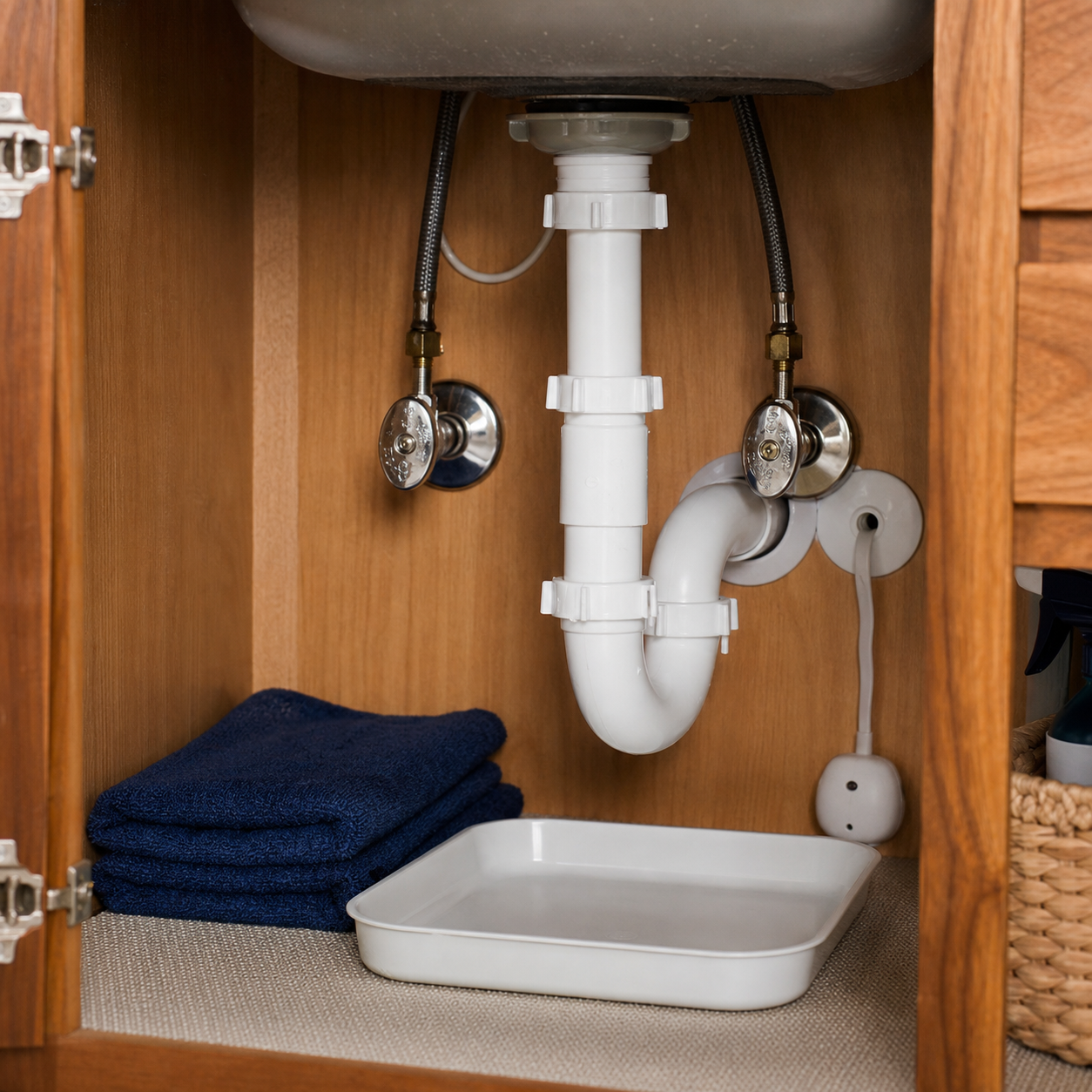

Stop use without approaching wet equipment
Keep children, pets and other occupants away from the affected bath and spreading water. Stop an already-running filler or jet function through its ordinary, understood control only if you can do that safely. Do not reach across water, lean into an equipment space or force a control. If equipment continues to run and cannot be stopped safely, request urgent qualified help.
CDC warns against switching power or operating electrical equipment while standing in water. Do not pull a wet plug, touch a wet switch or cross water to a breaker. Leave for immediate danger such as sparking, fire, injury or suspected collapse and call 911 from safety. A wet ceiling below needs its own urgent precautions; do not stand beneath a bulge to catch the drip.
Tell the plumber, bath-service provider or building emergency contact whether water is still escaping and whether the tub still contains water. Ask how the remaining water and safe isolation should be handled for that installation. Do not deliberately release it, refill to a previous level or run the jets to show when the leak appears.
For continuing incoming supply water, use only a known, authorized and safely accessible customer shutoff under its established instructions, or obtain urgent isolation help. Do not force a valve or guess at shared-building, utility or fire-protection controls. Keep the bath out of use while the source and safe next steps remain unresolved.
Record the actual bath system before choosing a repair route
The word “jetted” does not identify one arrangement. Reveal by Kohler distinguishes air jets from whirlpool water jets and describes a combination bath with both. That distinction helps frame a service question; it does not identify hidden parts or establish a leak source in this home.
Use existing invoices, manuals or equipment records first. Record the bath model and any known pump, air-system, heater, control and waste/overflow information separately. If a field is unknown, say so. Do not remove a panel or reach beside wet equipment to complete the record; let the qualified provider obtain inaccessible identifiers.
Kohler’s 1193347-2-B guide concerns a specific 120 V whirlpool with a custom pump location and an optional heater arrangement. Its requirements are not a specification for every jetted bath. Kohler Assist also limits its heater article to named product families. Match the actual model and instructions before borrowing any service advice.
Keep ordinary bath waste/overflow and enclosure questions with the bathtub and shower-response guides. A pump or jet-related observation may add a bath-service visit; it does not eliminate the need to assess adjacent plumbing, the bath shell or surrounding construction when the source remains uncertain.
Separate incoming water, retained water and powered equipment
Give the provider three separate reports: whether the filler or other incoming supply continues, whether water remains in the bath, and whether any powered function is still operating or was operating when water first appeared. Describe only what is already known. A closed water valve does not remove stored bathwater, and a stopped pump does not identify every energized component.
The named Kohler manual illustrates separate pump and optional-heater connections and requires disconnection before servicing. That is a reason to ask about the whole installed arrangement, not an instruction to reach for its plugs. Request an actual isolation plan from the qualified provider when the energy controls or access are uncertain.
Do not reset a breaker or GFCI to see whether the bath works. The manual’s safety section directs stopping use and qualified correction after an uncommanded protective-device interruption. Routine testing instructions and troubleshooting tables are different from a response to a wet, leaking installation.
Report a trip, lost function, unusual sound or continuing motor operation if it was already observed. These details do not prove that a motor, heater or control failed. Keep electrical exposure and the water-source investigation assigned to the responsible providers rather than trying another operating mode.
Use a service-call table without recreating the leak
These are original reporting prompts, not a fault chart. Several paths may need coordinated assessment. Give hazards and continuing water first; a complete model history can follow once urgent help is arranged.
| Observation already available | Report or question |
|---|---|
| Water continues after ordinary use stops | Say whether filling stopped and water remains in the tub. Ask for urgent source and isolation help. |
| Water was first seen while jets were running | Report the active functions and first visible location. Keep the source unconfirmed; do not restart. |
| Water was noticed during filling or draining | Report timing and remaining water. Ask who assesses bath plumbing as well as powered equipment. |
| Water is near equipment or a protective device tripped | Keep clear and report the electrical concern first. Ask who establishes safe access and equipment assessment. |
| An equipment space is concealed or inaccessible | Describe access from existing records. Ask the provider to plan access; do not remove finish work or panels. |
| Repair is proposed for one component | Ask what finding supports it, what other systems remain unassessed and who provides return-to-use instructions. |
Arrange service access and a written repair boundary
Ask the actual manufacturer or qualified bath-service provider whether it handles this model and symptom, and whether a plumber or electrician is also needed. Explain any recent installation or service and give the record of what changed. Do not choose a seal, pump or replacement bath from a similar-looking online installation.
The Kohler guide requires access for pump servicing and assigns electrical problems to qualified service or an electrician. Its diagrams illustrate an installation-specific arrangement. They do not authorize opening a wet compartment, lifting the bath, moving a pump, tightening a union or removing a jet yourself.
Before non-urgent repair work is agreed, ask the provider to name the confirmed source, work area, retained components, access work and exclusions. If the source is still unknown, ask what investigation is included and when the findings will be explained. Keep any later scope change and its responsible contact in the same private record.
Ask who checks the repaired water path and affected powered equipment, which actual manufacturer instructions apply, and what remains unresolved before normal use. An installation manual’s fill-and-run check is not permission for a homeowner to reproduce an occupied-bath leak. Have the responsible provider plan appropriate verification.
Keep electrical clearance and wet materials in the handover
ESFI recommends qualified evaluation of water-damaged electrical equipment and warns that drying alone does not remove the safety risk. A dry floor, silent motor or replaced plumbing joint does not document the condition of a water-exposed control, connection or appliance. Use the electrical return-to-use guide for specific questions to put to the providers.
EPA advises correction of the water problem, complete drying and experienced help for contaminated-water damage. Ask who assesses the floor, wall, equipment compartment and ceiling below where relevant, what remains inaccessible and who handles later finish work. Do not seal over damage or treat a cleaning cycle as source repair.
Retain the completed service report, stated verification and exact use restrictions. Ask who supplies and carries out the safe restoration instructions for the actual bath. If one part is repaired while another remains unresolved, keep the affected bath out of use and obtain clarification; do not assume an optional function can safely be bypassed.
A towel, bucket, closed valve or stopped drip may describe temporary damage limitation. Record it that way. Keep repair completion, electrical assessment, affected-material recovery and instructions before use as separate handover items.
Example: the jets stop but the repair remains open
Fictional example: a household notices water outside a jetted bath while a jet function is operating. It stops ordinary use from a safe position, keeps people away from the wet area and calls the bath-service provider and plumber. The report says that water remains in the bath and that the visible drip location is not a confirmed source.
The household shares the bath model from its invoice and says the heater arrangement is unknown. It does not remove the service panel, reset protection or run a different function. The provider arranges the appropriate source, access and electrical assessment before deciding which work is needed.
The private completion note later distinguishes the provider’s actual finding, the agreed repair, checks on affected equipment and a separate ceiling task. A quiet pump was only an observation during the initial call. This invented example does not identify a failed component, predict repair cost or authorize use of any installed bath.
Keep a compact private bath-service record
Use the free homeowner checklist for the next contact and unresolved task. Keep invoices, product identifiers, photographs and access information privately. The repair-estimate guide helps clarify exclusions; the bathtub guide covers waste/overflow and bath-level observations.
- Bath model and source of identification; unknown system details: ___.
- First visible water, time and functions already operating: ___.
- Whether supply continues, water remains in the bath or equipment keeps running: ___.
- Electrical, ceiling, slippery-floor or contaminated-water concerns: ___.
- Urgent contact, known safe stopping action and qualified isolation plan: ___.
- Bath-service provider, plumber/electrician coordination and planned access: ___.
- Confirmed source, agreed repair, exclusions and provider verification: ___.
- Equipment use instructions/restrictions and remaining wet-material tasks: ___.
A leaking residential hot tub retains water between uses
A residential hot tub needs a different response from an indoor jetted bath filled for one use. Tell its official service route about ongoing loss, the known power/operating state and any freezing forecast immediately. Do not transfer this bath’s ordinary-use or draining assumptions to a spa, and do not keep unsafe equipment operating to protect it from cold.
The hot-tub leak guide adds a retained-water and weather handover, an original contact table and a fictional overnight-freeze example. Ask qualified help who can establish safe isolation and protect remaining water for the actual model. A drained-looking shell, quiet jets or a control lock cannot certify those tasks. Keep people out and avoid wet controls, panel opening and refill/run tests.
When to call a professional
Leave the affected area and call 911 from safety for immediate electrical or structural danger, fire or injury. Keep clear of wet controls, plugs, wiring and damaged ceilings. For continuing water or equipment that will not stop safely, request urgent qualified plumbing/electrical help and notify the building emergency contact. Use the actual bath manufacturer or qualified bath-service provider for pump, heater, air-system and control assessment; include appropriate wet-material help. Do not enter water, open a service panel or run another bath to investigate.
Related guides
Sources
- Kohler: Installation and Care Guide 1193347-2-B — specific 120 V whirlpool with custom pump location; safety, service access and optional heater context
- Reveal by Kohler: Air Tubs vs. Whirlpool Baths — air-jet, water-jet and combination distinctions only
- Kohler Assist: Whirlpool Heater Not Working — explicit product-family limits; troubleshooting steps not adopted for a leak
- Kohler: Customer Service & Product Support — actual product documents and support route
- CDC: Reentering Your Flooded Home — standing-water electrical boundary
- ESFI: Water-Damaged Electrical Equipment — qualified evaluation and limits of drying
- EPA: Mold Cleanup in Your Home — source correction, complete drying and experienced contaminated-water help
- CPSC: Don’t Swim With Shocks — electrical hazards around pools and spas
- Hot Spring: current Hot Spot collection manual selector — match collection, year and model
- Hot Spring: 2026 Hot Spot Owner’s Manual, 303761.26 C (06/26), 60Hz — bounded safety, controls, draining and freezing example (PDF)
- Hot Spring: official contact route for spa operation and maintenance questions
- Hot Spring: service and support FAQ — actual manual and dealer assistance
- CPSC: February 12, 2026 Hydromassage rotary-jet recall — exact-product example, not leak diagnosis or unit clearance
- Hot Spring: current Hydromassage recall and linked official identification assistance
Free next step
Download the free seasonal maintenance checklist to record observations and follow-up tasks. See the seasonal maintenance routine for more context.
Affiliate disclosure
No affiliate links appear in this guide. If a reviewed recommendation is added, the disclosure will appear beside it.