
A moisture sensor can warn you when water reaches its sensing elements. A flow monitor looks at water use or related measurements. A compatible automatic shutoff can act on a detected condition by closing a valve. Confirm all three capabilities separately; “smart leak detector” does not promise all of them.
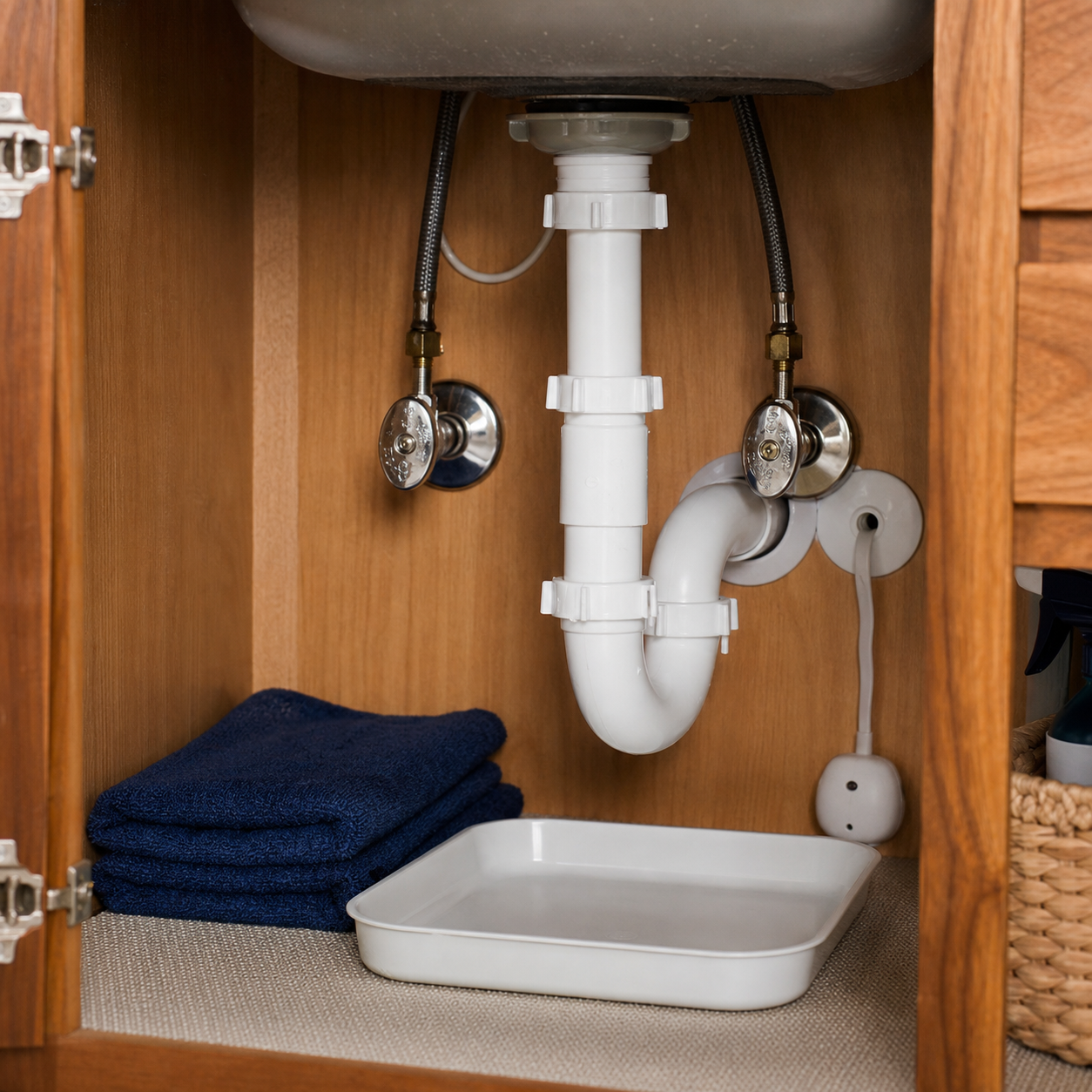

A laundry leak needs more than a valve-closed message
For a washer leak, distinguish a notification, actual supply-valve action and the remaining water in the appliance or drainage system. Closing an incoming supply does not empty the washer or repair a blocked or leaking drain. Do not infer the appliance state from an app message alone.
The washing-machine floor-leak guide separates safe stopping, known controls and appliance versus plumbing help. Keep the exact automatic-system instructions alongside the washer manual and record who can respond safely. Do not force the washer door, trigger another cycle or operate unfamiliar valves to test whether the automatic system worked.
Identify what the system observes
EPA distinguishes moisture detection from flow monitoring and notes that some devices can operate a shutoff valve. Its February 2026 consumer guide also separates point-of-use arrangements from systems intended to observe a home's incoming supply.
That distinction matters when writing down the problem:
This table is a way to form questions, not a statement that any product meets every need or detects every fault.
| What you want to notice | Capability to investigate |
|---|---|
| Water reaching an accessible cabinet floor | Appropriately placed moisture sensing |
| Unusual water consumption | Flow-monitoring features and their limits |
| A system that can close the supply after a supported trigger | A documented automatic-shutoff arrangement |
| Alerts while the home is empty | The complete remote-notification path |
An alert and a valve are separate components
A standalone sensor may have a local alarm, an app alert or both. None of those inherently moves a water valve. A separately installed compatible shutoff may be able to act on that sensor's signal.
Moen's setup documentation provides one example: pairing a Flo Detector is separate from choosing an action for an already installed Flo Shutoff. That illustrates the distinction, not an endorsement or an instruction to alter plumbing.
Before paying for a system, ask the manufacturer which exact components are required, which conditions trigger automatic action, what depends on a hub or internet connection, and what happens if power fails. Do not infer those answers from a product-family name.
A whole-home label still has limits
Consider a fictional home with two concerns: unexplained higher water use and a roof leak after rain. A device that tracks incoming supply is addressing a different signal from a sensor noticing escaped rainwater. The word “whole-home” does not establish that it detects all water from all sources.
A monitor can also report an irregular pattern without identifying the failed fixture. A shutoff can change the water supply without resolving the original defect or existing wet materials. Keep professional diagnosis and follow-up in the response plan.
Do not interpret a quiet app or a closed valve as proof that every location is dry. Continue ordinary safe observations and act on visible water or damage even if the system has not reported it.
Plan installation and responsibility first
EPA notes that in-line devices, often equipped with shutoff capability, may require a plumber. A renter or owner in a managed building also needs to establish who controls the supply and equipment.
Ask a qualified professional about suitability for your plumbing, applicable local requirements and any connected systems. Do not experiment with shared, corroded, unfamiliar or difficult-to-reach valves. This guide does not cover cutting pipes, wiring, valve installation or operating an unknown shutoff.
Decide who does what after a warning
Write down who receives alerts, who can respond safely, and which professional or building contact to call. Record model numbers, manual locations and the approved maintenance schedule. If remote awareness matters, verify the intended notification path using only the manufacturer's approved tests.
Avoid guarantees about preventing damage, reducing insurance premiums or saving a particular amount. Those outcomes depend on the actual system, event, maintenance, response and any insurer's specific terms.
Leave the conversation with five written answers
Use this as a question sheet for manufacturer support or an installer, rather than assuming “smart” covers every step:
- Which exact components detect the condition, send the alert and close the valve?
- Which documented events can trigger closing, and which only send a notification?
- What continues to work during internet or power loss for this exact arrangement?
- What approved test and maintenance process confirms the intended behavior without deliberately causing a leak?
- Who responds after an alert or valve closure, and who handles diagnosis and any authorized return to service?
Try the response plan on an empty home
For a fictional home left empty during the day, “my phone receives an alert” answers only part of the plan. The household still needs a person who can respond safely. If that person is unavailable, record the gap rather than claiming that a remote alert supplies automatic protection. Keep these answers with the exact component manuals; do not put home-network passwords in a shared response sheet.
When to call a professional
Stop and contact a qualified plumber or other appropriate professional if water is actively spreading, you cannot safely find the shutoff, the leak involves a wall or ceiling, or a repair would require changing plumbing.
Related guides
Sources
Free next step
Download the free seasonal maintenance checklist to record observations and follow-up tasks. See the seasonal maintenance routine for more context.
Affiliate disclosure
No affiliate links appear in this guide. If a reviewed recommendation is added, the disclosure will appear beside it.