
Keep people clear of spreading water and wet electrical equipment, and keep the affected dryer out of use. If it is running, use only the actual model’s established safe stopping instructions from a dry, safely reachable position; request urgent qualified help when access, hot laundry or the stopping method is uncertain. Contact appliance service for dryer-related leakage and a plumber for a house valve or shared supply concern. Do not run another steam cycle, open a steam-cycle door, move the machine, disconnect its vent or remove a hose to investigate.
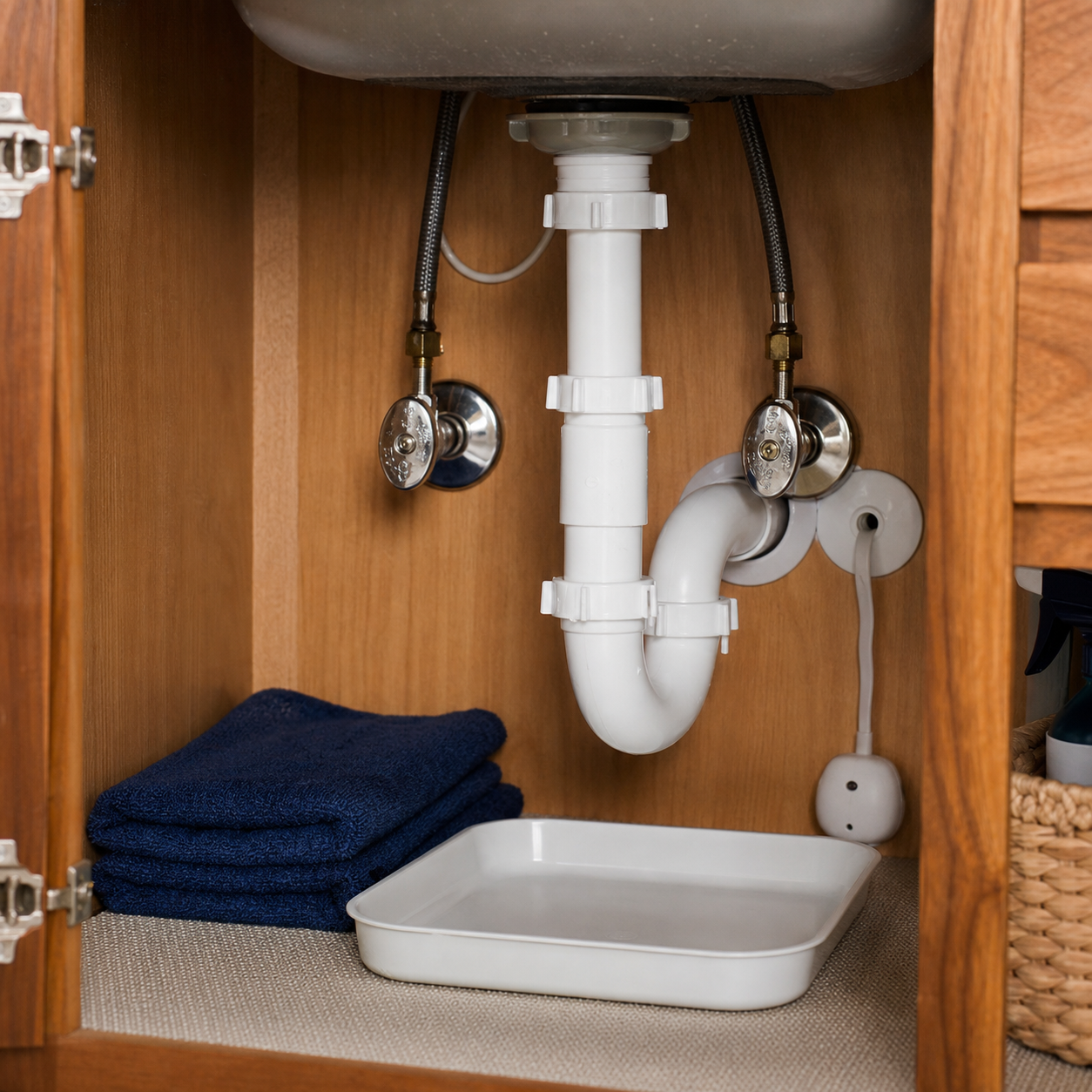

Put safe stopping ahead of a closer look
Keep children, pets and other occupants away from the wet area, the appliance and hot or moving parts. Do not reach behind the machine, step through water to a plug or breaker, or move a stacked installation. CDC warns against switching power or operating electrical equipment while standing in water. Leave immediate fire, sparking, serious injury or collapse danger and call 911 from safety.
For a gas smell or suspected gas leak, leave without using electrical switches or investigating the water. Call 911 and the serving gas utility from a safe distance. Atmos Energy’s leave-first page is a safety reference, not identification of your utility or a direction to operate a gas valve.
If the dryer is already running, follow only its understood, established stopping instructions when controls and access are dry and safe. LG’s cited operating warning also addresses heat retained in a stopped load; its steam warning prohibits opening the door during a steam cycle. Obtain urgent qualified instructions when stopping, hot contents or safe access are uncertain. Do not reach into a moving drum or approach steam to retrieve laundry.
Report continuing water and hazards first. Do not restart a stopped machine, select an air-only or heated cycle to dry it, or repeatedly cancel and resume a program to demonstrate the problem. A useful service report does not require another operating test.
Identify the appliance and its water arrangement from records
Record the full dryer model from an invoice or existing equipment note, including whether gas or electric heat and a steam feature are actually documented. A washer-dryer combination, a ventless/heat-pump appliance and a conventional steam-enabled dryer can have different water paths and care requirements. This guide addresses an unexplained leak at a steam dryer; do not apply its inlet example to an unidentified appliance.
GE’s steam-setting page explains that its covered gas and electric steam dryers use a cold-water connection. LG’s current online manual MFL70442676/02, for DL*X400** / DL*X408**, illustrates both a separate faucet connection and one shared with a washer through a Y-connector. These examples explain why a nearby washer and house valve may belong in the service report. They do not identify this home’s actual connections.
Use existing records first and mark inaccessible details unknown. Do not pull the machine out, loosen a hose, remove an access panel or detach a fuel, electrical or exhaust connection to identify a model or source. Ask the responsible provider to plan safe access.
Keep normal cycle moisture separate from an unresolved leak
GE and Whirlpool describe moisture on an inner door or drum in their steam-cycle guidance. That context does not clear unexplained water under the appliance, at an inlet or near electrical equipment. Nor does it establish that water entering an unused dryer is normal. Samsung’s U.S. leakage page specifically directs service when water enters the drum from the steam system while that system is not in use.
Tell service what was already observed: the cycle name if known, whether the machine was operating, first water location, and whether water continued after normal use ended. Do not open the door during a steam cycle to check the inside or run a different load to compare results. A timing pattern can help the provider; it cannot select a failed part.
Keep the affected appliance unused while escaped water or equipment exposure remains unexplained. Do not assume wiping the door, changing the load size, cleaning a lint screen or calling the event condensation completes a repair. Ordinary care and ventilation advice belongs after the active-water question is resolved.
Use a location report to choose the next contact
This original table organizes existing observations. Several contacts may need to coordinate, and water may travel before becoming visible. Do not reach behind a dryer, touch liquid, disconnect anything or run a cycle to complete a row.
| Observation already available | Useful contact and report |
|---|---|
| Water at an outlet, cord, controls or unsafe floor access | Keep clear; urgent qualified electrical/access help and appliance service. Report continuing water too. |
| Water at the house faucet or a known shared washer/dryer supply | Plumber or building emergency contact; describe the shared arrangement from records without moving either appliance. |
| Water at a dryer inlet/hose area | Appliance installer/service and plumber as appropriate. Give the first visible location; do not tighten or remove a fitting to prove the source. |
| Moisture seen at the door after an already-completed steam cycle | Give the actual model, cycle and location. Keep residual inner moisture distinct from unexplained floor or equipment water. |
| Water entering the drum while steam is not being used | Manufacturer or appliance service; report the existing observation without running another program. |
| Water appears beside a vent, wall or appliance underside | Ask appliance, ventilation and building service to assess the actual route; do not detach a vent or run with it disconnected. |
| A nearby washer overflowed or the source remains unclear | Include the washer service, plumber or building contact. Stop affected laundry use safely; do not perform a drain or fill test. |
Keep supply isolation and equipment repair separate
A stopped display or drum does not establish that incoming water has been isolated. LG’s maintenance warning distinguishes off controls from electrical disconnection. Close a water control only when it is already identified, authorized, safely reachable and its instructions are understood; otherwise ask for urgent qualified isolation help. Do not force a valve or guess at shared-building, utility or fire-system controls.
Ask the provider to distinguish a house valve, shared connection, appliance hose, internal dryer problem and any separate exhaust or building-moisture finding. If the dryer was recently installed, contact the installer with the model and work record. Ask what finding supports the proposed repair and what remains unassessed.
The LG inlet illustration is installation context. It does not authorize hose removal or seal replacement at a leaking, wet installation. Do not copy a tightening angle, water-pressure setting, load-size remedy, vent-cleaning interval or fill/run check from another product. Keep gas, wiring, protective devices, internal parts and difficult access with qualified service.
Before normal use, ask which source was corrected, what equipment was assessed, who performed appropriate verification and who supplies the actual restoration instructions. A new hose, clean screen or closed faucet does not document every part of that handover.
Arrange wet-material work without running the dryer to dry it
ESFI recommends qualified evaluation before returning power to water-damaged electrical equipment; thorough drying alone is not that evaluation. Tell service about known exposure to the dryer, nearby cords or controls. Do not reset a protective device, reconnect a wet plug or run a drying cycle as an equipment check.
EPA pairs correction of water problems with complete drying and recommends experienced help for contaminated-water damage. Ask who assesses the laundry floor, cabinetry, wall or ceiling below where relevant. Keep source repair, equipment clearance and affected-material recovery as separate tasks.
Use the ceiling-leak response for overhead hazards below the laundry area and the electrical guide for return-to-use questions. Do not use towels, a bucket, a dry-looking floor or a quiet leak alarm as evidence that the source or wet equipment has been repaired.
Example: a puddle behind a shared laundry installation
Fictional example: a household sees floor water behind a washer and steam dryer after ordinary laundry use. It keeps people clear, leaves affected equipment unused and requests appliance and plumbing help. Its note says “water behind laundry pair; source unknown,” rather than naming the dryer hose as the failed part.
An existing installer record shows that a cold-water connection is shared. The household tells the providers that fact and asks for a safe stopping/isolation and access plan. It does not pull either machine forward, turn an unfamiliar valve or run separate washer and dryer cycles to decide which appliance caused the puddle.
The later record separates the actual source finding, completed work, equipment-use instructions and any remaining floor task. The invented example illustrates coordination, not a diagnosis or a successful repair for another home.
Keep a private laundry-leak handover note
Call urgent help first; fill in only details already available safely. Use the free homeowner checklist for the next contact and open action, keeping invoices, photographs and access details private. The routine dryer-care guide remains useful after the active water and equipment questions are resolved.
- First visible water, time, continuing flow and affected locations: ___.
- Immediate gas, fire, electrical, heat, slippery-floor or ceiling concern: ___.
- Dryer model, fuel/steam arrangement and nearby washer details from records: ___.
- Cycle or message already observed; controls already used and unknowns: ___.
- Known shared supply or other installation information; recent work: ___.
- Appliance/installer, plumber/electrician and building contacts; urgent instructions: ___.
- Confirmed source, agreed repair and provider verification: ___.
- Specific equipment-use instructions and remaining wet-material tasks: ___.
When to call a professional
Leave and call 911 from safety for fire, sparking, serious injury or suspected collapse. For a gas concern leave without operating switches and call 911 and the serving gas utility from safety. Continuing water, wet equipment or uncertain safe stopping/isolation needs urgent qualified help. Coordinate appliance/installer, plumbing, electrical and building service for the actual findings; a dry floor is not clearance to use the dryer.
Related guides
Sources
- LG U.S.: DLEX4000W support — actual online manual selection
- LG: online manual MFL70442676/02, DL*X400** / DL*X408** — safety, operation, steam and inlet arrangement; model-specific example
- GE Appliances: What Is Normal and Not Normal with Steam Setting — door moisture versus floor/inlet concerns
- Whirlpool: Water on the Door — steam-cycle moisture and separate water-inlet/service questions
- Samsung U.S.: Dryer Is Leaking — unused steam-system drum leakage needs service; installation and moisture possibilities
- CDC: Reentering Your Flooded Home — standing-water electrical boundary
- ESFI: Water-Damaged Electrical Equipment — qualified evaluation before returning power
- Atmos Energy: Gas Emergency — leave first and call from safety
- EPA: Mold Cleanup in Your Home — source correction, complete drying and experienced contaminated-water help
Free next step
Download the free seasonal maintenance checklist to record observations and follow-up tasks. See the seasonal maintenance routine for more context.
Affiliate disclosure
No affiliate links appear in this guide. If a reviewed recommendation is added, the disclosure will appear beside it.