
For unexplained escaped water, keep the affected dryer unused and use the response for its actual steam or condensing/heat-pump arrangement before routine care. The user-accessible lint filter and a vented dryer's exhaust route are different parts of the system. Cleaning the filter does not establish that the full exhaust path is clear. Follow the exact appliance's routine-care instructions, and use qualified service for restricted, damaged or inaccessible venting and unresolved performance changes.
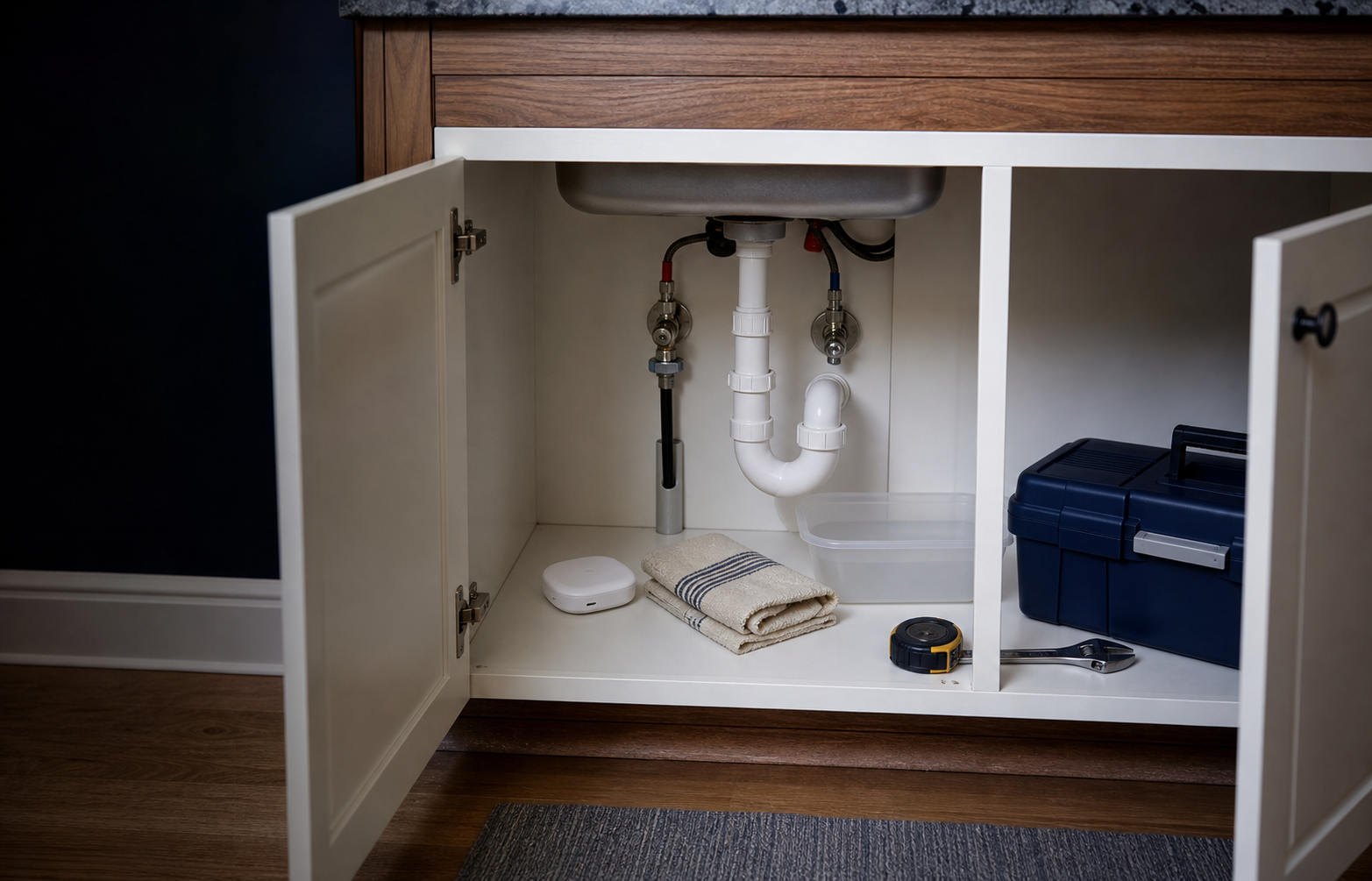

Escaped water needs a response before routine dryer care
For unexplained water under a steam dryer or at its inlet, keep affected equipment unused and people clear of wet electrical access. If it is running, follow only the actual established safe stopping instructions from a dry position; ask for urgent qualified help when hot contents, steam, access or isolation are uncertain. Do not open a steam-cycle door, move the machine or detach a vent to investigate.
The steam-dryer leak guide adds a location/contact table and fictional shared-supply example. It distinguishes residual inner-cycle moisture, house plumbing, dryer water paths and wet-equipment clearance. A clean screen or dry-looking floor does not complete that source assessment. The ordinary maintenance sections below apply after active water and unresolved equipment hazards have been addressed.
Identify the dryer before following a checklist
Start with the exact model and manual. A conventional dryer exhausted outdoors is different from a ventless appliance, which has its own filters and maintenance requirements. Whirlpool's heat-pump documentation, for example, describes a ventless system; an outdoor-exhaust checklist should not be imposed on it.
If the model or vent arrangement is unknown, establish that first. Do not pull the appliance forward, detach a connection or open a panel simply to identify it. Records, a safely visible label and manufacturer support are better starting points.
Treat the lint filter as a routine user task
The U.S. Fire Administration recommends using a lint filter and keeping it clean before and after cycles. Read the appliance's instructions for its location, removal, routine cleaning and correct replacement.
Do not run with a missing, damaged or incorrectly fitted screen. For Whirlpool's documented laundry-tower example, its instructions distinguish ordinary lint removal from occasional residue cleaning. That illustrates why a universal “wash every filter this way” instruction is inappropriate.
You do not need to buy a long brush or powered cleaning kit to complete a normal accessible-filter task. Additional equipment should follow an identified safe task and the relevant instructions, not a fear-based shopping list.
A clean screen does not inspect the exhaust route
On a vented dryer, the exhaust has a path beyond the filter and appliance. USFA flags damaged, crushed or restricted venting and emphasizes professional installation and servicing. Seeing little lint on the screen does not establish that a hidden duct is unobstructed.
Look only from a safe, accessible position for obvious changes. A route through a wall, attic or roof, or behind a heavy appliance, is not made accessible by a generic tutorial. Do not climb, dismantle ductwork, disconnect gas, disturb wiring or improvise a repair as part of this guide.
Record changes without declaring a cause
Suppose a fictional household notices that comparable loads now need noticeably longer. The useful record identifies the model, selected cycle, approximate load, screen care and any displayed message. It does not begin by declaring that a heating element or vent has failed.
Whirlpool's long-drying-time guidance considers multiple factors, including settings, filter condition and venting. Its exact-model messages and procedures are not a universal diagnosis for every brand.
If a warning persists, the dryer becomes unusually hot, or operation seems abnormal, stop using it and arrange appropriate service rather than repeatedly running it to collect more evidence. For smoke, fire or an immediate hazard, leave the area and use emergency assistance. Do not treat an active emergency as a maintenance appointment.
Make the service request specific
Tell the service provider what changed, what ordinary manual-approved care was completed and whether the exhaust route is accessible or shared. Ask what the appointment covers and what findings will be documented. For managed buildings, confirm who maintains common exhaust systems before booking or changing anything.
Use the appliance instructions and qualified advice to set the maintenance schedule. This article does not prescribe one universal cleaning interval or promise that a particular cleaning prevents every dryer fire.
Use a small care-and-service record
A fictional service question could be: “Our usual towel loads now take longer on the same named cycle. The model is recorded here, ordinary screen care has been completed, and this is the message we already saw. Does your visit assess both the appliance and its exhaust route, and who handles a shared vent?” Leave unknown fields blank or mark them unknown. Do not restart a potentially unsafe appliance, move it or repeat a test cycle just to complete the record.
The record should explain the observation and the request. It does not need a guessed failed part or a shopping list of cleaning attachments.
| Record | Why it helps |
|---|---|
| Exact model and manual location | Keeps advice tied to the actual appliance |
| Vented, ventless or still unknown | Prevents applying the wrong exhaust checklist |
| Last ordinary filter care and what changed | Separates completed user care from an unresolved issue |
| Existing display message and date noticed | Gives service a specific observation without interpreting the code |
| Contact, appointment and next action | Makes the follow-up visible to the household |
A ventless dryer needs its own collected-water assessment
For unexplained water at a separate condensing or heat-pump dryer, keep the affected appliance unused and follow only its actual safe stopping and hot-load instructions from dry, safe access. A collection container, a condensate drain and a steam-water inlet are different arrangements; do not choose a tank or hose task from the word ventless. Request qualified help when identity, access or the stopping method is uncertain.
The condensing-dryer leak guide adds a contact table, a fictional condenser-cleaning-indicator example and private drain/service prompts. It separates normal internal water use from a floor puddle and keeps appliance work, household-drain repair and electrical clearance distinct. Do not run another care cycle, move equipment or treat an emptied container as a completed repair.
When to call a professional
Stop and contact a qualified professional if the work involves electrical wiring, gas, structural damage, roof access, major plumbing changes, mold, lead, asbestos, or another hazardous material.
Related guides
Sources
- Manufacturer heat-pump explanation
- USFA clothes-dryer guidance
- Manufacturer filter-care example
- Manufacturer troubleshooting overview
- LG U.S.: DLEX4000W support — actual online manual selection
- LG: online manual MFL70442676/02, DL*X400** / DL*X408** — safety, operation, steam and inlet arrangement; model-specific example
- GE Appliances: What Is Normal and Not Normal with Steam Setting — door moisture versus floor/inlet concerns
- Whirlpool: Water on the Door — steam-cycle moisture and separate water-inlet/service questions
- Samsung U.S.: Dryer Is Leaking — unused steam-system drum leakage needs service; installation and moisture possibilities
- CDC: Reentering Your Flooded Home — standing-water electrical boundary
- ESFI: Water-Damaged Electrical Equipment — qualified evaluation before returning power
- Atmos Energy: Gas Emergency — leave first and call from safety
- EPA: Mold Cleanup in Your Home — source correction, complete drying and experienced contaminated-water help
Free next step
Download the free seasonal maintenance checklist to record observations and follow-up tasks. See the seasonal maintenance routine for more context.
Affiliate disclosure
No affiliate links appear in this guide. If a reviewed recommendation is added, the disclosure will appear beside it.