
Keep an active leak on the urgent plumbing response path, then arrange qualified water-damage and cabinet assessment. A swollen panel needs a material-specific finding before a sanding, painting or replacement decision. Ask whether the change affects only the finish, the facing or the material underneath, and what condition supports keeping or replacing each affected part. A new liner or a dry-looking laminate face does not make a damaged cabinet sound. Do not cut out the base, clamp a swollen panel, move the cabinet or disconnect plumbing to investigate.
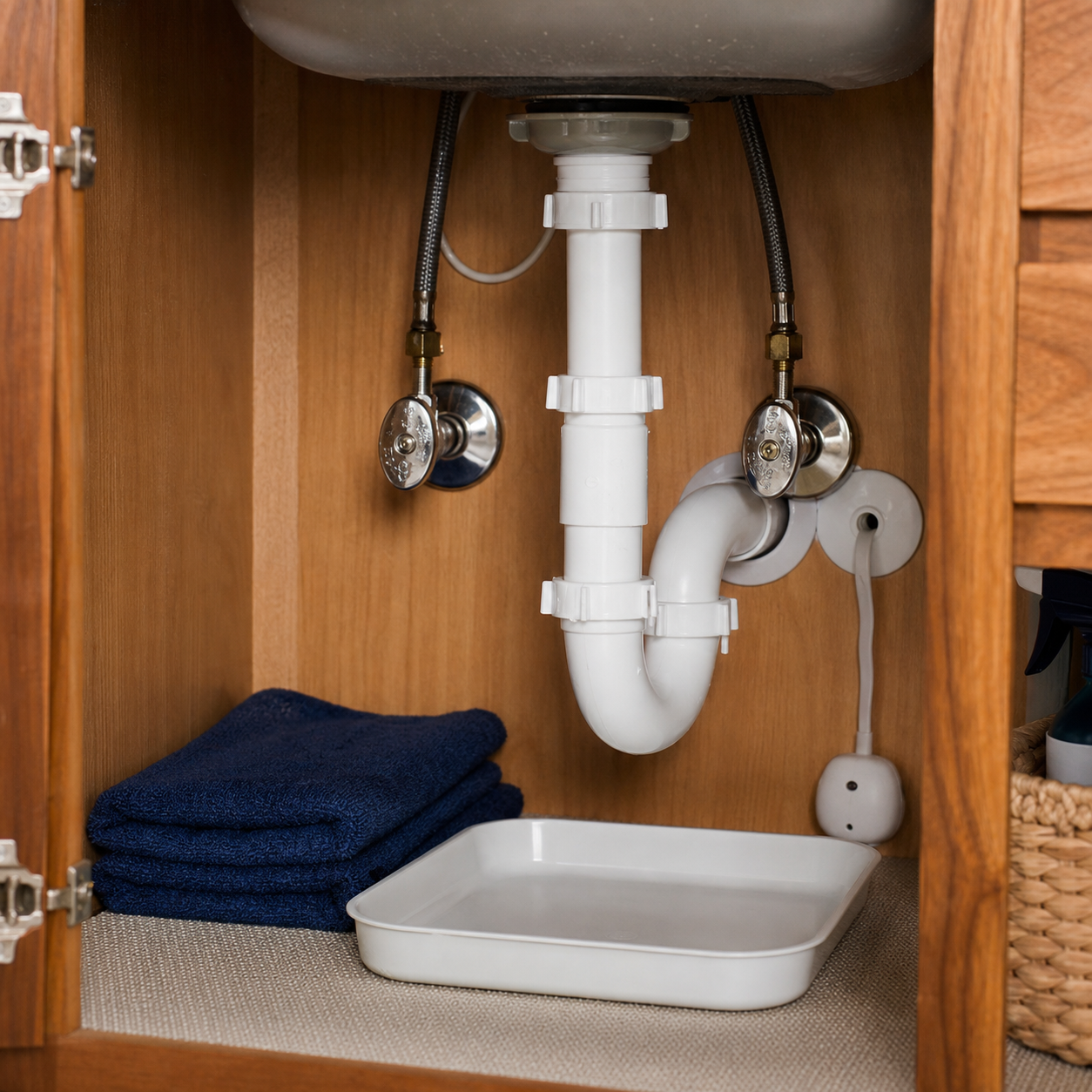

Stop the leak response from becoming a cabinet experiment
If water is continuing, stop using the affected sink or appliance through its ordinary safe controls and arrange urgent source help. Use only an identified, authorized water shutoff whose safe instructions you already know, or request isolation help. The under-sink response guide covers this stage; do not wait for cabinet quotes while water spreads.
Keep clear of wet outlets, disposal wiring and appliance connections. CDC warns against operating electrical equipment or power controls while standing in water. Do not reach into a wet cabinet for a plug, move stored chemicals through the water or use a heater to try to shrink a panel.
If a cabinet, counter or sink appears loose, separating or unstable, keep people away and tell the provider before approaching it. Do not lean on it, load a suspect shelf or remove a support to see what is behind it. For immediate danger or injury, leave and call 911.
Identify the finish, facing and core separately
Give the cabinet provider an existing invoice, model/collection record or original supplier contact when available. Ask it to identify the affected component and material. A door, shelf, bottom, side panel, toe kick and decorative skin do not necessarily share the same construction or role.
A wood-looking exterior does not establish solid wood throughout. NC State Extension’s flood-damaged furniture guidance distinguishes solid wood from veneered pieces with plywood, particleboard or fiberboard cores. It describes permanent damage where the particleboard beneath submerged veneer has swollen. That furniture/flood example explains why the core matters; it does not prescribe replacement of every installed cabinet after any splash.
Do not peel a facing, cut an edge, probe a soft area or remove a fixed panel to identify it. Mark the product or extent unknown and ask the provider how it will resolve that uncertainty safely. Report known older coatings or materials before any sanding or removal is planned.
A finish treatment does not settle core damage
Formica’s U.S. care guidance warns that water can penetrate near seams and make the substrate swell. Its laminate-cabinet cleaning advice addresses the surface; it is not a repair instruction for a swollen cabinet core. Do not assume polishing, paint or a new sheet of liner reverses that change.
Burrows Cabinets describes moisture-related finish clouding, deterioration and staining in its care guidance. This is a useful distinction from a changed panel shape or loose joint. Its discussion of seasonal wood movement is not a diagnosis of a cabinet damaged during an active leak.
Ask which finding supports a finish-only repair, a component repair or replacement. If sanding, recoating or a patch is proposed, ask what it resolves and what material remains underneath. This guide does not supply a glue, filler, clamping, heat or refinishing recipe; the actual product and damage determine the qualified work plan.
Compare the proposed work by the part and problem it addresses
A provider should be able to explain the affected area and why the proposed treatment suits it. These original questions help compare options without assuming the entire kitchen must be replaced or that every damaged part can be saved. Keep urgent source and safety work ahead of non-urgent comparisons.
| Proposed scope or finding | What to clarify with the responsible provider |
|---|---|
| Finish-only work | What confirms that the change is limited to the coating, rather than the facing, core, joint or support? |
| Repair to a facing or component | Which exact part can be retained or repaired, on what basis, and what damage or uncertainty remains? |
| Replacement panel or cabinet | Why is this boundary appropriate? Does it include related attachments, matching limits and the actual installed product? |
| Cabinet removal or access work | Who coordinates the sink, counter, plumbing, electrical and support needs before anything is moved? |
| Wet area and completion | What was assessed behind or below the cabinet, and who records drying, reinstatement and any remaining follow-up? |
Keep the area behind and below the cabinet in the plan
Ask the water-damage provider which cabinet surfaces, wall, floor and concealed areas were assessed and which remain inaccessible. Record the known water source and duration, including uncertainty. Do not treat the first visible drip or the face of a swollen base as the complete affected boundary.
EPA advises correcting water problems and drying items completely, with experienced professional help for contaminated-water damage. It also cautions against painting or caulking moldy surfaces. Keep the appropriate material and cleanup findings ahead of later finish work; do not cover a concern with sealant or a new bottom liner.
An installed cabinet can involve sink, counter, appliance and service connections. Have the responsible providers explain access, any necessary disconnection/support work and reinstatement. Do not borrow a flood-furniture instruction to move a fitted cabinet outside, remove its back or hose it down.
Use the drywall and flooring guides when those materials were affected too. Their findings remain separate from the cabinet decision. A completed plumbing visit, drying-equipment pickup or freshly painted door does not by itself close all of these tasks.
Fit a tray only after the repair and safe-access questions are resolved
Keep the record explicit: source controlled, source repaired, wet-material assessment pending, cabinet work completed, or surrounding-area follow-up still open. Ask who supplies the completed findings and the instructions for normal use. A paid invoice or accepted proposal is not the same as that completion record.
Once the cabinet is suitable for normal use and access is safe, the drip-tray guide can help compare the usable footprint, opening and fixed obstructions with a particular tray. A tray is a containment aid; it cannot restore a weakened panel, prove hidden areas are dry or repair the plumbing.
If the proposed cabinet work changes the interior dimensions, record the completed arrangement before selecting a tray. Keep pipes, cords, valves and service access clear. Report returning water or a further change promptly instead of repeatedly emptying a liner.
Example: a repaired supply line and a swollen cabinet bottom
Fictional example: a plumber repairs an identified supply leak. The household later sees that the cabinet bottom has changed shape, although its laminate face looks dry. It leaves the cabinet out of ordinary use and arranges material and cabinet assessment rather than placing a new mat over the change.
The cabinet provider identifies the component from records and its safe assessment. The household asks what supports the repair or replacement proposal, which adjacent materials were assessed and who handles any sink or service coordination. It does not press the panel, clamp it flat or cut out the base.
The private record separates the repaired line, cabinet finding, completed work and surrounding-area follow-up. A tray is considered only after those suitability and access questions are resolved. This invented example does not identify the material or decide the repair for another home.
Keep a short private cabinet-repair note
Make urgent calls first. Use existing records and observations available safely; a close-up picture, sample or complete form is not required before asking for help. Keep detailed documents privately and use the free homeowner checklist for the next action.
- Location, first noticed and what changed; uncertainty: ___.
- Known source and actual source-control/repair status: ___.
- Cabinet supplier, collection/model and affected component: ___.
- Finish, facing/core or support finding and how it was established: ___.
- Assessed surrounding areas, inaccessible places and specialist questions: ___.
- Retained/repaired/replaced parts, reasons and matching or scope limits: ___.
- Access, plumbing/counter/support coordination and responsible providers: ___.
- Completed work, normal-use instructions and remaining follow-up contact: ___.
Keep stored-food exposure outside the cabinet repair decision
Where food packages were on an affected shelf, keep their known water contact and any uncertainty separate from the cabinet’s finish, core and support findings. A dry-looking shelf, new liner or replacement panel does not establish that stored food is safe. Do not lean on a damaged cabinet or handle suspect containers to make the note.
The food-exposure guide adds practical package/contact questions, official flood/sewer limits and a fictional pantry example. Food disposal or another food-specific decision does not finish cabinet, concealed-material or electrical work. Keep each completed task and remaining restriction assigned to the appropriate contact.
When to call a professional
Contact a plumber promptly for continuing water or uncertain source control, and an experienced water-damage provider for the affected area. Use the original cabinet supplier, manufacturer or qualified cabinetmaker for product and repair/replacement assessment. Loose, separating or apparently unstable cabinetry, counters or sinks need qualified support assessment before access or use; keep people clear. Electrical, contamination and suspect-material concerns need the appropriate specialists. Leave immediate danger and call 911 from safety.
Related guides
Sources
- Formica U.S.: Care and Maintenance — laminate seams, substrate swelling and cabinet surface-care scope
- NC State Extension: Flood-Damaged Furniture, Sarah Kirby, June6,2014 — solid wood, veneer and swollen particleboard; furniture/flood context
- Burrows Cabinets: How to Care for Cabinets — moisture-related finish changes and manufacturer-specific care
- EPA: Mold Cleanup in Your Home — source correction, complete drying, contaminated-water expertise and finish limits
- CDC: Reentering Your Flooded Home — standing-water electrical precautions
- CDC: Keep Food Safe After a Disaster or Emergency — water contact, packaging and separate cooling history
- FDA: Food and Water Safety During Power Outages and Floods — flood packaging limits and full official container procedure
- CDC: Keeping or Discarding Packaged Food — floodwater contact and closure types
- Illinois DPH: Cleaning Up After Flood and Sewer Overflows — contaminated-food and sewer-water precautions only
- CDC: Drinking Water Advisories — actual restrictions and connected appliances
- ESFI: Water-Damaged Electrical Equipment — qualified evaluation before return to power
Free next step
Download the free seasonal maintenance checklist to record observations and follow-up tasks. See the seasonal maintenance routine for more context.
Affiliate disclosure
No affiliate links appear in this guide. If a reviewed recommendation is added, the disclosure will appear beside it.