
Do not eat food that may have touched floodwater or sewer water, or taste questionable food to decide. Discard unsafe or uncertain food under current official food-safety guidance; a dry package, repaired pipe or cold refrigerator is not clearance. First keep clear of wet electricity, unstable materials and contaminated water and arrange urgent source help. For an ordinary household leak, identify the actual contact and packaging without assuming every drip is floodwater or that supply water stayed clean on its path. Keep the water-contact decision separate from any loss of refrigeration.
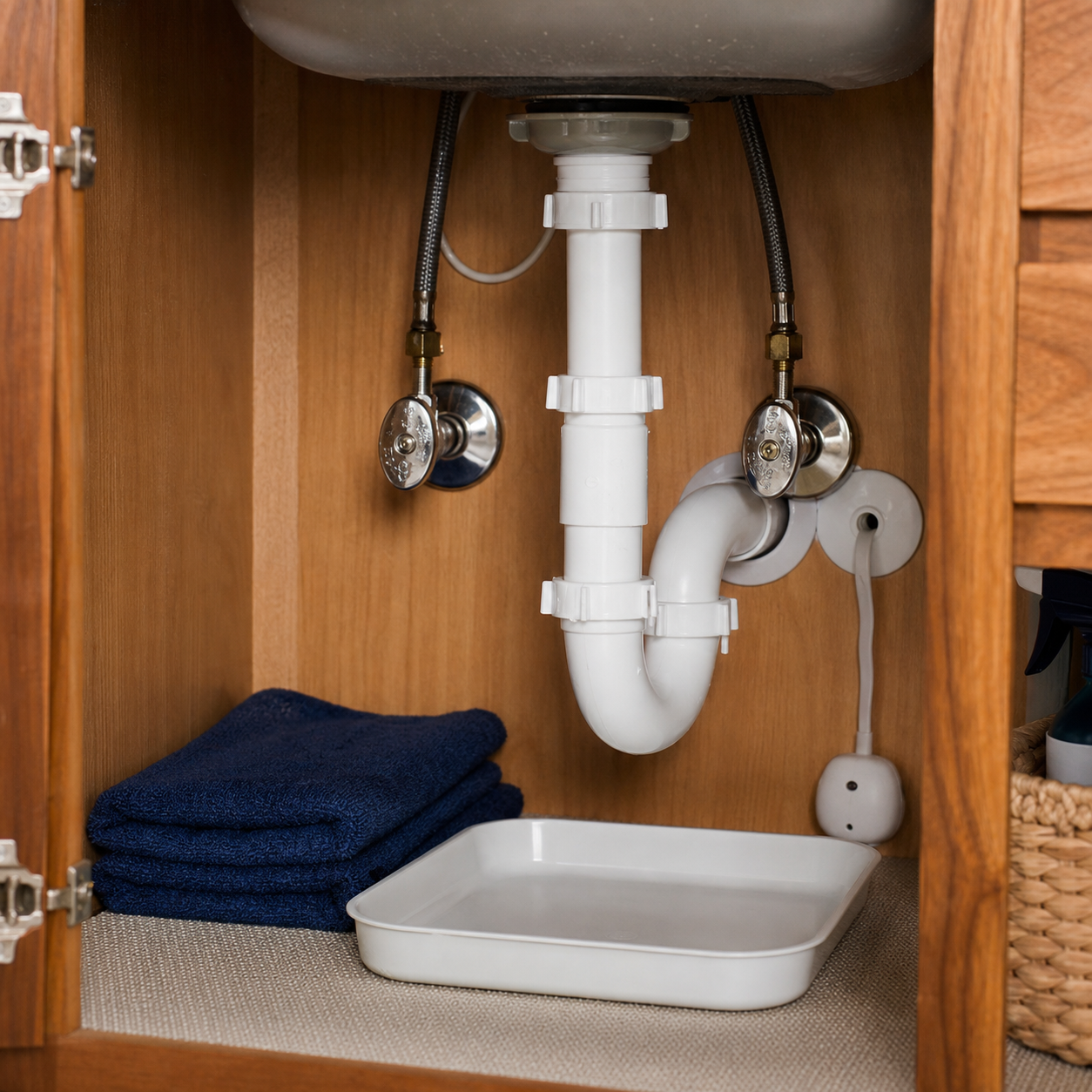

Handle the leak and unsafe access before sorting food
Keep people away from water near outlets, appliance cords and damaged ceilings or cabinets. Do not walk into flood or sewer water, move a refrigerator, reach behind an appliance or touch a wet plug to retrieve food. An item list or close-up photograph is not required before asking for urgent help.
Arrange the source response appropriate to the incident: plumber or building contact for continuing plumbing water, qualified roofing help for rain entry, and the coordinated sewer/septic response for wastewater returning through a drain. Use only an already identified, authorized and safely reachable customer shutoff under its established instructions; otherwise request isolation help.
EPA recommends experienced professional help for sewage or other contaminated-water building damage. ESFI calls for qualified evaluation before power returns to water-damaged equipment. A food-saving task must not become an electrical or contaminated-water cleanup experiment. The refrigerator-leak and wastewater-backup guides keep those urgent contacts separate.
Describe what touched what before choosing the guidance
Keep three entries separate: the known water event, the food or container that may have been contacted, and any interruption of cooling. Use observations already available from safety. Write unknown when the path, duration or package condition cannot be established; do not reproduce the leak or open a suspect package to complete the note.
An ordinary identified household supply leak is not automatically the same event as outdoor flooding or a sewer overflow. Equally, knowing that water started at a supply pipe does not establish what it contacted before reaching a pantry shelf. A source-repair finding does not by itself assess the food.
Follow official advice for the actual exposure. Illinois DPH says not to eat or drink anything exposed to sewer water and to discard food exposed to contaminated water. CDC advises discarding food when safety is uncertain after an emergency. Do not turn a household guess about clean water into permission to eat a questionable item.
Use the package and exposure to frame the next decision
This original decision table distinguishes questions that are often mixed together. It is not a container-salvage recipe or a way to clear an unknown item from a photograph. Use the linked official food guidance and local public-health advice for uncertainty; discard questionable food rather than tasting it.
| Already known situation | Useful decision or next step |
|---|---|
| Food itself may have touched floodwater or sewer water | Do not eat it. Follow the official discard guidance; do not rinse or cook it as a rescue experiment. |
| Floodwater reached a cardboard or other non-waterproof food package | Use the official discard rules for that package, even if its outside later dries. |
| A jar or bottle has a screw, snap, twist or similar closure exposed to floodwater | A closed lid is not floodwater protection. Follow the CDC/FDA discard guidance. |
| A food can is swollen, leaking, punctured or otherwise damaged | Keep it out of use. FDA excludes damaged cans from its floodwater-saving option; do not open it to inspect the contents. |
| An undamaged commercially prepared all-metal can or retort pouch may be involved | Do not assume it is ready to use. Read the exact official eligibility and complete procedure; discard when the package or safe process is uncertain. |
| A small household leak occurred, but food contact or water condition is unclear | Record the uncertainty, keep questionable food unused and seek item-specific public-health advice. Do not label the whole event floodwater or all-clear without evidence. |
| Cooling also stopped or the food history is uncertain | Address temperature history separately using current food-safety guidance. A later cold reading does not resolve earlier exposure. |
A closed lid or dry cardboard is not a floodwater barrier
CDC’s packaged-food guidance identifies closures such as screw caps, snap lids, twist caps, flip tops and traditional crimped soda-bottle caps as discard cases when floodwater may have touched them. Its flood guidance also addresses home-canned foods and non-waterproof packages, including cardboard food containers. Do not treat unopened as a synonym for waterproof.
FDA describes a limited saving procedure for eligible undamaged, commercially prepared all-metal cans and retort pouches. That exception does not include every can, plastic package or sealed jar. It requires the actual container conditions and the full process; wiping the outside or removing a wet cardboard sleeve is not that process.
If you cannot establish the eligible package, safe water, safe access and applicable instructions, discard the questionable food. This article does not combine chemical concentrations, soak times or boiling steps from different pages. Do not use a generic disinfectant or cook the food to try to compensate for an unresolved exposure.
Check cooling history and drinking-water instructions separately
CDC warns that unsafe food can look and smell normal, and says not to taste food to determine safety. Food affected by an outage has a separate temperature-history question even if no floodwater touched it. Conversely, a cold compartment does not establish that an exposed package was protected from contaminated water.
Use the refrigerator-setting guide for the distinction between a control setting, a present reading and storage history. Its ordinary checking intervals are not waiting periods for questionable food. Follow the current official food-specific outage guidance promptly; do not approach wet equipment to take a measurement.
CDC distinguishes boil-water, do-not-drink and do-not-use advisories. Follow the actual notice for this property and event, including food preparation and connected refrigerator water or ice. Boiling does not make harmful chemical or toxin contamination safe, and a refrigerator filter does not replace the notice.
The water-use-notice guide helps retain the issuing source, affected address, permitted uses and official update. A repaired leak, restored water pressure or later lifting notice does not retrospectively clear food already exposed. Keep each decision and its instructions explicit.
Keep food decisions separate from kitchen cleanup
Ask the responsible restoration or building provider what food-contact surfaces, shelving, appliance areas and concealed materials were assessed, and what remains restricted. Removing wet food does not resolve a swollen cabinet or establish that a countertop is ready for food preparation. Keep the source repair and material work on the same follow-up list.
EPA’s building guidance calls for source correction and complete drying, with experienced help for contaminated-water damage. It is not a food-container approval. Likewise, a food-disposal decision does not make wet electrical equipment safe. Keep the qualified electrical and appliance findings separate before normal use resumes.
If you think someone has a foodborne illness, contact a healthcare provider promptly; FDA directs that response. Do not delay care to finish an inventory or decide which leak caused it. This article does not diagnose illness, select treatment or prescribe an infant-feeding or medical diet plan.
Example: a repaired line and wet pantry packages
Fictional planning example: Morgan finds wet cereal boxes and a closed jar on a lower shelf after a kitchen water incident. From safety, the household arranges source help and keeps the affected food unused. It records the shelf location, package types and uncertain water path without tasting food or opening the jar.
The plumber later repairs an identified supply line. Morgan records that repair without rewriting the exposure history as clean or declaring the food safe. The household uses unexposed supplies and follows official food advice for what is known; it discards food whose safety remains uncertain rather than relying on dry cardboard or a closed lid.
If cooling was also interrupted, that becomes a separate food-history decision. The cabinet and electrical findings keep their own responsible contacts. This invented example explains recordkeeping and conservative decisions; it does not diagnose contamination, establish a universal discard rule for every household drip or promise that a package can be saved.
Keep a short private food-exposure and repair record
Make urgent calls first and keep people clear of unsafe areas. Use existing information and observations already available from safety; do not enter water, move appliances or handle damaged containers to collect evidence. The free homeowner checklist can hold the next action and contact, while detailed household records stay private.
- Incident time/location and known water source, path or uncertainty: ___.
- Food/package types and known contact, without opening or tasting: ___.
- Cooling interruption and reliable temperature history, kept separately: ___.
- Applicable official food guidance and unresolved public-health question: ___.
- Food discarded or other decision actually completed, with date: ___.
- Actual water-use notice and safe alternative supplies if applicable: ___.
- Source repair, kitchen/material and electrical follow-up with responsible contacts: ___.
- Remaining restrictions, next action and update: ___.
When to call a professional
Leave and call 911 from safety for immediate danger, fire, injury or suspected collapse. Use urgent plumbing/building help for continuing water, qualified electrical help for wet equipment or uncertain access and experienced contaminated-water restoration for sewage damage. Ask the local public-health office for food-exposure questions that official guidance does not resolve; do not eat questionable food while waiting. Contact a healthcare provider promptly if foodborne illness is suspected.
Related guides
Sources
- CDC: Keep Food Safe After a Disaster or Emergency — water contact, packaging and separate cooling history
- FDA: Food and Water Safety During Power Outages and Floods — flood packaging limits and full official container procedure
- CDC: Keeping or Discarding Packaged Food — floodwater contact and closure types
- Illinois DPH: Cleaning Up After Flood and Sewer Overflows — contaminated-food and sewer-water precautions only
- CDC: Drinking Water Advisories — actual restrictions and connected appliances
- ESFI: Water-Damaged Electrical Equipment — qualified evaluation before return to power
- EPA: Mold Cleanup in Your Home — source correction and contaminated-water professional help
Free next step
Download the free seasonal maintenance checklist to record observations and follow-up tasks. See the seasonal maintenance routine for more context.
Affiliate disclosure
No affiliate links appear in this guide. If a reviewed recommendation is added, the disclosure will appear beside it.