
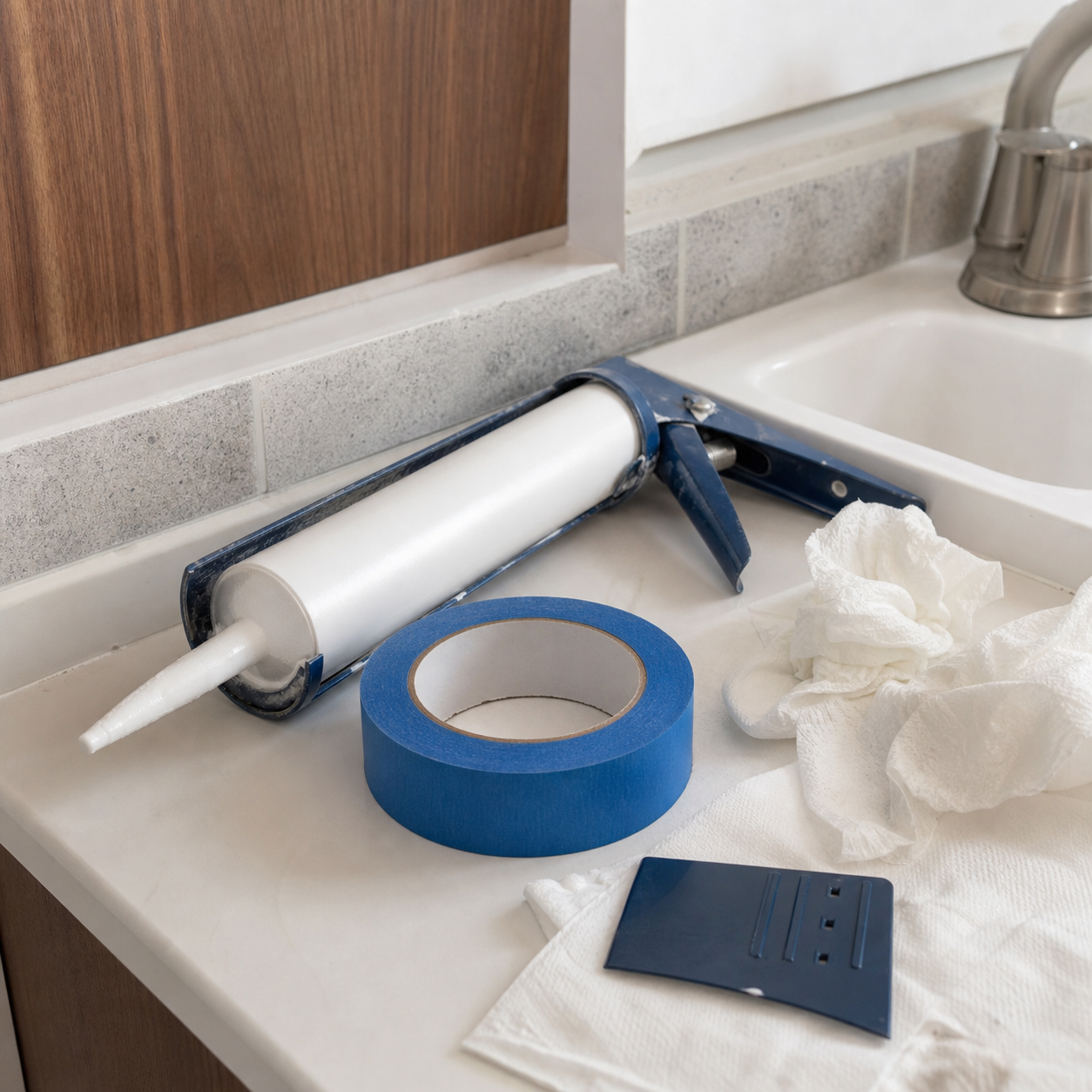
Use caulk only when the surface, location, and product instructions clearly match a small maintenance need. Stop and get qualified help for recurring water, mold-like growth, structural movement, or a gap whose cause you do not understand.
Look for the cause first
Photograph the area and note whether there is active water, staining, soft material, loose tile, recurring separation, or an odor. A failed bead may be cosmetic, but it can also be a sign that water, movement, or another problem needs attention before anything is covered.
Use the product instructions
If the task is clearly appropriate, read the label for compatible surfaces, preparation, ventilation, curing, and cleanup. Do not use caulk to conceal a leak, seal an electrical opening, repair a structural issue, or cover suspected mold or damaged material.
Know when caulk is not the answer
Contact qualified help for water that returns, a wall or ceiling concern, loose or damaged building materials, substantial gaps, mold-like growth, or any issue involving plumbing, electrical equipment, or an inaccessible area.
When to call a professional
Stop and contact a qualified professional if the work involves electrical wiring, gas, structural damage, major plumbing changes, mold, lead, asbestos, or another hazardous material.
Related guides
Sources
Affiliate disclosure
No affiliate links appear in this guide. If a reviewed recommendation is added, the disclosure will appear beside it.