
Keep people away from spreading water and wet electrical equipment, and contact the installer, qualified water-treatment service or plumber promptly. Follow only an already identified, safe and authorized water-isolation plan for the actual installation; request urgent isolation help if the control is unknown or water continues. Do not twist the housing, press a relief button, tighten a fitting or run water to find the source. OFF, BYPASS, pressure release and a filter-reminder reset can have different jobs. Report the first visible water location, any recent service and the exact known control already used.
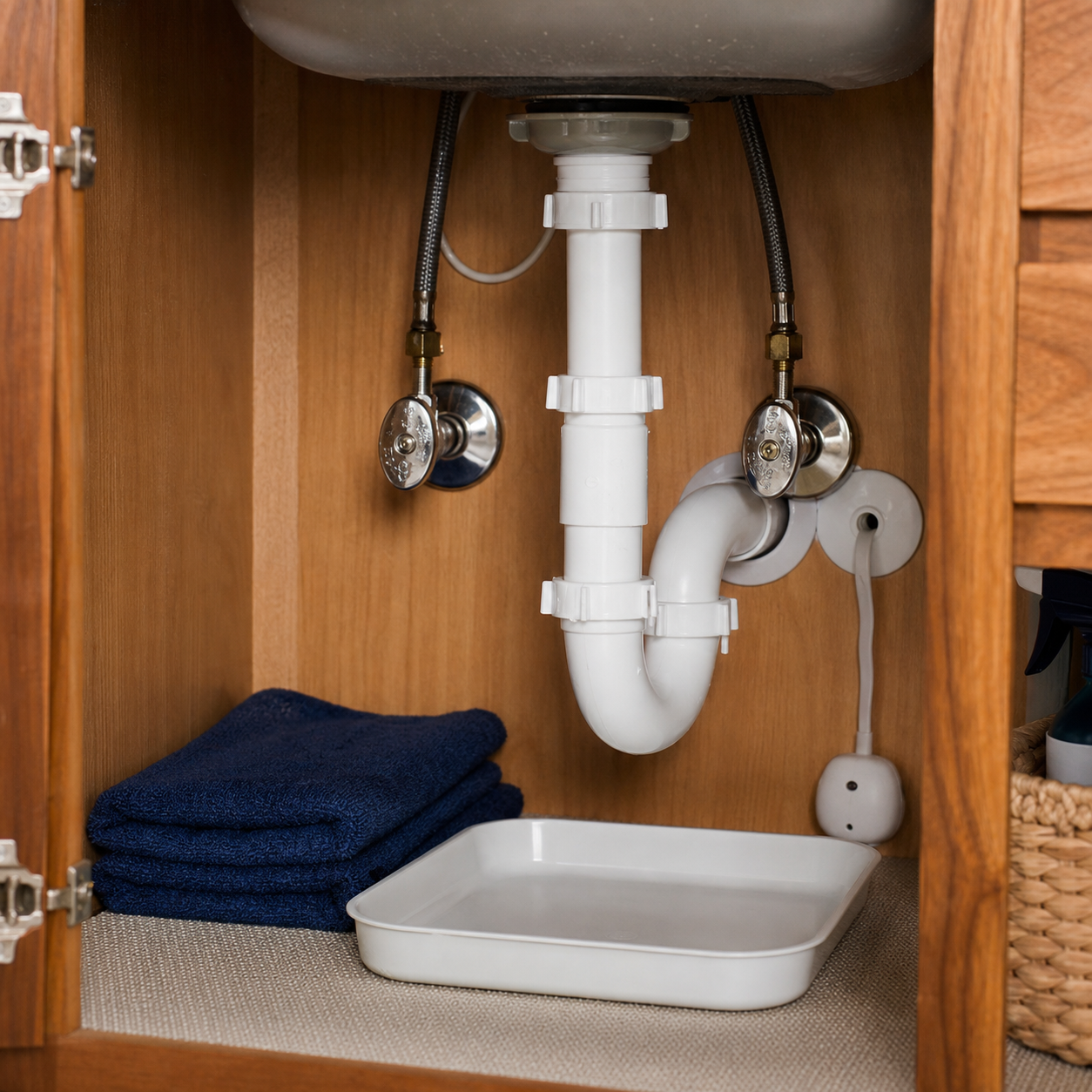

Arrange safe isolation before investigating the filter
Describe ongoing water and access hazards first when calling the installer, qualified water-treatment provider or plumber. In managed property, include the building emergency contact. A photograph or model number can follow the urgent call; do not approach a wet utility area to collect either.
Use only the established safe instructions for an identified authorized water control. If that action cannot be taken safely, the control is stiff or unfamiliar, or water continues, request urgent isolation help. Do not experiment with utility-owned, shared-building or fire-system valves. The main-shutoff guide explains how to document what each control serves before an emergency.
Keep clear of wet outlets, pumps, controllers and other powered equipment in the area. CDC warns against operating electrical equipment or power controls while standing in water. Do not reach through water for a plug or use a fan, wet vacuum or heater to start cleanup before the area is made safe. Leave immediate danger and call 911.
Identify the system and the control’s actual job
Use an existing invoice, installation record or manual to identify the filter and any separate stages. A whole-house cartridge housing, media tank, softener, UV device and under-sink RO system do not share one universal control diagram. Tell the provider about equipment and branches already known without tracing pipes or moving a tank.
GE’s manufacturer-linked GXWH40L manual (49-50220-4, December2012) illustrates the control functions below. These examples do not identify another installation or give handle directions.
| Documented control | Function to distinguish |
|---|---|
| OFF | Shuts off water in this model’s described arrangement. |
| FILTER / BYPASS | FILTER routes through the filter; BYPASS supplies the house without passing through it. |
| Red pressure-release button | A pressure-release component in the documented maintenance sequence, not a general supply shutoff. |
| Reminder timer/reset | A filter-change reminder function, not control of water flow. |
A bypass or reminder reset does not complete the leak response
Have the provider establish which control applies to the actual leaking point. A bypass label alone does not prove that an inlet connection, bypass assembly or every other stage is isolated. Do not press a button or change an unfamiliar handle simply because a similar system appears in a diagram.
Record any familiar authorized control already used and what water continued afterward. Keep unknown flow paths and isolation status explicit. A quiet reminder or stopped display is not a repair finding. Do not open a bowl, pull an O-ring, disconnect tubing or loosen a pressurized fitting to check whether the isolation worked.
Keep the manufacturer’s leak guidance and exact model manual together for service. GE’s short support page addresses several leak locations and includes repair steps with water-control prerequisites. Those steps should not be transferred to an unidentified wet system, and this guide does not supply a universal wrench, thread-tape or pressure-release sequence.
Report the visible location without choosing a failed part
GE’s support answer distinguishes installation-fitting, sump and pressure-relief-button leakage. Here, sump means the filter housing’s lower container, not a basement sump pump. Use the first visible location and timing you already observed; a puddle can remain “source unconfirmed.”
This original service-call table does not require opening a cover, touching a fitting or running a test. Give recent filter work, cold-weather exposure or other known history without deciding that it caused the leak.
| Observation already made | Useful report or question |
|---|---|
| Water at a pipe connection or top/head area | Which exact connection or component was confirmed as the source, and what safe isolation applies? |
| Water around the bowl or housing seam | What product and housing are installed, what condition was found, and what repair or replacement does that finding support? |
| Water near a small button or opening | Name the location without pressing or blocking it. Ask service to establish the component and next action. |
| Water appeared after a cartridge or plumbing visit | Give the date and actual work/parts record if available. Request follow-up without reopening the housing or repeating the job. |
Keep repair, water use and wet-material work separate
Ask the provider what source was identified, what was actually repaired, which controls or treatment stages remain out of normal service and what must happen before normal use resumes. Obtain the actual product instructions for any required flushing or other follow-up; no generic flush time, disinfectant dose or startup cycle is supplied here.
The cited GXWH40L instructions limit that product to a safe-to-drink cold-water supply and state that its cartridge does not make unsafe water safe. An external leak repair or a bypassed filter therefore does not establish drinking-water safety. Follow applicable utility or health-department instructions for a water-quality concern and consult the actual treatment provider.
Arrange timely assessment of affected walls, flooring and nearby equipment. EPA advises correcting water problems and drying items completely, with experienced professional help for contaminated-water damage. Keep source repair and material recovery assigned separately. A stopped drip, catch tray or dry-looking floor does not close every task.
Example: water near a filter after a service visit
Fictional example: a household sees water near a whole-house filter housing after a cartridge visit. It stays clear of the wet utility area, calls the installer and reports the time, first visible location and work already done. Its existing manual identifies a reminder timer as well as water controls; it does not treat a timer reset as a way to stop the water.
With no confirmed safe isolation instructions for the current arrangement, the household requests urgent help. It does not press the red button, tighten the bowl or restart flow to demonstrate the symptom. The provider establishes the source and correct action.
The service record later separates the completed repair, treatment/control status, return-to-use instructions and wet-floor follow-up. This invented example does not diagnose a seal, recommend a particular product or clear another installation for use.
Keep a short private system and repair note
Call first for active water. Use existing documents and safe observations; leave missing details unknown. The free homeowner checklist can hold the responsible contact and next action while full property and service details stay private.
- System location, installer and responsible household/building contact: ___.
- Filter model, manual/revision and separate stages known from records: ___.
- First visible water location, time and whether it continues: ___.
- Wet electricity, spreading water, access or contamination concern: ___.
- Known authorized control action already taken, by whom and when: ___.
- Recent cartridge/parts/service record and confirmed source: ___.
- Completed repair, remaining isolation/treatment status and actual return-to-use instructions: ___.
- Affected-material provider, next update and unresolved task: ___.
When to call a professional
Arrange prompt qualified water-treatment or plumbing help for continuing housing/connection water, uncertain isolation or an unknown product. Include building management for shared supplies and the responsible well/treatment provider for those systems. Wet electrical equipment, unsafe access or major spreading water needs appropriate urgent assistance; leave immediate danger and call 911. Housing opening, connection repair, pressure work, bypass changes and return-to-use instructions need the actual installation’s qualified assessment.
Related guides
Sources
- GE Appliances: Whole Home Filtration—Leak — fitting, sump and pressure-relief-button locations
- GE GXWH40L: Installation Instructions 49-50220-4, December2012, English pages1–4 — official model-linked manual, controls and safety scope
- GE Appliances Parts: GXWH40L — manufacturer model page and manual link
- CDC: Reentering Your Flooded Home — standing-water electrical precautions
- EPA: Mold Cleanup in Your Home — source correction, complete drying and contaminated-water expertise
Free next step
Download the free seasonal maintenance checklist to record observations and follow-up tasks. See the seasonal maintenance routine for more context.
Affiliate disclosure
No affiliate links appear in this guide. If a reviewed recommendation is added, the disclosure will appear beside it.