
Stop using the affected reverse-osmosis faucet and any known connected dispenser. Keep clear of wet plugs, pumps and wiring. Use only the installed system’s established, safe and authorized water-control instructions; if the feed, storage-tank or power arrangement is unfamiliar or water continues, request urgent help from the installer, qualified water-treatment service or plumber. Do not open a housing, pull tubing or assume one closed valve removes stored pressure. Report whether water is in the cabinet, at a faucet opening or only flowing through the installed drain path.
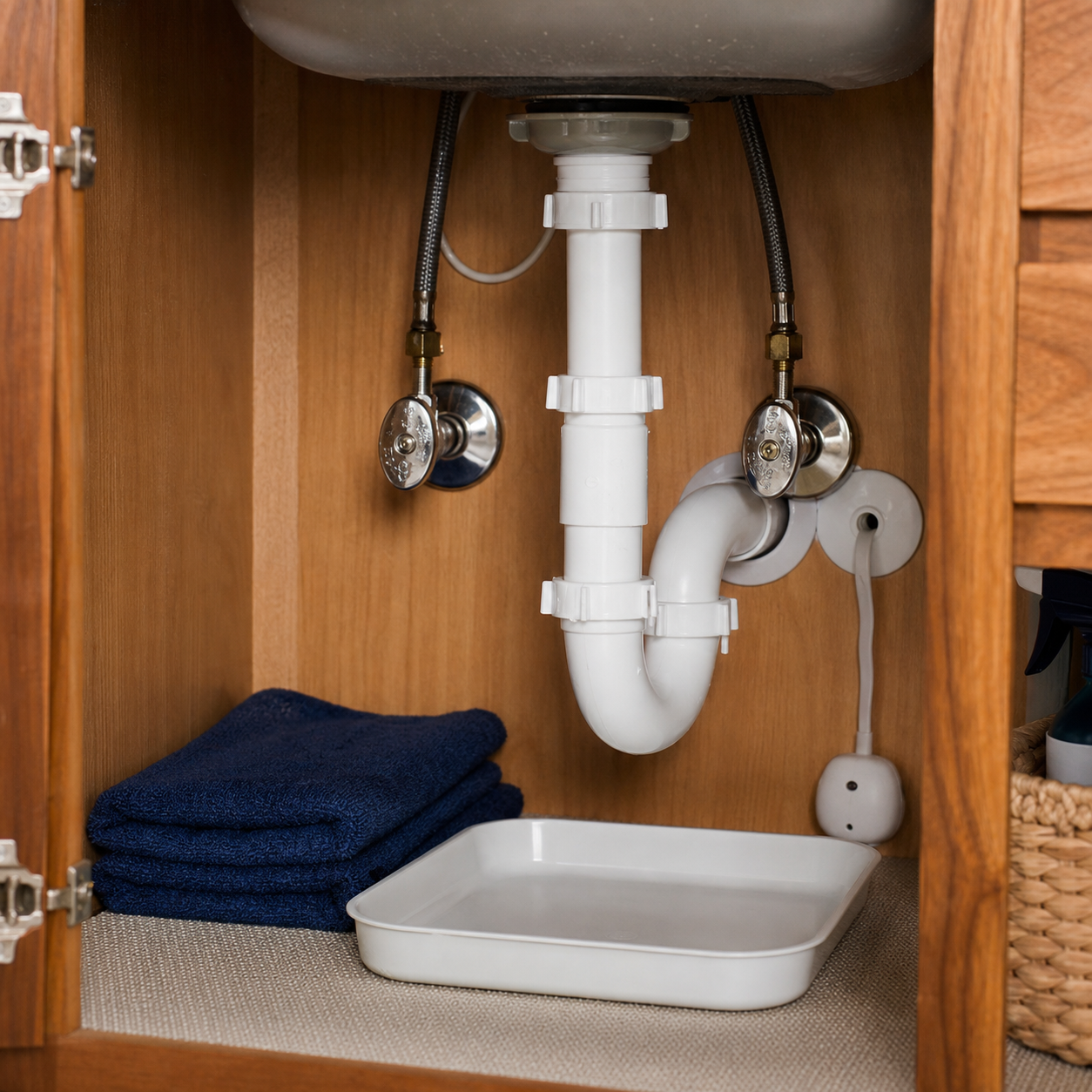

First limit exposure and arrange safe source control
Stop ordinary use of the affected RO faucet. If existing records identify a connected refrigerator or other dispenser, keep that connection in the service report and stop its ordinary dispensing use too. Do not run another glass, refill the tank or start a flush to reproduce the water.
Keep people and pets away from the wet area. Powered RO equipment, disposal wiring and nearby outlets can make cabinet access unsafe. CDC warns against switching power or using electrical equipment while standing in water. Do not touch a wet plug, reach behind equipment or cross water to a breaker. Get appropriate electrical/emergency help; leave and call 911 for immediate danger.
If you already have a safe, familiar and authorized isolation plan for the installed system, follow its exact instructions. Otherwise call the installer, qualified water-treatment service, plumber or building emergency contact promptly. Describe continuing flow and any unsafe access first. Do not force a valve or guess at a household, shared, utility-owned or fire-system control.
Identify feed, stored water and power as separate questions
An RO drinking-water faucet is not the same control as the water feeding the system. A system may also have a storage tank or powered equipment. Watts’ H2O-DWRO300 manual depicts separate feed, tank, faucet and drain paths. That specific tank system is an example, not a map of every RO installation.
Ask the provider which controls stop incoming water, isolate any stored water and make powered equipment safe. A stopped pump or one closed handle does not establish that every wet component is isolated or depressurized. Do not loosen a filter bowl, press a fitting collar, pull a retaining clip, disconnect a tube or check a tank’s air valve to find out.
APEC’s RO-pump support describes automatic pressure-related shutoff components. Their normal operating function is a different question from safe emergency isolation or repair access. Do not defeat a detector, bypass a valve or copy the page’s diagnostic tests onto an unknown leaking unit.
Report the water location without selecting a failed part
APEC’s pump-leak table separates possible housing, connection, faucet and tank-related locations. It does not identify the source of a puddle in another system. Give the first visible location and timing already observed, plus any recent filter or plumbing visit.
Use this original report table without removing covers, touching fittings or moving a tank. Unknown is a useful answer when access is unsafe.
| Observation already available | Question for qualified service |
|---|---|
| Water in the cabinet; origin uncertain | Which path actually leaked: feed, housing, tank, faucet connection, drain or nearby sink plumbing? |
| Water at a small opening near the RO faucet base | Does this installation have an air gap, and is water escaping from that opening rather than the drinking outlet? |
| Water continues after a known control was used | What exactly did that control isolate, and what further urgent source-control action applies? |
| Drain flow or pump activity seems continuous | Is it expected for this model and state? What finding supports the control or drainage assessment? |
| Leak noticed after filter or service work | Which exact parts and work were used, and what needs checking before normal use resumes? |
| A refrigerator or other appliance is connected | Which branch is affected, who coordinates isolation and what return-to-use instructions apply? |
Separate an air-gap overflow from a drinking-outlet drip
Some RO faucets include an air-gap drain arrangement; others do not. Watts’ Designer703 sheet explains that its drain routing can allow water to back up and escape at the air gap. This model-specific example means a wet faucet base may need drain-path assessment, not simply a new drinking-water cartridge.
Tell service whether water was seen at the spout, faucet base, an already-visible opening or below the counter. Do not seal the opening, poke wire into it, pinch a hose or disconnect a drain saddle. Do not add drain chemicals or copy a tubing-color diagram to identify a different system.
A separate sink or wastewater backup needs the appropriate plumbing response as well. Keep people away from suspected contaminated water. The location alone does not establish the water’s condition or which component must be replaced.
Intended reject water and escaped water need different reports
RO systems can produce a drain-bound rinse or reject stream while making treated water. Watts explains that distinction in the H2O-DWRO300 overview. Water inside the intended drain path is therefore a different observation from water reaching the cabinet or floor.
Unexpected continuous drainage still deserves service assessment. Give the operating state, times and sounds already known; do not wait through an invented universal refill interval or run a pressure test. APEC’s pump page addresses non-stop drainage after an expected shutoff, with several possible control causes. It is not proof that one automatic valve has failed.
Do not cap the reject line, reroute it into a container, alter a restrictor or change tank pressure to stop the sound. Ask the qualified provider to explain normal operation for the exact system after the current fault has been addressed.
Clarify repair, water use and cabinet recovery separately
Request the actual source finding, completed work and the provider’s checks of affected connections and drainage. Ask which components and branches remain isolated, whether any model-specific flushing or sanitization is needed and who supplies the approved return-to-use instructions. This guide does not supply a generic flush, disinfectant dose or pressure setting.
Repairing an external leak does not itself establish treatment performance or drinking-water safety. The Watts manual limits use with microbiologically unsafe or unknown-quality water without adequate disinfection. Follow applicable water-utility or health-department instructions for a water-quality concern and ask the qualified provider about the actual system; a dry cabinet or clear-looking glass is not clearance.
Arrange prompt wet-material assessment. EPA advises fixing water problems promptly and drying items completely; substantial damage or contaminated water needs appropriate experienced help. Keep cabinetry, floor and concealed-area follow-up assigned separately from the treatment-system visit. A towel, quiet alarm or stopped drip does not close every task.
Example: water appears near an RO faucet opening
Fictional example: a household notices water near a small opening behind its documented RO faucet, then sees a wet cabinet edge. It stops ordinary use, stays clear of nearby wet power and calls the installer/plumber. Existing paperwork identifies a tank system and a refrigerator branch; the household reports both without moving the tank.
The report says “water near faucet opening and cabinet edge; source unconfirmed.” It asks whether an air-gap/drain problem or another connection is involved. No one plugs the opening, pulls a tube, tightens a housing or repeats dispensing to prove a theory.
After service, the household keeps the source finding, branch/control status, approved water-use instructions and wet-cabinet work as separate entries. This invented example illustrates the handoff, not a diagnosis or a repair procedure.
Keep a compact private system and service record
Make the urgent call before completing a note. Use existing documents or safe observations; a photograph and model label are not prerequisites for help. The free homeowner checklist can hold the responsible contact and next action while detailed records remain private.
Keep the established under-sink response for a separate sink leak and the refrigerator guide for that appliance’s water/cooling concerns. If it is a softener rather than RO equipment, use that distinct service plan.
- Full RO model, applicable manual and installer/contact: ___.
- Tank / tankless / powered / unknown; connected appliances from records: ___.
- First visible water location, time and ongoing flow: ___.
- Wet electrical, access, ceiling or contamination concern: ___.
- Known control action already taken, by whom and when: ___.
- Recent filters/parts/service record and source finding: ___.
- Completed work, approved water-use instructions and wet-material next contact: ___.
A separate dishwasher air gap is a different fitting
A sink or counter may also have a separate dishwasher air gap. GE and Oatey describe that fitting as part of the dishwasher drain arrangement. It is a different question from the RO faucet’s drinking outlet or its own air-gap drain opening. Tell the provider which fitting was already identified; if unknown, leave identification to qualified service.
Use the dishwasher leak guide for water escaping at that separate fitting, including its drain-side plumbing contact and safe stopping boundaries. Do not assume the RO tank or faucet cartridge caused water elsewhere on the counter, and do not open or test either system to distinguish them.
When to call a professional
Contact the installer, qualified water-treatment service, plumber or building emergency contact promptly for escaped RO water or uncertain isolation. Wet electrical access needs appropriate qualified safety help. Keep stored-pressure, housing, tank, pump, tubing and drain work with the responsible qualified provider; request exact instructions before restoring use. Leave and call 911 for immediate danger.
Related guides
Sources
- Watts H2O-DWRO300: IOM-WQ-H2O-DWRO300 2422, 2024 — system paths, water-quality limitation and troubleshooting; exact-model scope
- Watts Designer703 air-gap faucet: IS-WQ-FCT703AG REV1646 — drain-path example, not universal tubing instructions
- APEC: RO Pump Leaks — possible locations and manufacturer support
- APEC: RO Pump No Shut-Off — pump-system control example; diagnostic tests not adopted
- CDC: Reentering Your Flooded Home — standing-water electrical precautions
- EPA: Mold Cleanup in Your Home — prompt water correction and affected-material follow-up
- GE Appliances: Water Leaks From the Air Gap — drain-plumbing role and plumber referral
- Oatey: What is an Air Gap product? — dishwasher inlet and separate drain-side connection
Free next step
Download the free seasonal maintenance checklist to record observations and follow-up tasks. See the seasonal maintenance routine for more context.
Affiliate disclosure
No affiliate links appear in this guide. If a reviewed recommendation is added, the disclosure will appear beside it.