
Keep people away from spreading water and wet electrical equipment. For an active leak, contact a qualified water-treatment technician, plumber or building emergency contact promptly. Use only known, safely accessible water controls under the actual installation’s established instructions; do not force a bypass or assume turning off the controller stops the water. Do not unplug through water, remove retaining clips or start a regeneration cycle to investigate. Report the first visible water location and whether it continues.
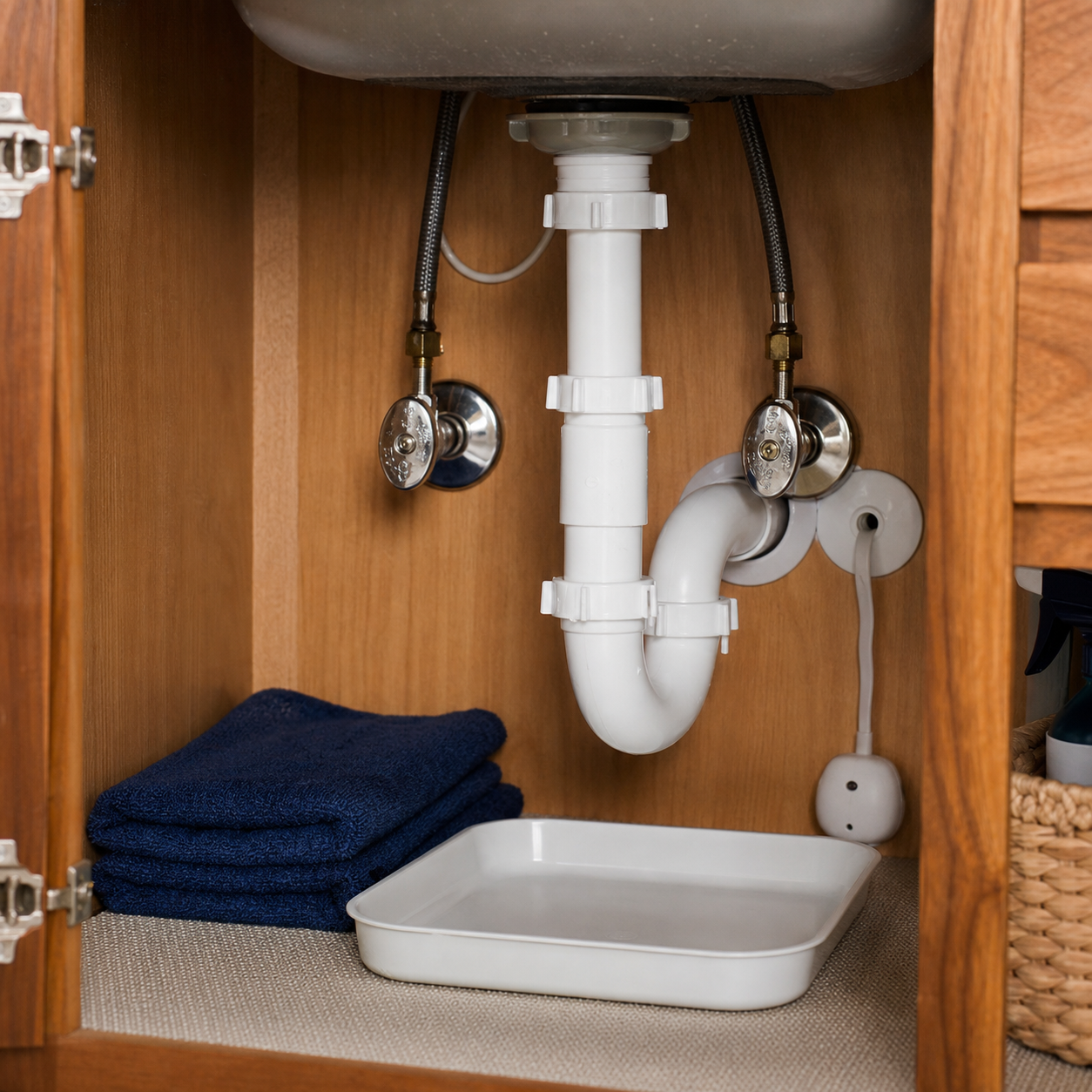

Put safe access ahead of troubleshooting
Keep children and pets out of the wet area. Do not enter water to reach the softener, an outlet, a plug or a breaker. Do not move a heavy salt-filled unit or reach behind it for a better view. CDC warns against using electrical equipment or switching power while standing in water; retain that boundary during a treatment-system leak. Leave an immediately dangerous area and call 911.
Call the building emergency contact for a shared or managed system. Otherwise, contact the installer, qualified water-treatment service or plumber, describing any ongoing flow and unsafe access first. Use an existing equipment record when the label cannot safely be reached. Documentation can follow the urgent call.
Separate the water control from the display or bypass label
A blank display, stopped motor or disconnected power supply does not establish that the plumbing is isolated. Follow only the already identified system’s safe stopping and water-control instructions when access is dry, you are authorized and you understand the controls. Do not guess at a valve position or force a stiff bypass.
If water continues or the local control cannot be used safely, obtain urgent isolation help. Use the known customer shutoff only under its established safe instructions. Texas Water describes that control’s role in stopping household supply water; its local valve locations and handle directions are not universal instructions for every home. Do not experiment with utility, shared-building or fire-system controls.
The WHES40/WHES44 manual 7392319 Rev. G, dated January 30, 2025, describes single and three-valve bypass arrangements that allow house supply while the softener is bypassed. A bypass is therefore a different control from stopping all household supply. Whirlpool’s licensed-partner support also addresses leaks in bypass assemblies themselves. Do not assume a bypass position isolates an unknown inlet, connection or valve leak; ask the provider what applies.
Tell the provider which water path you already observed
Whirlpool Water Solutions’ licensed-partner support separates external leak reports into several areas, including the main valve, bypass, tank overflow, floor and drain hose. That is useful context for the call, not a diagnosis from a puddle. Use this original reporting table without removing a cover or repeating operation.
| What you already see | Useful report or question |
|---|---|
| Water on the floor; origin unclear | Give the first visible location, time and whether water spreads. Ask for safe source and isolation assessment; do not move the unit. |
| Water near supply or bypass connections | Describe the location from a safe position and any known control already used. Do not pull clips, loosen fittings or force the bypass. |
| Water coming from a tank overflow or over the tank edge | Report which opening was already observed and whether the level is rising. Seek prompt service; do not plug the overflow. |
| Water continuing through a drain hose | Give the displayed operating state and timing already known. Ask whether it matches that model’s intended cycle or needs service. |
| Water near the power supply, outlet or controller | Give the electrical-access concern first, keep clear and arrange appropriate urgent electrical and plumbing help. |
Keep the valve drain and tank overflow distinct
In the cited WHES40/WHES44 installation example, the valve drain hose and salt-storage-tank overflow hose have separate roles. The manual expressly keeps them separate. Drain routing and air-gap requirements also belong to the actual instructions and applicable local installation requirements.
Do not join, plug, lift, disconnect or reroute a hose to stop an unexplained symptom. Keep the exact configuration for the service provider to assess. Water intentionally discharged through a properly configured drain during a documented operating stage is a different report from water escaping onto the floor; neither a running sound nor a nearby drain proves the installation is working correctly.
There is no universal regeneration duration to copy to every softener. Record only the message, cycle and times already observed. Do not start a recharge, pour in test water or wait for another cycle to reproduce a leak. Continuing unexpected drainage needs follow-up even when the floor remains dry.
Match the manual before considering any owner task
The licensed-partner WHES40/WHES44 manual selector distinguishes production periods and model/serial information. Even a familiar model name is a reason to confirm the applicable document, not choose the first diagram in a search. Use an existing invoice, equipment record or safely accessible label information.
Keep connection repair, pressure relief, retaining-clip removal, tank opening and plumbing changes with qualified help. The cited manual requires depressurization before removing connection clips; this guide does not supply a generic sequence for that work. Do not add salt, cleaner or chemicals as an attempted fix for external water.
No product is recommended here. Water-softener service, treatment performance and drinking-water safety are separate questions. A stopped leak or a bypassed unit does not establish water quality or complete any required equipment checks.
Example: a puddle beside a softener in the utility room
Fictional example: a household finds water spreading beside a softener and near its power outlet. They keep clear and contact the building emergency line or qualified help. From a dry safe location, they report the floor water and electrical concern, plus any display information already known. They do not reach behind the unit to unplug it or move a bypass just because an online diagram looks similar.
The responder establishes safe access and the correct isolation method. The service report later distinguishes the actual source, completed repair, drain arrangement and any wet-material follow-up. The initial record stays “floor water beside softener; source unknown,” rather than a guessed O-ring failure.
Close the source and damage follow-up separately
Ask what was found, what was repaired, which controls remain in use and what instructions apply before returning to normal operation. Keep a separate contact for affected flooring, walls or nearby equipment. EPA advises prompt correction of water problems, complete drying and experienced help for mold or contaminated-water damage.
A quiet alarm, off display, stopped drip or dry-looking floor does not close those tasks. Retain service findings and unresolved work on the free homeowner checklist. If continuing drain flow also prompted a higher-bill question, keep that observation beside the usage records; it does not quantify water loss or prove the entire cause of the bill.
Keep a short private service-call record
Call first for active water or unsafe access. Fill these fields afterward from safe observations and existing documents; do not publish addresses, access codes or full serial records with a public question.
- System location, provider/installer and responsible building contact: ___.
- Model, serial/manufacture information and applicable manual reference if safely available: ___.
- First visible water location, time and whether it continues: ___.
- Floor water / observed overflow / drain flow / uncertain: ___.
- Electrical/access concerns and exact message or operating state already known: ___.
- Known controls used, by whom and when; response to those actions: ___.
- Service finding, source repair, damage follow-up and instructions before reuse: ___.
Identify a separate whole-house filter before choosing its instructions
A treatment installation can have a cartridge filter as well as the softener. If water is first seen near another housing or its connections, report the equipment from existing records instead of applying a softener clip, bypass or regeneration instruction. An unknown source should stay unknown until qualified assessment.
The whole-house filter response distinguishes documented water-control, pressure-release and reminder functions with a service-call table. Keep each actual component’s manual and qualified contact together; do not open a bowl, force a bypass or repeat a cycle to decide which unit leaked.
When to call a professional
Stop and contact a qualified plumber or other appropriate professional if water is actively spreading, you cannot safely find the shutoff, the leak involves a wall or ceiling, or a repair would require changing plumbing.
Related guides
Sources
- Whirlpool Water Solutions licensed partner: External Leak — separate areas to describe to service
- Whirlpool Water Solutions licensed partner: Bypass Assembly Leak — connections and bypass styles can themselves leak
- WHES40/WHES44 manual selector — production period and model/serial applicability
- Water Channel Partners: WHES40/WHES44 manual 7392319 Rev.G, January30,2025 — safety, bypass and separate drain/overflow example
- Texas Water: Find Your Water Meter & Shut Off Your Water — customer-control role; local installation limits apply
- CDC: Reentering Your Flooded Home — wet-electrical safety boundaries
- EPA: Mold Cleanup in Your Home — prompt source repair, drying and experienced cleanup help
- GE Appliances: Whole Home Filtration—Leak — fitting, sump and pressure-relief-button locations
- GE GXWH40L: Installation Instructions 49-50220-4, December2012, English pages1–4 — official model-linked manual, controls and safety scope
- GE Appliances Parts: GXWH40L — manufacturer model page and manual link
Free next step
Download the free seasonal maintenance checklist to record observations and follow-up tasks. See the seasonal maintenance routine for more context.
Affiliate disclosure
No affiliate links appear in this guide. If a reviewed recommendation is added, the disclosure will appear beside it.