
Stop adding water and stop ordinary ice-making use when unexplained water escapes onto the counter, beneath the unit or toward power connections. Keep people away from wet plugs, controls and flooring. Follow only the actual machine’s understood stopping instructions from dry, safe access; request urgent qualified help if access or stopping is uncertain. Contact the manufacturer or qualified appliance service. Water recirculating inside a matching model does not explain an exterior puddle. Do not refill, start a cleaning cycle, disconnect a tube or lift the machine to reproduce or find the leak.
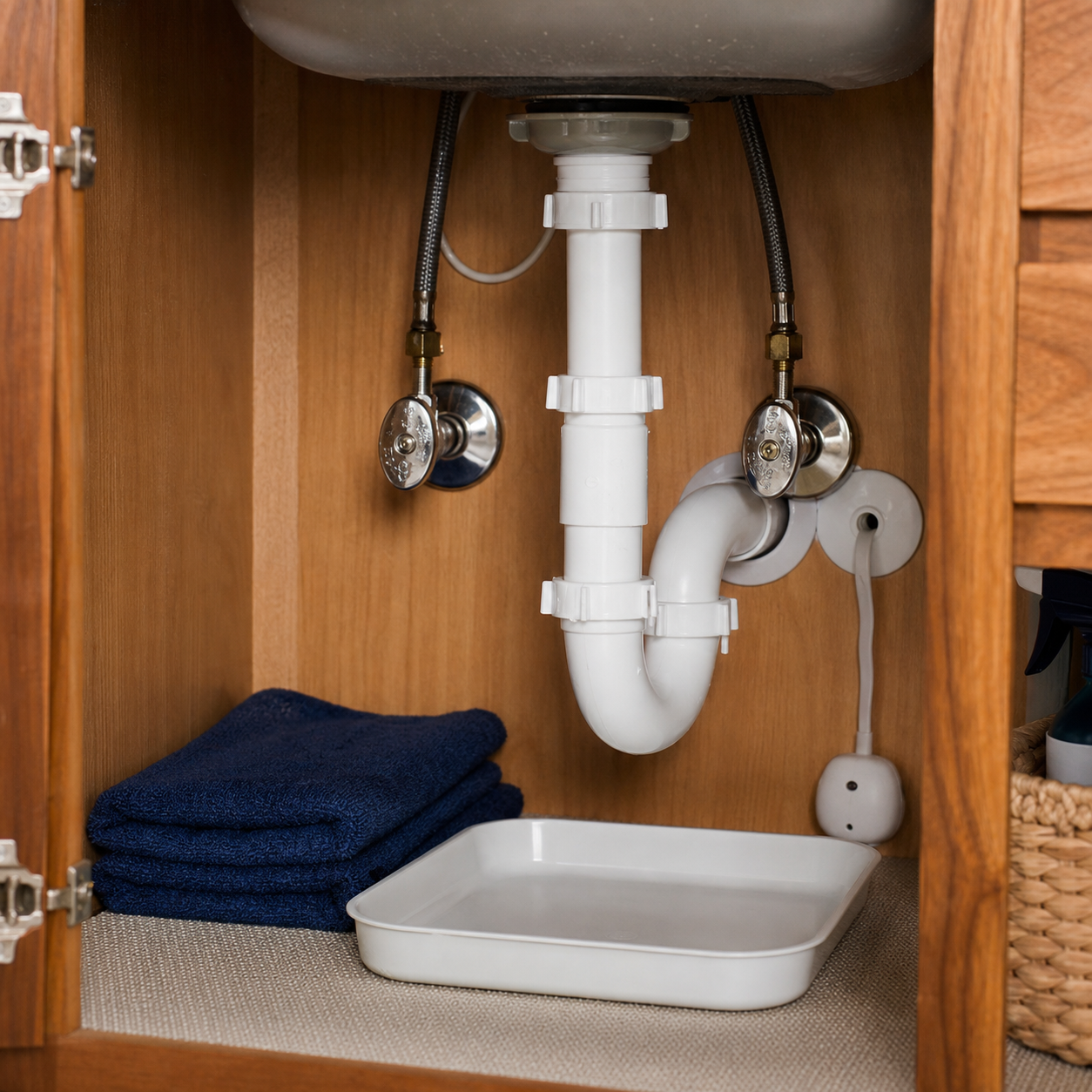

Stop ordinary use before handling the tank or tubes
Keep children and pets away from the wet counter and floor. For fire, sparking, serious injury or immediate danger, leave the affected area and call 911 from safety. Do not reach through water to a plug, switch or breaker, or touch wet controls to finish a shutdown.
Use only the installed machine’s known stopping instructions when access and controls are dry and safe. If the expected control does not respond, keep clear and request qualified help instead of trying button combinations, a cleaning mode or another outlet. CDC warns against operating power or electrical equipment while standing in water.
The current GE Opal manual warns against operation with damaged components, handling plugs with wet hands and owner disassembly or repair. It reserves servicing for authorized personnel. An off display is not permission to handle wet equipment, tip it over or work on its electrical or refrigeration system.
Confirm which water arrangement you actually have
This guide concerns a separate countertop ice maker with a refillable reservoir, including models with an optional side tank. A refrigerator’s built-in ice maker and a plumbed undercounter machine need their own supply, drain and service instructions. Do not look for a household shutoff on the assumption that every ice maker has a piped feed.
Use an existing receipt or manual to identify the full model and suffix. Describe a side tank or plumbing connection only if already known; leave it uncertain rather than moving the unit or reaching behind it. For a known household connection and continuing supply water, involve a plumber or building emergency contact alongside appliance service. The refrigerator-leak guide explains the distinction between water-supply and ice-making controls.
GE’s current XPIO13BCBT support gateway links manual 49-9000075 Rev. 2, dated 12-25, for several named Opal families. Its drawings distinguish the reservoir, ice bin, drip tray and optional side tank. That is a model-bound example, not proof of this household’s equipment or a universal tank-and-tube arrangement.
Separate internal water, an observed spill and an unexplained puddle
The reviewed Opal manual describes recirculating meltwater inside the appliance. Intended internal collection is a different observation from water escaping onto the counter. A normal mode or familiar sound does not settle where an exterior puddle began.
Report what was already seen: water spilled during filling, water around the side-tank base, water near a rear tube, water beneath the housing or water reaching a counter seam. A witnessed filling spill and an unknown recurring puddle deserve different reports. Do not turn an assumption about condensation, melting ice or a loose cap into a diagnosis.
For its side-tank models, the reviewed manual warns that raising the tank above the ice maker’s level surface can cause overflow. Tell support about an arrangement already observed, without moving a wet tank or changing its position as a repair test. Ask whether the setup, appliance and surrounding damage need separate attention.
| Already known observation | Useful next step |
|---|---|
| Wet power or unsafe access | Keep clear; request urgent qualified electrical or emergency help. Report continuing water before discussing parts. |
| A filling spill was actually witnessed | Describe that event and any equipment or material exposure. Do not assume it accounts for later or continuing water. |
| Water remains inside its intended collection area | Ask which normal behavior and ordinary care the exact model’s manual describes; this does not explain exterior water. |
| Water around a side tank or rear tube | Give appliance support the actual arrangement and recent work already known. Do not disconnect, reseat, refill or reposition it to test. |
| Water beneath the housing or source unknown | Keep ordinary use stopped and request qualified appliance assessment. Do not lift the unit to identify a failed component. |
| Ice, water or kitchen surfaces may be contaminated | Keep questionable ice unused; follow the actual water notice and official food advice, with separate appliance and surface follow-up. |
Keep normal care out of the active-leak investigation
Use the complete matching manual for ordinary tank, bin, tray, filter and drain care only after the leak, exposure and safe-access questions are resolved. A drain or side-tank installation drawing is not an instruction to disconnect tubing during a leak. Do not run a refill, rinse, descale or defrost experiment to see whether the counter stays dry.
Keep cleaning and drinking-water decisions separate from source repair. If water safety, food contact or cleaner residue is uncertain, keep questionable ice unused and seek the applicable official advice. Do not taste ice to investigate, use floor water again or improvise a chemical dose. A leak alone does not identify what the ice contacted.
Follow the actual utility or health-authority notice when an advisory applies. CDC distinguishes boil-water, do-not-drink and do-not-use restrictions, and says filters do not replace the required precautions. Tell the authority and manufacturer if the reservoir was filled during the affected period; ask for the equipment-specific follow-up before reuse. The water-use-notice and food-exposure guides keep these questions separate from a repaired leak.
Assign appliance service, electrical assessment and kitchen recovery
Start with the actual manufacturer or qualified appliance provider. GE’s current Opal support article supplies its product support contact; use that current route and the matching manual rather than assuming that a general large-appliance appointment covers this machine. Have existing model and purchase records ready, but do not move wet equipment to read a rear label. Ask what safe handling or service arrangement applies; coverage and shipping instructions need an actual provider decision.
If electrical equipment was exposed or the condition is uncertain, coordinate appliance service with the appropriate qualified electrical assessment. ESFI warns that drying alone does not clear water-damaged equipment for power. Do not reset a protective device, use an extension cord or try another receptacle as a test. An appliance finding does not itself assess an affected household outlet.
Arrange prompt attention to wet counter joints, cabinet edges and flooring after hazards are controlled. EPA calls for correcting water problems and complete drying, with experienced help for contaminated-water damage. Do not reach under potentially energized equipment to mop up. Ask who handles concealed or swollen materials and what remains restricted; a towel, empty reservoir or stopped drip is not completion of all the work.
Example: a side tank is on a stand and the counter is wet
Fictional example: a household discovers a wet counter beside its reservoir-fed ice maker. An existing photo shows that its optional side tank had been put on a raised stand. From safe access, the household stops ordinary use under its known instructions and contacts appliance support; unsafe power access would require urgent qualified help first.
The report says “side tank previously raised; exterior water discovered; starting point unknown.” The household does not lift the tank down, disconnect a tube or refill the machine to prove that the arrangement caused the leak. Support receives the actual model and installation history so it can assess the finding and applicable instructions.
The household separately records any ice/water-use question, electrical assessment and wet-cabinet work. It obtains specific instructions before use resumes. This invented example explains a useful service report; it does not diagnose overflow, clear the ice or establish a universal tank adjustment or restart procedure.
Keep a private ice-maker and repair handover note
Make urgent calls first. Use existing records and safe observations; unknown is an acceptable entry. The free homeowner checklist can hold the next action and contact, while purchase records, photos and service reports remain private.
- Full model/suffix and purchase or earlier service record: ___.
- Refillable reservoir, side tank or actual plumbing connection, if known: ___.
- Discovery time, first water location and whether water continues: ___.
- Filling, cleaning, moving or other work already performed before discovery: ___.
- Wet power, unsafe access, stopping action already taken and instructions used: ___.
- Water-use notice, possible ice/food contact or cleaner question: ___.
- Provider’s actual finding, completed work and specific reuse restrictions: ___.
- Separate electrical and counter/cabinet/floor tasks, responsible contact and next action: ___.
When to call a professional
Keep an ice maker with an unresolved exterior leak out of ordinary use and contact its manufacturer or qualified appliance service. Request urgent qualified help for wet power, unsafe access or continuing water that cannot be safely controlled. Coordinate any actual household plumbing connection, electrical exposure, questionable ice/water and wet-material work with the appropriate separate providers; obtain specific return-to-use instructions.
Related guides
Sources
- GE Appliances: XPIO13BCBT support gateway — match the model and currently linked owner manual
- GE Opal: Owner manual 49-9000075 Rev. 2, 12-25 — safety, display, internal water and side-tank scope (pages 3, 5–7, 10–14, 20)
- GE Appliances: Opal Ice Maker Support — current product-specific contact
- CDC: Reentering Your Flooded Home — standing-water electrical boundaries
- ESFI: Water-Damaged Electrical Equipment — qualified evaluation before power returns
- CDC: Drinking Water Advisories — follow the actual restrictions and safe alternatives
- EPA: Mold Cleanup in Your Home — source correction, complete drying and contaminated-water help
Free next step
Download the free seasonal maintenance checklist to record observations and follow-up tasks. See the seasonal maintenance routine for more context.
Affiliate disclosure
No affiliate links appear in this guide. If a reviewed recommendation is added, the disclosure will appear beside it.