
Keep people away from wet electrical equipment, unstable glass and rising outdoor water. Follow local flood instructions and request emergency help for immediate danger. For a small, safely accessible indoor leak, limit the spread without blocking an escape route, then contact the door installer or a qualified door/building-envelope repair provider promptly. Record where water first appeared without opening trim or testing with a hose. Wet flooring at the threshold does not prove the sweep is the cause; ask about the installed door system, its drainage and its connection to the surrounding wall. A towel or a stopped drip is containment, not a completed repair.

Make the entrance safe before investigating the seal
Treat rising outside water, rapid inflow or an unsafe exit as an emergency response problem. Follow local alerts and evacuation directions; do not go into floodwater to inspect the doorstep. The National Weather Service advises avoiding floodwater and keeping out of rooms where water covers outlets or submerges cords. Call 911 for immediate danger or trapped occupants.
Keep away from water-exposed lights, outlets, door operators and cords. CDC warns never to switch power or use electrical equipment while standing in water. Do not reach across a wet floor to unplug equipment or get to a breaker; obtain qualified electrical help from a safe location.
Do not force a swollen or damaged door, handle loose glass, remove hinges or stand beneath damaged material. Keep people away from the affected opening and seek urgent help if the entrance cannot be used safely. In a managed building, notify the emergency maintenance contact and identify any affected shared exit.
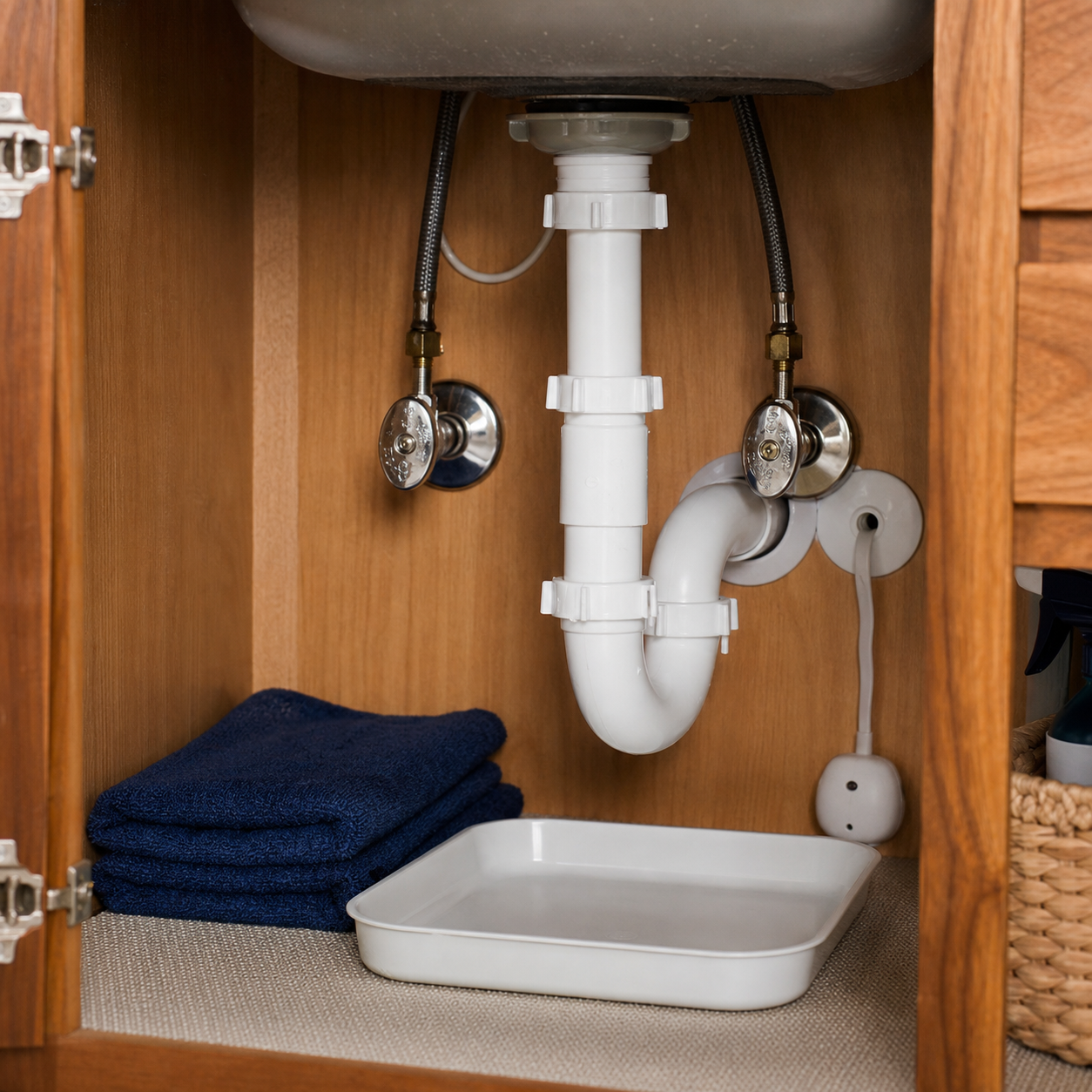
For a small leak reachable from dry, safe flooring, a towel or shallow catch container may limit the spread while help is arranged. Keep the walking and escape route clear. Move nearby dry belongings only if safely reachable. Do not use containment as permission to postpone a continuing leak or enter an unsafe area.
Record the first wet location without creating a test
From a safe indoor position, note where water first became visible: above the opening, at a side jamb, beside a sidelight, along the bottom edge or already spread across the floor. Distinguish the first observation from where water later collected. If you did not see the start, write “first entry point unknown.”
Record the time, whether rain and water entry are continuing, and any wind or outdoor ponding already observed safely. Note whether the door was ordinarily closed when the problem was discovered, without recreating the conditions. A short private photo can help the service conversation if taking it requires no exposure to danger.
Describe the observation without naming a failed component: “water on the indoor floor beside the lower hinge-side corner” is more useful than an unsupported diagnosis of a bad sweep. Do not open the door against accumulated water, probe a slot, remove trim or climb outside to complete the record.
If water appears above the door or in a ceiling, use the ceiling-leak response as well. If it is actually around a window, use the window-rain guide. An entry door, sliding patio door, garage door and storm door have different assemblies; do not apply one product’s drainage or adjustment instructions to another.
Ask about both the door components and the wall connection
A sweep and weatherstripping are parts of a door system, not the whole investigation. JELD-WEN’s July 2024 care manual distinguishes the slab, frame, threshold and flexible bottom sweep. Its inspection guidance includes the frame, sealant joints, weatherstripping and exposure-related maintenance. These are product-specific reference points, not proof that any one part caused this leak.
PNNL explains that window and door openings interrupt the wall drainage plane, and that flashing must direct water out rather than into wall cavities. Its door section points to manufacturer instructions for sill flashing and integration with housewrap. That supports asking about the installed connection as well as replaceable seals; it does not supply an owner retrofit recipe.
Ask whether the provider can assess this type of door, its surrounding opening and the observed wet area. If the first provider handles only replacement seals, ask who will evaluate an unresolved door-to-wall or sill concern. Keep the original installer, product warranty/service route and a qualified building-envelope repair provider in the contact list as applicable.
Provide a safely available model label, existing invoice or installation record if you already have one. Do not disassemble the door to identify it. Ask what remains unknown, what access is needed and who is responsible for any further investigation before agreeing that a seal replacement resolves the source.
Do not seal an unidentified gap or hose-test the entrance
JELD-WEN’s manual explicitly warns against adding sealant where the installer or contractor did not originally seal and says to seek professional advice when the intended locations are uncertain. Its sealant-joint drawing labels a weep gap as well as sealant. A visible opening is not automatically a defect to fill.
The same manual warns against cleaning doors with a garden hose or power washer because that can cause seal failure and water entry. Do not turn an active leak into an improvised spray test. Leave any necessary diagnostic method to the appropriate provider and the actual product/installation instructions.
Do not adopt generic threshold-screw turns, sweep trimming, corner pads, foam, tape or caulk patterns from another door. Do not drill a drainage hole, block an existing path, remove trim or loosen the frame to find hidden water. A product-specific owner task is appropriate only when the actual system and exact applicable instructions are established and the task is safe.
Ordinary air-gap maintenance belongs in the weatherstripping guide. Recurring rainwater, damaged materials or unknown construction needs the source assessment above. Quiet weather after an adjustment does not by itself demonstrate that the original leak is repaired.
Use the repair conversation to assign the unresolved work
Use this original table to obtain a clear next action. It is a conversation aid, not a diagnosis or a promise that the first contractor covers every part of the job.
| What to establish | Useful question or next action |
|---|---|
| Safe entrance and access | Is urgent help needed for unsafe operation, glass, electricity or a blocked exit? Describe the hazard before arranging inspection. |
| Actual door system | Which product and installation records apply? Confirm the provider handles this entry-door type. |
| Observed entry and spread | Where was water first seen, what is still happening and what source remains uncertain? Keep observations separate from diagnosis. |
| Seal, sill and wall scope | Does the assessment cover relevant components, intended drainage and the connection to the surrounding opening? Who handles any excluded area? |
| Investigation and proposed repair | What findings support the work, what access is needed and what remains unresolved? Ask for applicable product instructions. |
| Wet materials and follow-up | Who assesses affected interior materials, and what follow-up will establish that source work and drying are complete? Record temporary measures separately. |
Keep wet-material recovery separate from stopping entry
Ask promptly about the flooring, trim and wall materials reached by water. EPA advises fixing water problems and drying items completely; it also recommends experienced professional help for damage caused by sewage or other contaminated water. Do not assume water stays clean after crossing outdoor surfaces or entering an unknown cavity.
A dry towel, a dry-looking floor edge or the end of rainfall does not establish that concealed materials are dry. Tell the provider about continuing dampness, swelling, odor or visible mold without opening the wall to investigate. Agree who will assess affected materials and what safe follow-up is required.
Keep source investigation, permanent repair, wet-material work and any temporary protection as separate entries. Request a written explanation of the proposed scope and exclusions; the repair-estimate guide can help compare those records. Do not paint over a stain or conceal the wet area as proof of completion.
Example: water beside the lower corner after driven rain
Fictional example: a household finds a small wet area on the indoor floor beside an entry door after rain. Access is safe, so it contains the spread without blocking the route and calls a door repair provider. The first entry point was not observed; the record says so.
The household supplies an existing installation record and asks whether the assessment covers the door components and the surrounding opening. It does not caulk every visible gap, replace a sweep by guesswork or spray the door to reproduce the leak. It separately asks about the affected floor and trim.
After the rain stops, its notes still say “entry source under assessment; wet-material follow-up pending.” This invented example illustrates an honest handoff. It does not diagnose a sweep, prescribe flashing work or establish that a dry day confirms repair.
A short private entrance-leak record
Make urgent calls first. Use the free homeowner checklist for the next action and responsible contact; retain address details, product records and photos privately. No completed household record needs to be uploaded here.
- Affected entrance and immediate access, electrical, glass or flood concern: ___.
- Discovery time, rain still occurring and water still entering: ___.
- First wet location actually observed, later spread and unknowns: ___.
- Safely available product, installer and existing service records: ___.
- Provider contacted, response arrangement and scope accepted: ___.
- Component, drainage or surrounding-opening questions still unresolved: ___.
- Temporary containment, interior wet-material contact and next update: ___.
- Actual repair findings, completed work and separate follow-up still open: ___.
Rainwater at a sectional garage door needs a different service handoff
If the affected opening is a sectional overhead garage door, use the separate garage-door rainwater guide. Its large moving assembly, spring hardware and automatic opener add questions beyond an entry-door sweep or sill. Give the door and opener records separately to a trained door systems technician; keep wet power and questionable surrounding framing with the appropriate qualified providers.
Record whether water crossed the closed opening or was noticed only after an earlier ordinary opening, without moving the door to find out. Coordinate actual door findings with any outside runoff, slab or surrounding-building question. Do not apply this entry-door manufacturer’s threshold, drainage or adjustment details to the garage assembly.
When to call a professional
Call 911 for immediate danger, trapped occupants, injury, fire or suspected collapse; follow local emergency instructions for flooding. Request qualified electrical help for water-exposed equipment. Contact the installer/manufacturer service route or a qualified exterior-door and building-envelope repair provider for water entry, damaged glass/frame, unsafe operation or uncertain drainage. Include building management for a shared entrance. Arrange appropriate wet-material recovery separately; do not begin hidden-wall or structural work from this guide.
Related guides
Sources
- JELD-WEN: Care and Maintenance — Interior and Exterior Doors, JCM005 revision July 2024; seal locations, weep gap and hose warning
- Pacific Northwest National Laboratory: Windows and Doors are Fully Flashed — door and wall water-management connection
- National Weather Service: During a Flood — rising water, evacuation and electrical hazards
- CDC: Reentering Your Flooded Home — standing-water electrical boundary
- EPA: Mold Cleanup in Your Home — fix the water problem, dry materials and obtain experienced contaminated-water help
- Clopay: Steel Garage Doors Care and Maintenance, 4150089-REV10-0726 — named families, safety, service and records (pages 1–3, 8)
- DASMA TDS174: Residential sectional-door damage — technician and surrounding-framing responsibilities, current indexed edition
Free next step
Download the free seasonal maintenance checklist to record observations and follow-up tasks. See the seasonal maintenance routine for more context.
Affiliate disclosure
No affiliate links appear in this guide. If a reviewed recommendation is added, the disclosure will appear beside it.