
Begin with a ground-level exterior and indoor water walkthrough, refresh emergency readiness, and document concerns. Skip roofs, damaged electrical equipment, major plumbing, and any task you cannot identify safely.
Start with a ground-level walkaround
From the ground, notice drainage changes, loose items, visible damage, and conditions around doors, windows, and water connections. Take photos and notes rather than climbing, probing, or trying to repair the cause before it is understood.
Look for visible water and moisture
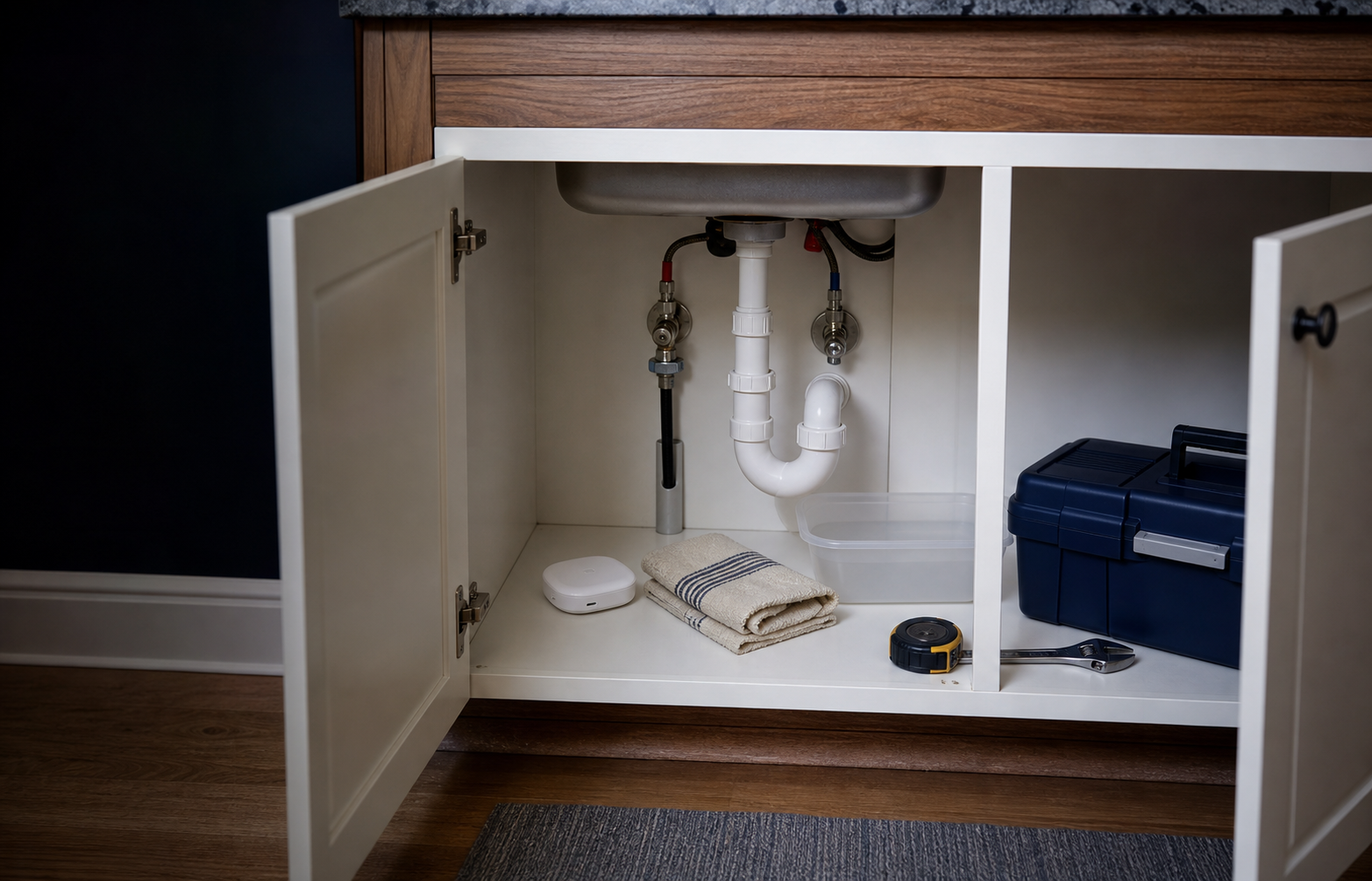
EPA recommends watching for drips, water spots, puddling, and leaks at pipe connections. Check under sinks and around appliances only where you can safely see. A visual check is a prompt for appropriate next steps, not a diagnosis of a hidden problem.
Prepare for spring weather
Review local emergency alerts, check lights and communications supplies, and keep outdoor access clear. If your area has a storm or flood season, use local instructions first and keep away from floodwater, downed lines, and damaged electrical equipment.
Keep the professional boundary clear
Call qualified help for roof concerns, persistent or unexplained water, structural changes, gas smells, damaged electrical equipment, mold, or work that would require opening walls or altering plumbing. If responsibility is unclear, check with your HOA or building management.
When to call a professional
Stop and contact a qualified professional if the work involves electrical wiring, gas, structural damage, roof access, major plumbing changes, mold, lead, asbestos, or another hazardous material.
Related guides
Sources
Affiliate disclosure
No affiliate links appear in this guide. If a reviewed recommendation is added, the disclosure will appear beside it.