
Stop ordinary use of the affected instant-hot-water dispenser and keep people away from hot spray, steam and wet electrical equipment. Arrange prompt help from the manufacturer, installer or a qualified plumber; request urgent safe isolation if water continues or controls cannot be reached safely. Follow only the installed system’s established energy-and-water stopping instructions when access is dry, safe and understood. Do not reach for a wet plug, block an outlet or vent, open a hot tank or restart it to test the leak. Report where water was first seen and whether it is still escaping; a dripping spout does not identify a failed tank or clear a wet cabinet.
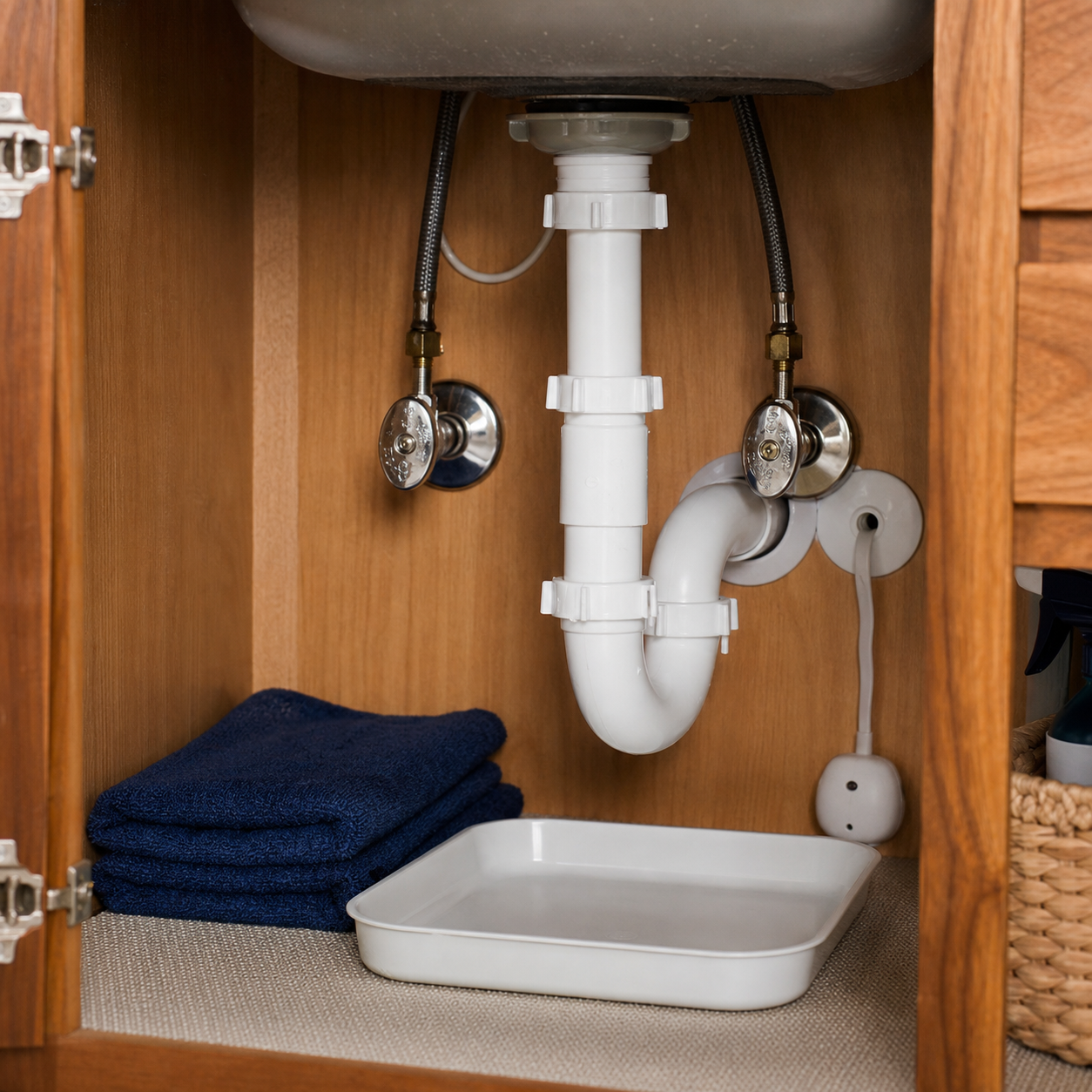

Keep clear of hot water and make stopping the first call
Keep children, pets and other household members away from the affected dispenser and cabinet. Do not put a hand into the flow to judge its temperature, lean over a sputtering outlet or reach behind a hot tank. Stop ordinary dispensing without forcing an unfamiliar control. Seek emergency help for immediate danger or serious injury; do not delay to collect a model number.
Water near the tank cord, outlet, disposal or other powered equipment makes under-sink access a separate safety problem. CDC warns against using electrical equipment or switching power while standing in water. Do not pull a wet plug, touch wet wiring or cross water to a breaker. Obtain qualified help from a safe location.
Tell the manufacturer, installer or plumber whether water continues and whether the installed controls can be reached safely. Use an established, authorized stopping plan for that exact system only when you can follow it safely. Ask explicitly about both electrical energy and incoming water. If either part is unclear, request urgent isolation help instead of guessing.
Moen’s current SIP/IH2300 manual warns against operating a malfunctioning tank or one with a damaged cord or plug, and against owner servicing. It requires disconnection before servicing or cleaning. That is not permission to reach into a wet cabinet; the access hazard comes first. Closing a faucet handle also does not document energy isolation or removal of stored hot water.
Describe outlet water and escaped cabinet water separately
From a safe position, report whether water was noticed at the dispensing outlet, around the handle or spout base, below the counter, beside a tank connection or already spread across the cabinet. If the starting point was not seen, say so. More than one wet location can be present.
Use the timing already observed: ordinary dispensing, a heating period, shortly after use or a continuing drip. Do not run another cup, fill a container, change a setting or wait beside the equipment to reproduce it. A safe existing photo and product record may help, but neither is required before requesting urgent help.
Moen’s SIP leak support treats sputtering, continuous outlet/handle leakage, spout-base leakage and under-sink water as separate troubleshooting categories. It requires product identification for some tube and hose parts. Those distinctions help frame the service report; they do not identify the failed component in an unknown installation.
A household water heater, an RO drinking-water faucet and a heated countertop dispenser are different systems. This guide concerns an installed instant-hot-water tank and its dedicated sink dispenser. Use the water-heater or RO guide when that is the actual equipment, and report any shared supply or filtration arrangement already known from records.
Preserve the vented system and do not borrow an ordinary faucet fix
Moen’s April 2026 INS14046B guide identifies the IH2300 as a tank for its vented instant-hot faucets. Its initial-heating instructions note that outlet drops can occur in that specific setting. That narrow note does not explain continuous dripping, hot spray or water escaping into a cabinet.
InSinkErator’s Showroom Collection safety guidance describes a non-pressurized tank and warns against closing its vent tube, modifying the system or substituting another type of dispenser or valve. It also directs the reader to the separate tank manual. Confirm the actual matched components with support; a similar-looking faucet is not proof of compatibility.
Do not cap a dripping outlet, plug an unidentified opening, pinch a tube or add a valve to stop visible water. Do not turn an ordinary-faucet cartridge article into a repair plan for a heated dispenser. Ask the provider which path is intended to remain open and which component actually leaked.
Leave aerator removal, tube repositioning, thermostat troubleshooting, cartridge work and tank draining out of an active-leak experiment. Exact instructions may exist for a particular safe installation; they are not a universal sequence for an unknown wet system. Avoid temporary tape, sealant or a bypass that conceals the symptom or changes the system.
Use a service table that keeps the important questions separate
Use this original table for the first repair conversation. Report only observations already available safely. A provider may need both appliance information and plumbing or electrical help; clarify who handles the work that remains outside the first visit.
| Observation or decision | Question for the responsible provider |
|---|---|
| Hot spray, steam or unsafe electrical access | What urgent stopping and safety response applies? Describe the hazard before arranging diagnosis. |
| Drops at the dedicated outlet | Does the exact model and observed operating state explain this, or does it require service? Do not generalize an initial-heating note. |
| Water at the handle or spout base | Which faucet and generation are installed, and what finding identifies the source? Avoid guessing at a standard cartridge. |
| Water in the cabinet or near the tank | Which path leaked: supply, faucet tubing, tank, filter or nearby plumbing? What safe isolation remains required? |
| Repair or replacement proposed | Which confirmed finding supports it, and does the work include compatible components and the affected connections? |
| Before normal use resumes | Who confirms electrical safety, required filling/checks and any water-use instructions, with wet-material work assigned separately? |
A stopped drip is not a safe restart instruction
Keep the dispenser out of ordinary use until the actual source, completed work and return-to-use instructions are resolved. Request a written explanation of what was repaired, any remaining isolated branches and any work excluded from the visit. The repair-estimate guide helps keep those scopes clear.
Moen’s manual warns not to connect power with the tank empty and separates filling from heating. Do not use a reset, dry start or automatic protective device as a leak check. Ask qualified service to establish the correct filling and restoration procedure for the actual equipment after the fault is addressed; this guide supplies no universal wait, temperature or restart sequence.
If water reached electrical equipment, follow the qualified assessment in the water-exposed-equipment guide. A dry exterior is not that assessment. InSinkErator’s safety guidance calls for qualified inspection before reconnecting a product that has fallen into water; do not reduce that warning to wiping off its housing.
Arrange prompt assessment of affected cabinet, flooring and concealed materials as well. EPA advises correcting water problems and drying items completely, with experienced help for contaminated-water damage. Keep room/material recovery separate from the appliance repair. Do not pack paper or rags around the tank; InSinkErator warns against storing flammable material near it.
Example: outlet drops and a wet cabinet edge
Fictional example: a household notices drops from its dedicated hot-water spout, then sees water along the cabinet edge. It stops ordinary use and keeps clear of the tank cord. Existing paperwork identifies the tank and faucet, so it gives both to the installer and asks for safe source-control help.
The household reports “outlet drops and cabinet water; source unconfirmed.” It does not assume the cabinet water is normal heating expansion, block an opening or change a thermostat to see what happens. It asks whether the source is in the appliance, its connections or nearby plumbing.
After service, its notes distinguish the actual repair, approved return to use and remaining cabinet assessment. A dry towel or quiet alarm does not close all three tasks. This invented example illustrates reporting and follow-up, not a diagnosis, warranty decision or claim that every dispenser needs replacement.
Keep a short private dispenser and repair record
Make urgent calls first. Use the free homeowner checklist for the next action and responsible contact; keep detailed product records and household photos privately. Use unknown rather than moving the tank or opening a cover to complete a field.
- Affected dispenser/tank, installer and model from existing records: ___.
- First water location, discovery time and observed operating state: ___.
- Hot spray, steam, wet electricity or unsafe access already observed: ___.
- Water continuing, stopped or uncertain; no repeat test: ___.
- Known stopping instructions used, by whom and what remains unresolved: ___.
- Connected filter/supply arrangement from existing records and recent service: ___.
- Provider finding, agreed work and safe return-to-use instructions: ___.
- Separate cabinet/floor/electrical follow-up and next contact: ___.
Use the countertop-machine response for escaped espresso water
If the affected equipment is a countertop espresso machine rather than the installed tank and dedicated sink faucet, give the provider that distinction. The espresso-machine guide separates intended drip-tray collection from water outside the appliance and explains why a tray-care instruction does not resolve an unknown exterior leak. Use the actual model from existing records without lifting a hot or wet machine.
An installed dispenser’s vent and tank instructions do not identify a countertop machine’s controls or repair parts. Ask the actual appliance manufacturer or qualified service provider about safe stopping, the confirmed source and reuse. Include plumbing help for an actual supply connection and electrical help for exposure; keep wet-counter or cabinet work assigned separately.
Use the bottled-dispenser response for a separate water cooler
A separate top- or bottom-loading bottled drinking-water dispenser needs its own bottle, reservoir and equipment-provider response. Its bottle arrangement is different from this guide’s installed tank and dedicated sink faucet. Use an existing receipt or provider record to identify it without moving wet equipment; a lower cabinet door alone does not establish whether a machine has a bottle or household plumbing.
The bottled-dispenser guide separates a witnessed loading spill, tray water and unexplained floor water, with a service table, fictional example and private repair prompts. A heating switch or bottle change does not establish complete isolation or repair. Keep unsafe access and continuing water on the urgent qualified-help path, and obtain the actual provider’s stopping and return-to-use instructions.
When to call a professional
Leave immediate danger and call 911 for fire, serious injury or an immediate electrical hazard. Contact the actual dispenser/tank manufacturer, installer or a qualified plumber promptly for escaped water, hot spray, continuing dripping or uncertain stopping instructions. Electrical damage or unsafe access needs appropriate qualified electrical help. Keep tank opening, draining, wiring, tubing, vent changes and uncertain controls with qualified service; request explicit return-to-use instructions.
Related guides
Sources
- Moen: IH2300 current product resources — linked applicable instruction sheet
- Moen: SIP faucet and IH2300 guide INS14046B, April 2026 — safety, vented-system scope, filling, maintenance and troubleshooting
- Moen: Instant Hot SIP Faucet and Tank — Leaking; outlet, handle, spout-base and under-sink distinctions
- InSinkErator: Showroom Collection Installation, Care & Use, 45495-ISE Rev C, copyright 2023 — safety page 2; supplied tank manual also required
- CDC: Reentering Your Flooded Home — standing-water electrical boundary
- EPA: Mold Cleanup in Your Home — source correction, drying and experienced contaminated-water help
- Primo: current equipment-support directory — match top-load, bottom-load and rental instructions
- Primo / Pure Water Dispenser: 100 Series manual — copyright 2021; safety, cap and hot-tank scope
- Brio: CLBL520SC product support — current linked setup manual and help center
- Brio: CLBL520SC setup manual — current product-page V18 asset, copyright 2025
Free next step
Download the free seasonal maintenance checklist to record observations and follow-up tasks. See the seasonal maintenance routine for more context.
Affiliate disclosure
No affiliate links appear in this guide. If a reviewed recommendation is added, the disclosure will appear beside it.